Google DeepMind merges Street View with Genie for interactive world simulations
Google DeepMind is integrating Street View with Project Genie to create immersive, interactive world simulations for robotics, gaming, and travel. The system allows users to explore environments, weather changes, and rare scenarios.
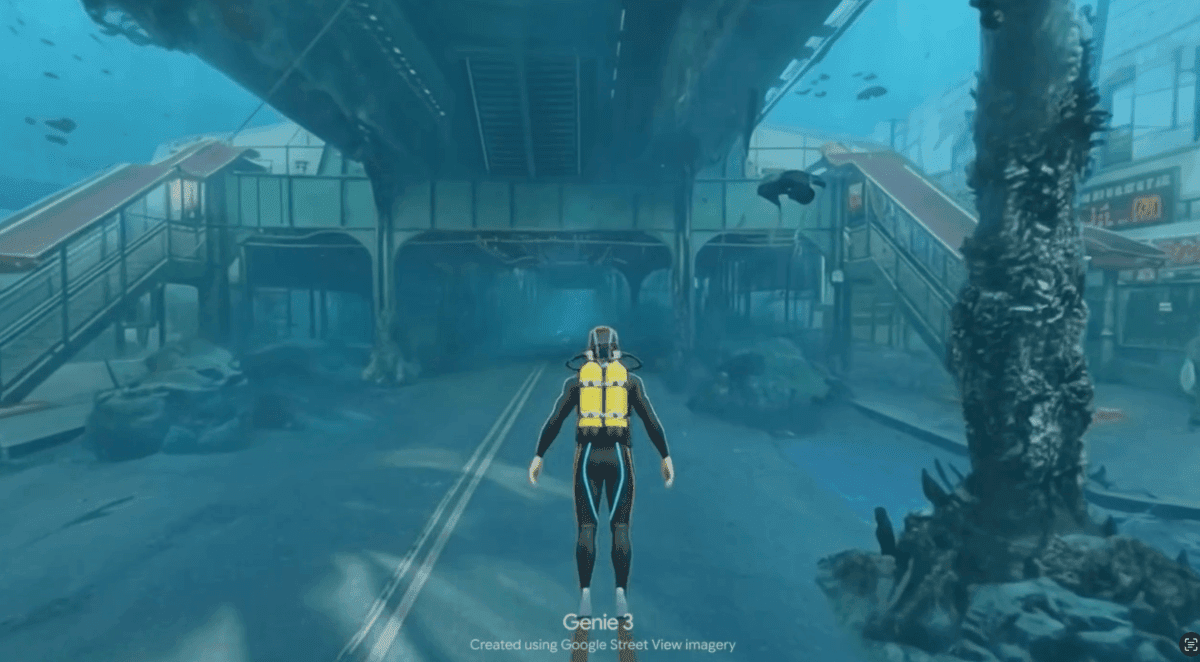
Google DeepMind has announced the integration of Street View with Project Genie, a move that enables the creation of immersive, interactive world simulations. The technology is designed to support applications in robotics, gaming, and virtual travel. Users can navigate through simulated environments that include dynamic elements such as weather changes and rare scenarios.
The integration leverages the vast dataset of Street View imagery to train Genie's world model. This model can generate realistic, interactive 3D environments from static images. The system can simulate various conditions, including different times of day, weather patterns, and even uncommon events like accidents or natural disasters.
DeepMind researchers highlighted that the model can extrapolate beyond the original Street View data to create plausible variations of real-world locations. This capability is particularly valuable for training autonomous systems, such as self-driving cars, in a safe and controlled virtual setting. The simulations can also be used for urban planning and disaster response training.
For gaming and entertainment, the integration opens up possibilities for creating detailed, explorable virtual worlds based on real places. Users could virtually visit cities, landmarks, or remote areas with the ability to interact with the environment. The system supports real-time rendering, allowing for smooth navigation and interaction.
The project is part of DeepMind's broader efforts to build general-purpose world models that can understand and simulate the physical world. Genie, initially introduced as a model for generating interactive environments from text or images, now gains the ability to incorporate real-world data from Street View.
DeepMind has not announced a specific release date for the integrated system. However, the company stated that the technology is being tested internally and with select partners. Pricing details have not been disclosed, and the system is expected to be available through Google Cloud services.
The integration of Street View with Genie represents a significant step in making AI-generated simulations more realistic and useful. By grounding simulations in real-world data, DeepMind aims to bridge the gap between virtual and physical environments. The company emphasized that the technology adheres to privacy and data usage policies, ensuring that Street View imagery is used responsibly.
Google Unveils Gemini 3.5 Flash, Emphasizing Autonomous AI Agents Over Chatbots
Google introduced Gemini 3.5 Flash at its developer conference, positioning it as a powerful model for coding and agentic tasks. The model can autonomously execute complex operations and build software from scratch.
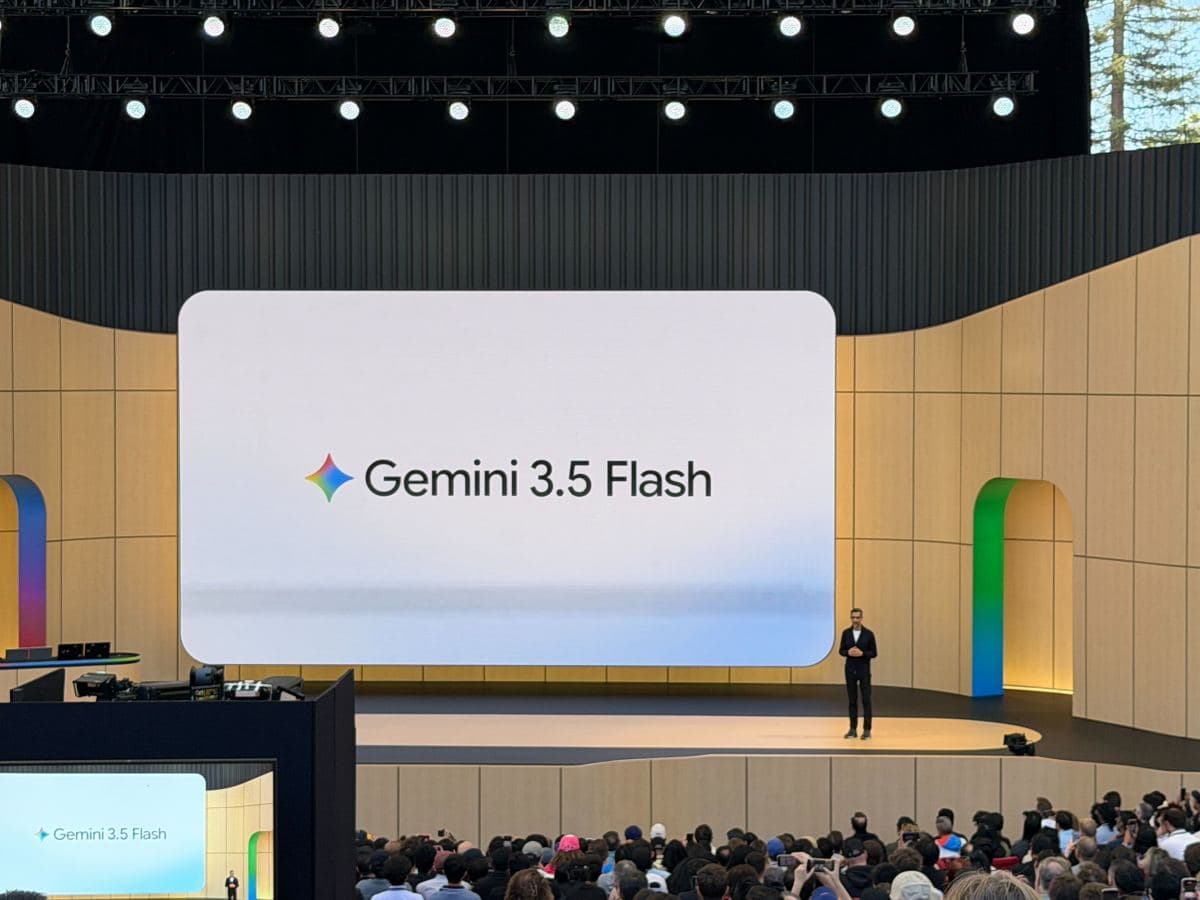
Google announced Gemini 3.5 Flash during its annual developer conference, marking a strategic shift toward autonomous AI agents rather than conversational chatbots. The company described the model as its most capable offering for coding and agentic workflows.
Gemini 3.5 Flash is designed to execute complex tasks independently, including building software applications from the ground up. Google emphasized the model's ability to reason through multi-step problems and take actions without human intervention.
The model represents a departure from earlier AI products that focused primarily on text generation and question-answering. Google's leadership framed the release as a move toward more practical, action-oriented AI systems.
Developers will gain access to Gemini 3.5 Flash through Google's AI platform, Vertex AI, and via the Gemini API. The company highlighted the model's improved performance on coding benchmarks compared to previous versions.
Google also introduced new safety features tailored for agentic AI, including guardrails to prevent unintended actions. The company stated that these measures are critical as AI systems gain the ability to interact with external tools and services.
Pricing for Gemini 3.5 Flash will be competitive with other high-performance models, though specific rates were not disclosed at the event. Google plans to offer tiered access based on usage volume.
The release comes as competitors like OpenAI and Anthropic also push toward agentic AI capabilities. Google's strategy appears to focus on integrating these agents deeply with its cloud ecosystem and developer tools.
Gemini 3.5 Flash is available immediately for developers in preview. Google expects to roll out broader access in the coming months, with a general availability date yet to be announced.

OpenAI Co-Founder Andrej Karpathy Joins Anthropic’s Pre-Training Team
Andrej Karpathy, co-founder of OpenAI, has joined Anthropic to work on pre-training. He previously led computer vision and AI at Tesla.
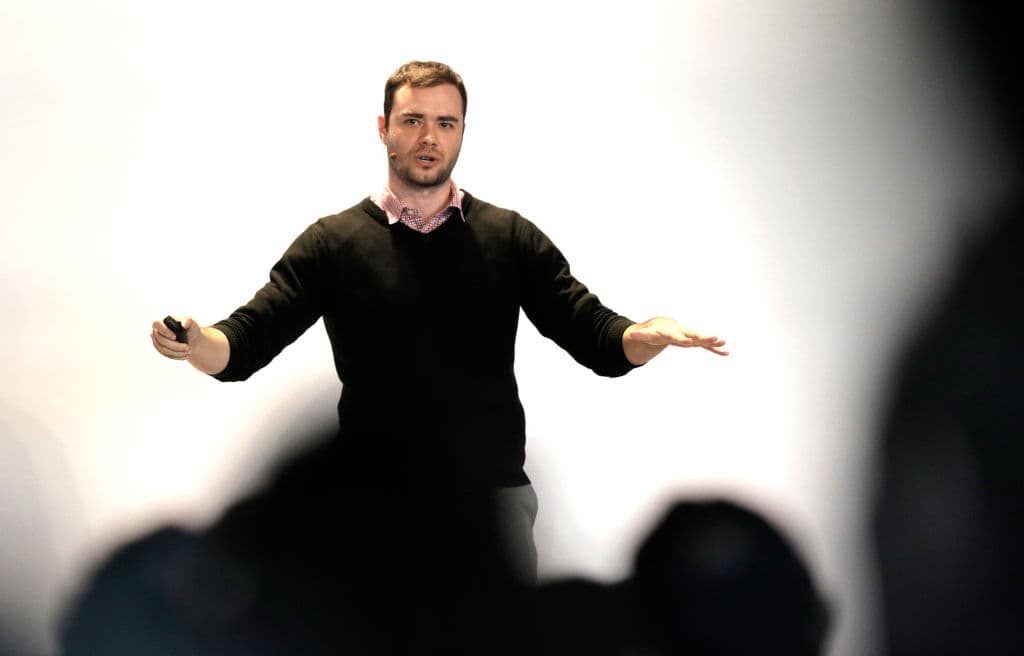
Andrej Karpathy has taken a position at Anthropic, the artificial intelligence company, where he will focus on pre-training. The move was announced by the company on Monday. Karpathy brings extensive experience from his previous roles at OpenAI and Tesla.
Karpathy co-founded OpenAI in 2015 and served as a research scientist there. He later joined Tesla in 2017, where he led computer vision and AI efforts. His work at Tesla included developing the neural networks for the company's Autopilot system.
At Anthropic, Karpathy will contribute to the pre-training of large language models. Pre-training is a critical phase in developing AI systems, where models learn from vast amounts of data before being fine-tuned for specific tasks.
Anthropic is known for its focus on AI safety and alignment. The company has developed models like Claude, which compete with OpenAI's GPT series. Karpathy's expertise in AI research is expected to bolster Anthropic's pre-training capabilities.
Karpathy announced his departure from OpenAI in 2023 after eight years with the company. He had been on a sabbatical since then. His move to Anthropic marks his return to active AI research.
The hiring is seen as a significant addition to Anthropic's team, which includes several former OpenAI employees. Anthropic has been expanding its research efforts to develop more capable and safe AI systems.
Karpathy's role at Anthropic will involve working on improving the efficiency and effectiveness of pre-training methods. This includes exploring new architectures and training techniques to enhance model performance.
Anthropic confirmed the appointment in a statement, expressing enthusiasm about Karpathy joining the team. The company did not disclose further details about his specific projects or timeline.

US software stocks rebound, seeking to loosen AI's grip
This development in AI News signals new momentum in the technology agenda.

US software stocks rebound, seeking to loosen AI's grip has become a significant development in the technology sector. This advancement signals new momentum in the ai haberleri space and carries important implications for both consumers and industry players.
The technical details surrounding this announcement suggest a deliberate strategy aimed at capturing market share while addressing existing user pain points. Industry analysts note that the timing of this release aligns with broader shifts in how technology is adopted at scale.
From a competitive standpoint, this move places additional pressure on established players who have dominated the segment for years. The introduction of these features could force rivals to accelerate their own roadmaps or risk losing relevance in an increasingly crowded marketplace.
Consumer reactions have been mixed but generally positive, with early adopters highlighting the practical benefits over marketing promises. The focus appears to be on solving real problems rather than introducing novelty for its own sake.
Looking at the broader ecosystem, this development may trigger ripple effects across adjacent categories. Partnerships, supply chains, and developer communities are all likely to feel the impact as adoption scales.
Whether this represents a lasting shift or a temporary market reaction will depend on execution quality and sustained innovation in the coming quarters.}
AI Avatar Doctor Cuts Stress, Boosts Knowledge in Cancer Patients Before Consultations
Cancer patients who interacted with an AI avatar doctor before meeting their real-life consultant reported feeling more knowledgeable and less stressed, according to research presented at ESTRO 2026.

A study presented at the Congress of the European Society for Radiotherapy and Oncology (ESTRO 2026) found that cancer patients who engaged with an artificial intelligence (AI) avatar doctor before their actual consultation experienced reduced stress and increased knowledge about their condition. The research was conducted by a team from the Netherlands Cancer Institute and the University of Amsterdam.
The AI avatar, named “Dr. AI,” was designed to simulate a conversation with a physician, answering patient questions about their diagnosis, treatment options, and side effects. Patients interacted with the avatar via a tablet or computer before meeting their oncologist. The study involved 200 patients with various cancer types, half of whom used the avatar while the other half received standard pre-consultation materials.
Results showed that patients who used the avatar reported a 30% reduction in anxiety levels compared to the control group. They also scored significantly higher on a knowledge test about their cancer and treatment. The avatar used natural language processing to understand patient queries and provided responses based on medical guidelines and the patient’s own medical records.
Dr. Irma Verdonck, lead researcher and radiation oncologist at the Netherlands Cancer Institute, said the avatar helped patients feel more prepared and empowered. “Patients often feel overwhelmed during consultations. The avatar gives them a chance to ask questions in a low-pressure environment and get reliable information,” she explained.
The avatar was developed using a large language model trained on oncology literature and anonymized patient data. It could explain complex medical terms in plain language and offer personalized advice. The system also flagged questions that required follow-up by the human doctor, ensuring no critical information was missed.
Researchers noted that the avatar was not intended to replace human doctors but to complement the consultation process. Patients who used the avatar reported feeling more confident in discussing their concerns with their actual physician. The study also found that consultations were more efficient, with doctors spending less time on basic explanations and more on individualized care.
The AI avatar is currently available only in Dutch and English, with plans to add more languages. The research team is working to integrate the system into hospital workflows and electronic health records. Further studies are planned to assess long-term outcomes and patient satisfaction.
The findings were presented at ESTRO 2026, which took place in Vienna, Austria, from April 24 to 28. The study has not yet been published in a peer-reviewed journal but has been submitted for publication.