Google bets on AI agents at I/O 2026, aiming for practical assistants
Google announced new AI agents at I/O 2026 that can gather information, plan events, and summarize inboxes and calendars. The agents run continuously in the background, with Google claiming seamless integration into users' workflows.

For years, tech companies have promised AI will deliver a capable personal assistant but instead offered something akin to a clueless intern. Over the past six months, that trajectory has begun to shift, largely driven by the viral open-source AI agent platform OpenClaw. Among the top AI labs now chasing similar success, one appears particularly well-positioned to make agents succeed at scale: Google.
At its I/O 2026 developer conference, Google unveiled new AI agents designed to handle tasks such as gathering information, planning events, and summarizing a user's inbox and calendar. These agents can operate continuously in the background, according to the company. Google claims they will integrate seamlessly into existing workflows, though specific technical details remain sparse.
The announcement signals Google's intent to compete in the burgeoning AI agent space, where OpenClaw has set a high bar. OpenClaw's open-source platform has enabled developers to build autonomous agents that perform complex tasks, sparking widespread adoption. Google's approach appears to emphasize integration with its own ecosystem, including Gmail, Google Calendar, and Google Search.
Google's agents are expected to leverage the company's large language models and vast data resources. The company has not disclosed pricing or a specific release date for the agents, but they are anticipated to roll out gradually across Google's services. Developers will likely gain access through Google's cloud platform and API offerings.
The move comes as competitors like Microsoft and OpenAI also push agent-based AI features. Microsoft has integrated Copilot into its Office suite, while OpenAI has demonstrated agents that can browse the web and perform actions. Google's deep integration with consumer and enterprise tools could give it an edge in making agents truly useful.
Google emphasized that the agents are designed to respect user privacy and data security, though details on how data is handled were not provided. The company stated that users will have control over agent permissions and can review actions taken. This focus on trust may be critical as AI agents gain access to sensitive personal and professional information.
Industry analysts note that Google's vast infrastructure and AI expertise position it well to deliver agents that work reliably at scale. However, the company faces challenges in ensuring agents understand context and avoid errors. Google acknowledged that the technology is still evolving and that user feedback will shape future iterations.
Google's I/O 2026 keynote also highlighted other AI advancements, but the agent announcements drew the most attention. The company plans to share more technical details and developer resources in the coming months. For now, Google is positioning its agents as a natural evolution of its existing AI services, aiming to move beyond simple chatbots toward proactive assistance. The success of this effort may determine whether AI agents finally live up to their long-promised potential.
Stability AI Releases Audio Model Capable of Six-Minute Song Generation
Stability AI has launched Stability Audio 3.0, a new audio model that can generate songs up to six minutes long. The model also includes a smaller version that runs on-device and produces two-minute tracks.

Stability AI announced the release of Stability Audio 3.0, a generative audio model that can create songs lasting up to six minutes. The company positions the model as a tool for musicians, producers, and content creators seeking to generate original audio content. The announcement was made on the company's official blog and social media channels.
The model introduces a new architecture that allows for longer audio generation compared to previous versions. Stability Audio 3.0 can produce full-length tracks with multiple instruments, vocals, and sound effects. The company claims the model maintains coherence and musical structure over extended durations.
A smaller variant of the model, called Stability Audio 3.0 Small, is designed to run locally on consumer devices. This version generates audio clips up to two minutes long. The on-device capability aims to provide faster generation and offline functionality, reducing reliance on cloud servers.
Stability Audio 3.0 is available through the company's API and web interface. The model supports text-to-audio generation, where users input descriptive prompts to create custom audio. The company also provides a library of preset styles and genres for quick generation.
The release follows Stability AI's previous audio models, including Stability Audio 2.0, which generated shorter clips. The company has been expanding its generative AI portfolio beyond image and video models into audio. Stability AI faces competition from other audio generation tools such as Google's MusicLM and Meta's AudioCraft.
Stability Audio 3.0 is available now for developers and creators. Pricing follows a credit-based system, with free tier credits available for testing. The on-device model is accessible through the company's GitHub repository for local deployment.
The company stated that the model has been trained on licensed audio data and proprietary datasets. Stability AI emphasized that the model is designed to assist human creativity rather than replace artists. The company continues to develop safety measures to prevent misuse, including content filtering and usage guidelines.
Stability Audio 3.0 is available immediately through the Stability AI platform. The on-device model can be downloaded from GitHub. The company plans to release additional updates and improvements in future versions.

Google Launches Gemini Omni, a New AI Model Family Merging Text and Multimedia
Google has introduced Gemini Omni, a family of AI models that combine advanced text reasoning with multimedia creation capabilities. The models are designed to process and generate text, images, audio, and video in a unified manner.

Google announced the launch of Gemini Omni, a new family of artificial intelligence models, on Tuesday. The models are built to merge advanced text reasoning with multimedia creation, enabling them to process and generate content across text, images, audio, and video. This marks a significant expansion of Google's AI capabilities beyond text-only models.
Gemini Omni models are designed to understand and generate multiple modalities simultaneously. For instance, they can take a text prompt and produce a video with synchronized audio, or analyze an image and generate a descriptive paragraph. The models leverage a unified architecture that processes different data types through shared parameters, allowing for cross-modal learning.
According to Google, the Gemini Omni family includes several model sizes to suit different use cases, from on-device applications to large-scale cloud deployments. The largest model, Gemini Omni Ultra, is said to achieve state-of-the-art performance on multimodal benchmarks, including tasks like visual question answering and video captioning.
Google emphasized that safety and responsibility were key considerations in developing Gemini Omni. The company implemented extensive red-teaming and bias testing, and incorporated filters to prevent harmful content generation. The models also include watermarking for AI-generated content to help identify synthetic media.
The launch comes as competition in the AI space intensifies, with rivals like OpenAI and Anthropic also developing multimodal models. Google's move positions it to offer integrated AI solutions for enterprises and developers, potentially enabling applications in education, entertainment, and accessibility.
Developers can access Gemini Omni through Google Cloud's Vertex AI platform starting today. Pricing is based on usage, with costs varying by model size and input/output modalities. Google also plans to integrate Gemini Omni into its consumer products, including Google Search and Assistant, in the coming months.
Initial availability is limited to select regions, including the United States, Canada, and parts of Europe. Google said it will expand access gradually based on feedback and safety evaluations. The company also released a research paper detailing the model architecture and training methodology.
"Gemini Omni represents a step toward more general AI systems that can understand and interact with the world in richer ways," said a Google spokesperson in a statement. The company invited developers to explore the models and provide feedback to help shape future iterations.

Google unveils proactive AI assistant and suite of new tools at I/O conference
Google announced a range of AI advancements at its I/O conference, including a personal AI assistant that can proactively perform tasks. The company also introduced updates to its Gemini model and new developer tools.
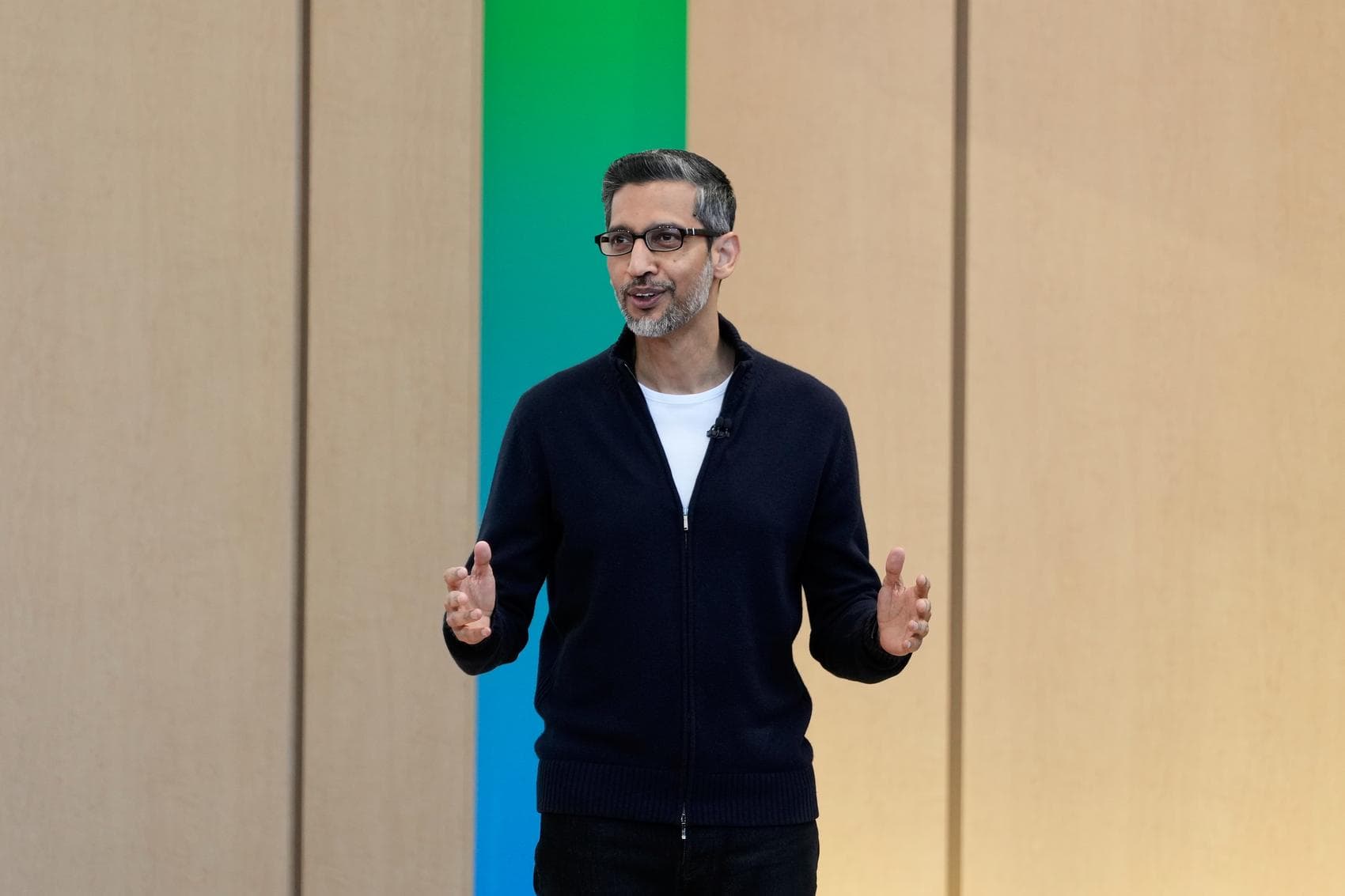
Google announced a series of artificial intelligence advancements at its annual I/O developers conference on Tuesday. The company unveiled a personal AI assistant that can proactively perform tasks on behalf of users, marking a shift toward what the industry calls "agentic" AI. The assistant, which is expected to roll out in the coming months, will be able to handle complex multi-step requests such as planning trips or managing emails.
Google also introduced updates to its Gemini large language model, which powers many of its AI features. The new version, Gemini 1.5 Pro, offers improved reasoning and longer context windows, allowing it to process more information at once. Developers will gain access to expanded capabilities through the Gemini API, including the ability to create custom AI agents.
Among the new tools is a feature called "Ask Photos," which lets users search their photo library using natural language queries. For example, a user could ask "Show me photos from my trip to Japan" and the system will retrieve relevant images. The feature is powered by Gemini and will be available later this year.
Google also demonstrated Project Astra, a prototype AI assistant that can see and hear its surroundings through a smartphone camera. In a demo, the assistant identified objects and answered questions about the environment in real time. The company said it plans to integrate similar capabilities into its products in the future.
For developers, Google announced AI-powered tools for Android Studio and Firebase. These include a code completion feature that suggests entire functions and a debugging assistant that can explain errors. The company also launched a new version of its Vertex AI platform with enhanced support for multimodal models.
On the hardware side, Google revealed the Pixel 8a, a mid-range smartphone that includes several AI features such as Magic Editor and Best Take. The device starts at $499 and goes on sale May 14. The company also announced that the Pixel 8 and Pixel 8 Pro will receive a software update enabling on-device AI processing for certain tasks.
Google emphasized its commitment to responsible AI development, announcing new safety measures and transparency tools. The company said it will require developers to disclose when content is AI-generated and will implement watermarking for AI-created images. These measures are part of a broader industry effort to address concerns about misinformation.
The announcements at Google I/O underscore the company's aggressive push to integrate AI across its product ecosystem. With the new assistant and developer tools, Google aims to compete with rivals like Microsoft and OpenAI in the rapidly evolving AI landscape. The company said many of the new features will begin rolling out in the coming weeks.

Elon Musk Warns of Artificial Intelligence Risks, Urges Caution
Elon Musk expressed serious concerns about the potential dangers of artificial intelligence, emphasizing the need for proactive regulation. He warned that AI could pose existential risks if not properly managed.

Elon Musk has issued a stark warning about the potential dangers of artificial intelligence, urging the public and policymakers to take the matter seriously. The Tesla and SpaceX CEO, known for his outspoken views on technology, emphasized that AI could pose existential risks if left unchecked. Musk's comments come amid growing debate over the ethical implications and safety of advanced AI systems.
Speaking at a recent event, Musk described AI as one of the biggest threats facing humanity. He stressed that the technology's rapid advancement demands immediate attention and regulatory oversight. Musk has previously called for proactive measures to ensure AI development remains aligned with human interests.
The entrepreneur's concerns are not new; he has been vocal about AI risks for years. In 2014, he described AI as potentially more dangerous than nuclear weapons. More recently, he co-founded OpenAI, an organization dedicated to developing safe and beneficial AI, though he later stepped down from its board.
Musk's latest remarks highlight the need for a balanced approach to AI innovation. While acknowledging the technology's transformative potential, he warned against complacency. He called for collaboration between industry leaders, researchers, and governments to establish safety protocols.
The debate over AI safety has intensified with the release of powerful language models and generative AI tools. Critics argue that without proper safeguards, AI could be used for malicious purposes or develop unintended behaviors. Proponents, however, point to the benefits in healthcare, education, and other fields.
Musk's warning serves as a reminder of the dual-edged nature of technological progress. As AI continues to evolve, the conversation around its risks and rewards is likely to grow. The tech community remains divided on the urgency of the threat, but Musk's influence ensures his views will be heard.
In the absence of concrete regulations, companies like Tesla and OpenAI are developing their own safety guidelines. Musk has also advocated for a universal basic income as a potential solution to job displacement caused by automation. The future of AI remains uncertain, but Musk's message is clear: vigilance is essential.