Google launches Universal Cart to track shopping across devices and retailers
Google announced Universal Cart, a new feature that tracks users' shopping across multiple devices and retailers. The tool aims to simplify the online shopping experience by consolidating cart items from various sites.
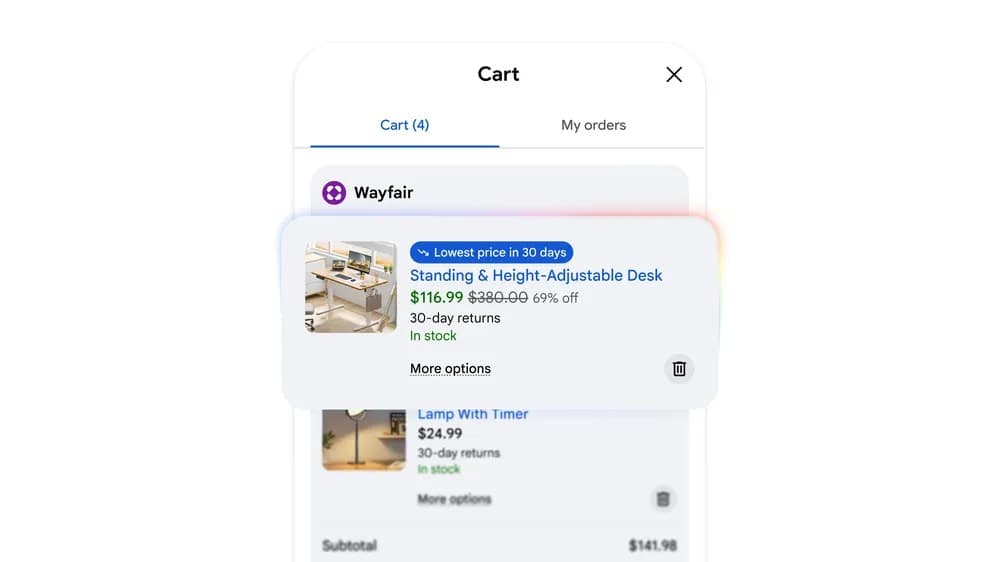
Google introduced Universal Cart, a feature designed to follow users' shopping journeys across different devices and online retailers. The announcement was made during the company's annual developer conference. Universal Cart aims to address the fragmented nature of online shopping, where consumers often browse and add items to carts on multiple sites over several days.
The feature integrates with Google's Shopping platform and uses the user's Google account to sync cart data across devices. When a user adds an item to their cart on a participating retailer's site, Universal Cart saves that information. The user can then access their cart from any device, including smartphones, tablets, and desktop computers.
Universal Cart also provides price tracking and alerts. If the price of an item in the cart drops, Google will notify the user. The feature can also suggest alternative products or retailers based on the user's shopping history and preferences. Google emphasized that user privacy is a priority, and the data is encrypted and not shared with third parties without consent.
Retailers that have signed up for Universal Cart include major brands like Target, Walmart, and Best Buy. Google plans to expand the list of participating retailers over time. The feature is currently rolling out in the United States, with a global expansion expected later this year.
To use Universal Cart, users need a Google account and must enable the feature in their Google Shopping settings. The feature is available on the Google Shopping app and website. Google stated that Universal Cart is free for both users and retailers, with no additional fees for participation.
The launch of Universal Cart comes as Google faces increasing competition from Amazon in the online shopping space. Amazon offers a similar feature called Amazon Cart, which syncs across devices but is limited to Amazon's own platform. Google's Universal Cart aims to provide a cross-retailer solution.
Google also announced that Universal Cart will integrate with its Google Assistant, allowing users to add items to their cart via voice commands. The feature will be available on Google Home devices and Android smartphones. Google plans to add support for iOS devices in the coming months.
Universal Cart is now available to all users in the U.S. who have the latest version of the Google Shopping app. Google encourages users to provide feedback to help improve the feature. The company has not announced a specific date for the international rollout but expects it to begin in the fourth quarter of this year.
Mach Industries Acquires Defense Tech Firm for $50M to Boost Unit Economics
Mach Industries has acquired a defense technology company for $50 million to improve unit economics across its vehicle programs. The deal comes as the company begins scaling production.

Mach Industries announced it has completed a $50 million acquisition of an undisclosed defense technology company. The purchase is aimed at addressing a major challenge in the defense tech sector: improving the cost efficiency of manufacturing advanced systems at scale.
The acquisition will meaningfully improve unit economics across Mach's five vehicle programs, the company said. These programs include unmanned aerial systems and other defense platforms that the company has been developing for military customers.
Mach Industries has been working to transition from prototype development to volume production. The company's leadership stated that the acquired technology and expertise will help reduce per-unit costs while maintaining performance standards.
The deal comes at a time when defense tech startups are under pressure to deliver affordable solutions to the Pentagon and allied militaries. Many companies in the sector struggle with high production costs that limit the number of units they can field.
Mach's five vehicle programs cover a range of mission types, including reconnaissance, logistics, and strike capabilities. The company has not disclosed which specific programs will benefit most from the acquisition.
Financial terms of the deal were confirmed at $50 million. The acquisition includes intellectual property, manufacturing equipment, and a team of engineers who will join Mach's workforce.
Mach Industries expects the integration to be completed within the next quarter. The company plans to begin incorporating the acquired technology into its production lines immediately.
The acquisition was funded through a combination of cash and equity. Mach's investors include prominent venture capital firms focused on defense technology.
"This acquisition strengthens our ability to deliver affordable, high-performance systems to our customers," a Mach spokesperson said in a statement. The company declined to provide further details about the acquired firm's identity or specific technologies involved.
The Vergecast dissects Google I/O 2026: agents, Spark, and the singularity
The Vergecast analyzed Google I/O 2026 highlights, including a conversational Gmail bot and DeepMind's singularity claim. Senior AI Reporter Hayden Field joined to discuss Google's new agent-focused services like Spark and Antigravity upgrades.

The Vergecast went live immediately after Google I/O 2026's two-hour keynote, offering a deep dive into the event's most notable announcements. Senior AI Reporter Hayden Field joined the show to break down the key moments, from a Gmail bot capable of natural conversation to DeepMind's leader declaring the singularity is near.
Agents emerged as the central theme of the keynote, positioning them as Google's latest strategy for making AI practical. The company introduced Spark, a service that bears resemblance to a Gemini-infused version of OpenClaw, alongside enhancements to its Antigravity platform. A suite of agents designed to handle shopping and track search topics was also unveiled.
The discussion also touched on the broader implications of these developments, including how Google's agent-based approach could reshape user interactions with AI. The Vergecast panel examined the potential impact of these tools on daily tasks and productivity.
DeepMind's singularity comment sparked particular interest, with the panel weighing its significance in the context of Google's AI trajectory. The conversation highlighted the tension between ambitious long-term goals and immediate product releases.
Google's focus on agents reflects a shift toward more autonomous AI systems that can perform complex tasks on behalf of users. The new services aim to integrate AI more deeply into everyday workflows, from email management to online shopping.
The Vergecast also explored how Spark compares to existing AI tools, noting its potential to compete with other platforms in the space. The Antigravity upgrades were described as a significant step forward for Google's cloud AI offerings.
Full coverage of Google I/O 2026 is available on The Verge, including detailed breakdowns of each announcement and analysis of their market implications.

Democrats hold shadow hearing to criticize DOJ's Live Nation-Ticketmaster settlement
A group of Democrats convened an unofficial hearing on Monday to denounce the Department of Justice's settlement with Live Nation-Ticketmaster, calling it insufficient. The event previews how the party might challenge Trump-era antitrust agreements if they regain control of Congress in November.

A handful of Democrats convened an unofficial hearing on Capitol Hill Monday to criticize the Department of Justice's settlement with Live Nation-Ticketmaster, labeling it "trivial" and "pathetic." The event offered a preview of how the party might challenge Trump administration antitrust agreements if they regain congressional power in November.
The DOJ settlement with Live Nation, announced one week into trial, includes a promise of up to $280 million. Despite receiving widespread pushback, Democrats currently lack the majority in either chamber to set committee agendas, forcing them to hold what they called a "shadow hearing."
Unlike most official proceedings, Monday's hearing took a different format. Instead of sitting at a dais, lawmakers gathered in a more informal setting to voice their objections.
The settlement has drawn criticism from both sides of the aisle, but Democrats argue it fails to address the company's market dominance. They contend the fine is too small to deter future anticompetitive behavior.
Live Nation-Ticketmaster has long faced scrutiny over its control of the live entertainment industry. Critics say the company's practices harm consumers through high fees and limited competition.
The shadow hearing signals that antitrust enforcement could become a major issue if Democrats win back control of the House or Senate in the upcoming elections. Lawmakers indicated they would push for stricter oversight and more aggressive action against dominant firms.
No official action was taken at Monday's event, as it lacked the authority of a formal committee hearing. However, participants said it was intended to draw attention to what they see as a failure of the current administration to hold corporations accountable.
The DOJ has defended the settlement, stating it provides meaningful relief to consumers. But Democrats vowed to continue pressing the issue, with some calling for further investigations into Live Nation-Ticketmaster's business practices.
Ugreen FineTrack 2 soccer ball-shaped tracker offers up to 7 years battery life
Ugreen launched the FineTrack 2, an Apple Find My-compatible tracker shaped like a soccer ball. It costs $19.99 and features a 600mAh CR2450 battery lasting five to seven years.
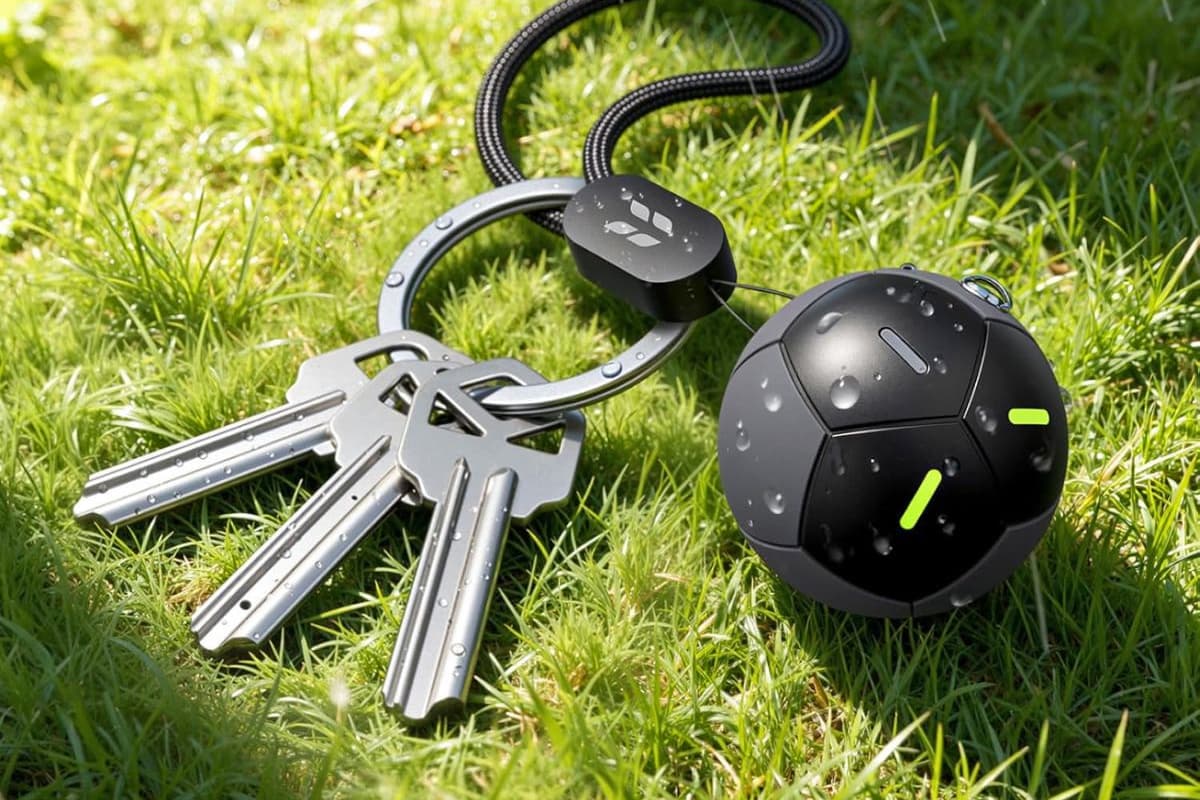
Ugreen has introduced a new tracker compatible with Apple's Find My network, featuring a design that prioritizes battery life over discretion. The FineTrack 2 takes the shape of a soccer ball, a nod to major football tournaments the company refrains from naming explicitly. This form factor makes it suitable for hanging off keychains or bags, though its size limits concealment options compared to an Apple AirTag or credit card-style trackers.
The device measures larger than typical coin-shaped trackers but remains compact enough to stow inside a suitcase or a car's glove compartment. Ugreen designed the FineTrack 2 with water resistance, allowing it to withstand exposure to rain or splashes during everyday use. The tracker relies on a 600mAh CR2450 battery, which the company estimates can power the device for five to seven years under normal usage with Apple's Find My network.
Apple's Find My integration enables the FineTrack 2 to leverage the vast network of Apple devices for location tracking. Users can locate the tracker through the Find My app on iPhones, iPads, or Macs, receiving proximity alerts and directional guidance. The soccer ball shape also serves a functional purpose, providing a larger surface area for the battery and potentially improving signal transmission.
Ugreen positions the FineTrack 2 as a practical accessory for travelers and those who frequently misplace items. The device's extended battery life reduces the need for frequent replacements, a common pain point with smaller trackers that use standard coin cells lasting about a year. The trade-off is a bulkier form that may not suit every use case, such as slipping into a wallet or attaching to a pet collar.
The FineTrack 2 is available for purchase immediately through Ugreen's official channels and select retailers. Priced at $19.99, it undercuts Apple's AirTag, which retails for $29, while offering a similar feature set with a distinct design. Ugreen did not announce plans for Android compatibility, limiting the tracker's appeal to users within Apple's ecosystem.
Ugreen's announcement did not specify regional availability, but the product is expected to ship globally through online stores. The company's decision to adopt a themed design aligns with the upcoming football tournaments, though the tracker remains functional year-round. Customers can choose from multiple color options, though Ugreen has not detailed the full range.
"The FineTrack 2 combines long-lasting battery life with a fun, sporty design," a Ugreen spokesperson said in a statement. The company emphasized the tracker's durability and ease of use, targeting consumers seeking a reliable Find My accessory without frequent battery changes. The product is backed by Ugreen's standard warranty, though specific terms were not disclosed.