Google Pixel Watch 5 Leaked in Underwater Video by Borderlands Creator
Randy Pitchford, creator of Borderlands, has leaked an unannounced Google Pixel Watch 5 in an underwater video. The footage shows the smartwatch submerged, revealing its design and features.

Randy Pitchford, the creator of the Borderlands video game series, has surfaced an unannounced Google Pixel Watch 5 in an underwater video. The footage, posted on social media, shows the smartwatch submerged in water, providing an early look at its design. The device appears to be a prototype, as it has not been officially announced by Google.
The video reveals a circular watch face with a sleek, minimalist design. The display is visible underwater, suggesting strong water resistance. The watch appears to be running Wear OS, with a custom Google interface. The band shown is a sporty silicone strap, likely designed for fitness tracking.
Details about the Pixel Watch 5's specifications remain scarce. However, the leak hints at potential improvements in water resistance and display visibility. The previous Pixel Watch 4 offered 5ATM water resistance, and the new model may exceed that rating. The video also shows the watch tracking a swim workout, indicating enhanced swim-tracking capabilities.
Pitchford did not provide any context on how he obtained the device. He is known for his work on the Borderlands franchise and has a history of sharing tech finds. The leak comes ahead of Google's expected fall hardware event, where the Pixel Watch 5 is rumored to launch alongside the Pixel 10 series.
Google has not commented on the leak. The company typically unveils its Pixel Watch lineup in October. The Pixel Watch 5 is expected to feature a new processor, improved battery life, and advanced health sensors. Pricing is anticipated to start around $349 for the base model.
The underwater video confirms that the Pixel Watch 5 will retain the circular design language of its predecessors. It also suggests that Google is focusing on durability and fitness features. The watch is likely to compete with the Apple Watch Series 10 and Samsung Galaxy Watch 7.
Availability is expected in October 2025, with pre-orders starting shortly after the announcement. The Pixel Watch 5 will be sold through the Google Store and major retailers. The leak has generated buzz among tech enthusiasts, but official details remain pending.
As of now, Google has not confirmed the Pixel Watch 5's existence. The company is expected to provide more information at its upcoming hardware event. The leak by Randy Pitchford offers an early glimpse, but consumers should wait for official specifications and pricing.
Apple TV Surpasses Netflix in Content Quality Index, Study Finds
A new quality index by MoffetNathanson ranks Apple TV above Netflix in content quality. The study highlights Apple TV's strong performance in original programming.

MoffetNathanson, a research firm, has released a new quality index that evaluates streaming platforms based on content quality. The index places Apple TV ahead of Netflix, marking a notable shift in the competitive landscape. Apple TV's original series and films received high marks for critical acclaim and audience engagement.
Netflix, long considered a leader in original content, slipped in the rankings despite its vast library. The index measures factors such as critic scores, viewer ratings, and cultural impact. Apple TV's focused strategy on fewer but higher-quality productions appears to have paid off.
The study analyzed data from the past year, including releases from major streaming services. Apple TV's investment in prestige projects like "Ted Lasso" and "Severance" contributed to its top position. Netflix, with a larger volume of content, saw its average quality score decline.
MoffetNathanson noted that Apple TV's curated approach contrasts with Netflix's volume-driven model. The index suggests that quality over quantity can yield better results in viewer satisfaction. However, Netflix still leads in total viewership hours due to its extensive catalog.
The findings come as streaming services face increasing competition for subscribers. Apple TV has been expanding its original content slate, while Netflix continues to invest heavily in new series and films. The index may influence how platforms prioritize content strategies.
Apple TV's rise in the quality index reflects its growing reputation among critics and audiences. The service has won multiple Emmy Awards for its original programming. Netflix, despite its broader reach, has faced criticism for canceling shows prematurely.
The MoffetNathanson index is based on a proprietary methodology that weights various quality metrics. It provides a benchmark for comparing streaming services beyond subscriber numbers. Apple TV's performance underscores the importance of content curation in a crowded market.
Apple TV is available as a subscription service for $9.99 per month, with select original content also accessible through Apple One bundles. Netflix offers plans starting at $6.99 per month with ads. The study's results were published on MoffetNathanson's website.
SK Hynix joins $1 trillion club as AI demand boosts chipmaker value
SK Hynix has surpassed a $1 trillion market valuation for the first time, driven by surging demand for AI memory chips. The South Korean company becomes the third memory chip maker to reach this milestone, following Samsung and Micron.
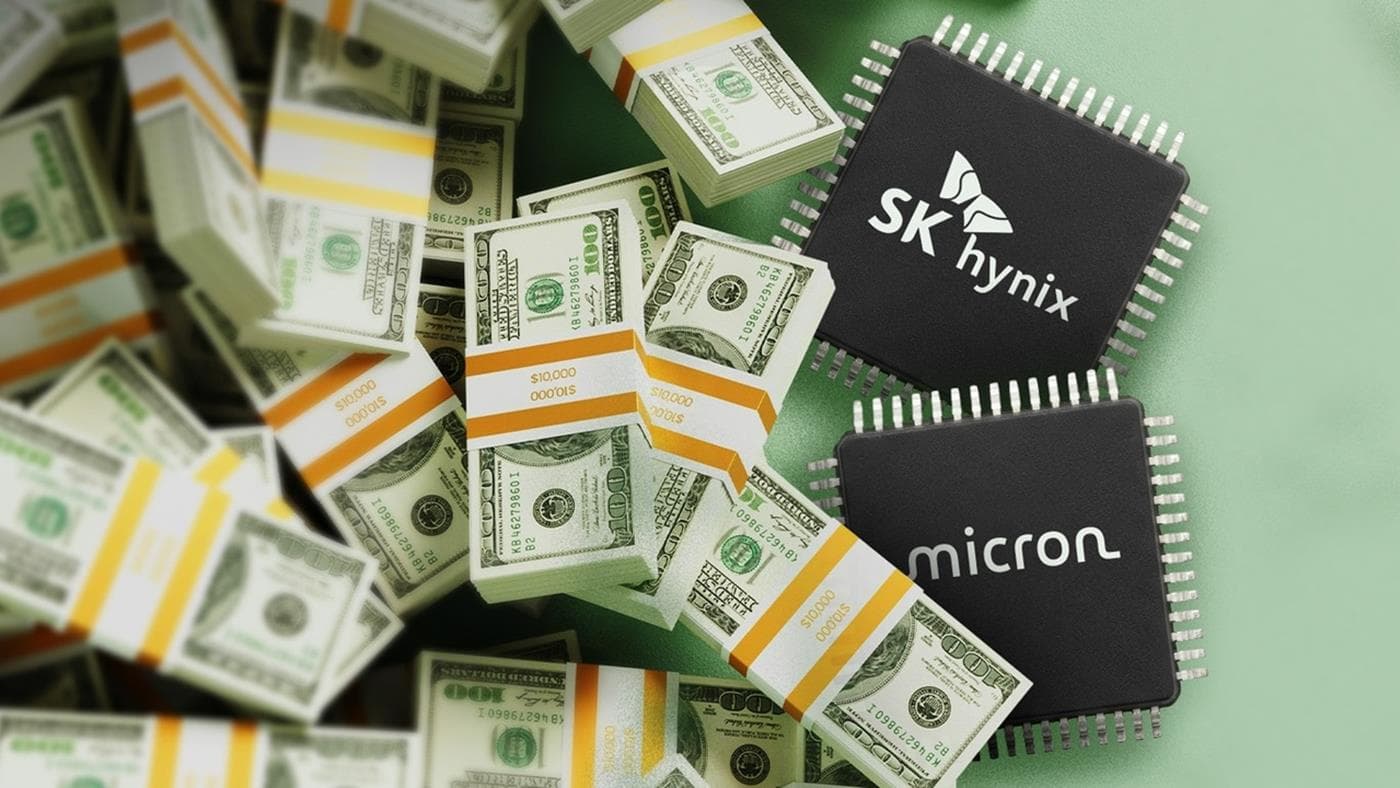
SK Hynix has crossed the $1 trillion market capitalization threshold for the first time in its history. The South Korean memory chip maker joins an elite group of 14 companies worldwide that have achieved this valuation. The milestone comes amid a surge in demand for high-bandwidth memory chips used in artificial intelligence applications.
The company's stock price has more than doubled over the past year, fueled by its dominant position in the HBM3E memory market. SK Hynix is the primary supplier of these advanced chips to Nvidia, which uses them in its AI accelerators. The company's market cap reached approximately 1.04 trillion dollars on Tuesday.
SK Hynix now stands alongside Samsung Electronics and Micron Technology as the only memory chip manufacturers in the trillion-dollar club. Samsung crossed the threshold earlier, while Micron achieved the milestone in 2021. The trio collectively controls over 90% of the global DRAM market.
The broader semiconductor industry has seen a valuation boom driven by AI computing demands. Nvidia itself has surged past $3 trillion, while TSMC and Broadcom have also joined the trillion-dollar ranks. SK Hynix's ascent reflects the growing importance of memory bandwidth in AI workloads.
Analysts attribute SK Hynix's success to its early investment in HBM technology. The company began developing HBM in 2013 and has maintained a technological lead over competitors. Its HBM3E chips offer data transfer speeds of up to 1.18 terabytes per second, critical for training large language models.
SK Hynix reported record quarterly profits in its most recent earnings, with operating profit surging over 400% year-over-year. The company plans to invest $74.6 billion over the next five years to expand its HBM production capacity. New fabrication facilities are under construction in South Korea and the United States.
The company's market cap milestone comes as global AI spending is projected to reach $200 billion by 2025. SK Hynix expects HBM to account for more than 60% of its total DRAM revenue this year. The company has already secured long-term supply agreements with major AI chip designers.
SK Hynix's achievement underscores the rapid transformation of the semiconductor landscape. The company's market value has grown more than tenfold since 2020. As AI adoption accelerates across industries, memory chip makers are poised to capture an increasing share of the technology value chain. SK Hynix aims to maintain its leadership by advancing to HBM4 technology by 2026.

Anthropic Files Confidentially for IPO, Valuation at $965 Billion
Anthropic has submitted a confidential draft registration statement to the SEC for a proposed initial public offering. The company's valuation reached $965 billion after a recent Series H funding round.

Anthropic announced it has made a confidential filing for an initial public offering. The company submitted a draft registration statement to the U.S. Securities and Exchange Commission. The number of shares and price range have not yet been disclosed. The planned IPO will depend on market conditions and other factors, according to Anthropic.
Confidential IPO filings allow companies to begin preparations without publicly revealing detailed financial information, risks, or internal operations. Anthropic's IPO will be evaluated privately away from public scrutiny. If the process advances, the company will need to file an S-1 registration document containing detailed information about its finances, legal matters, risks, and the distribution of voting rights.
Currently, Anthropic has submitted a draft registration statement on Form S-1 to the SEC under confidential terms. If the application is approved after review, the IPO could rank among the most valuable offerings. Last week, the company closed a Series H funding round that raised $65 billion, pushing its valuation to $965 billion.
The investment round was co-led by Altimeter Capital, Dragoneer, Greenoaks, Sequoia Capital, Capital Group, Coatue, and D1 Capital Partners. The funding round attracted significant interest from institutional and strategic investors in anticipation of the IPO.
Founded in 2021 by former OpenAI employees, Anthropic was long seen as a distant rival to OpenAI and ChatGPT. The company has enhanced its capabilities and attracted investors and customers by focusing on enterprise services. Anthropic recently announced that its annualized revenue exceeded $47 billion by the end of 2025, up from $9 billion.
Anthropic's IPO filing comes at a time when IPOs from ScaleX and OpenAI are also expected. SpaceX is preparing for an IPO with a valuation target of $1.75 trillion, while OpenAI is preparing to file for an IPO expected in September. OpenAI completed a funding round in March at a post-money valuation of $852 billion, raising $122 billion.
As of the end of May, Anthropic's valuation stood at $965 billion, while OpenAI's valuation was around $852 billion. Both AI giants are preparing for IPOs, with Anthropic potentially surpassing OpenAI in valuation.
The company's confidential filing allows it to proceed with IPO preparations while keeping sensitive details under wraps. The exact timing of the public offering remains subject to SEC review and market conditions.
AMD Unveils Ryzen 7 5800X3D, 7700X3D and RX 9070 GRE at Computex 2026
AMD announced the Ryzen 7 5800X3D, Ryzen 7 7700X3D, and Radeon RX 9070 GRE at Computex 2026. The new processors extend AM4 platform support, while the graphics card targets the mid-range market.
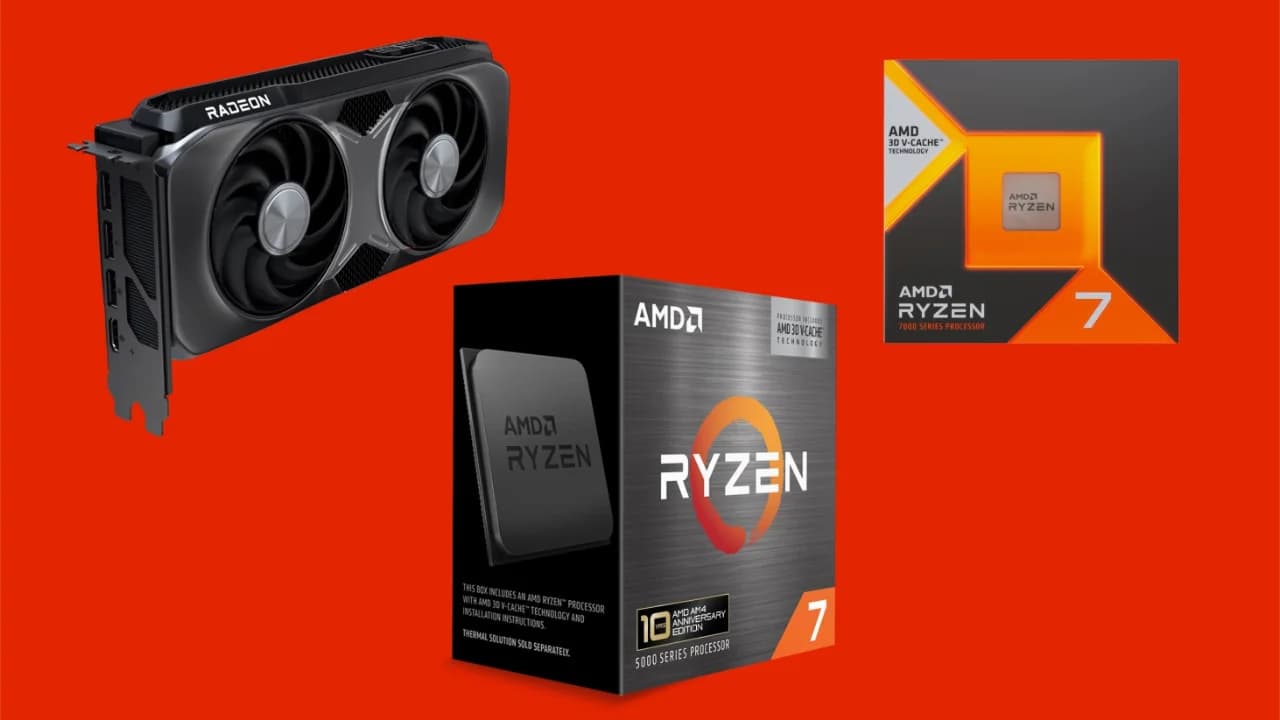
AMD took the stage at Computex 2026 in Taipei to introduce three new products: the Ryzen 7 5800X3D, Ryzen 7 7700X3D, and Radeon RX 9070 GRE. The announcements signal the company’s continued investment in both its AM4 socket and newer platforms. The Ryzen 7 5800X3D arrives as an updated version of the original 5800X3D, featuring 3D V-Cache technology. AMD claims the chip delivers up to 15% better gaming performance compared to its predecessor. The processor retains eight cores and 16 threads, with a base clock of 3.4 GHz and a boost clock of 4.5 GHz. The 96 MB of L3 cache remains unchanged, but AMD refined the voltage and thermal management for improved efficiency. The Ryzen 7 7700X3D targets the AM5 platform with similar 3D V-Cache benefits. This model offers eight cores and 16 threads, with a base clock of 4.0 GHz and a boost clock of 5.0 GHz. AMD stated that the 7700X3D outperforms the Intel Core i7-13700K in gaming benchmarks by an average of 12%. The chip supports DDR5 memory and PCIe 5.0, making it a direct competitor to Intel’s latest offerings. On the graphics side, the Radeon RX 9070 GRE enters the mid-range segment with a focus on 1440p gaming. The card is built on the RDNA 4 architecture and features 16 GB of GDDR7 memory on a 256-bit bus. AMD reported that the RX 9070 GRE achieves 60-80 frames per second in demanding titles like Cyberpunk 2077 and Starfield at high settings. The card includes hardware-accelerated ray tracing and FidelityFX Super Resolution 4.0 support. Pricing for the Ryzen 7 5800X3D is set at $329, while the Ryzen 7 7700X3D costs $449. The Radeon RX 9070 GRE launches at $499. All three products are scheduled to go on sale starting July 15, 2026. AMD also confirmed that the 5800X3D will be the final high-performance chip for the AM4 platform, signaling the end of an era for the socket. The company emphasized its commitment to providing long-term support for AM4 users, with BIOS updates rolling out to compatible motherboards. Pre-orders for the new hardware begin on June 15, 2026, through AMD’s official website and partner retailers.