
SoftBank to Invest €75 Billion in France's AI Infrastructure
SoftBank announced a €75 billion investment to expand France's AI infrastructure, including the construction of a 5 GW data center. The move marks one of the largest AI investments in Europe.

SoftBank has unveiled plans to invest €75 billion in France to bolster the country's artificial intelligence infrastructure. The Japanese conglomerate announced the commitment on Tuesday, positioning it as one of the largest AI-related investments in Europe. The funds will be directed toward building a massive data center with a capacity of 5 gigawatts, aimed at supporting advanced AI workloads.
The investment underscores SoftBank's aggressive push into AI infrastructure, a sector where demand for computing power has surged. The 5 GW data center is expected to be among the largest in the region, capable of powering extensive machine learning and deep learning operations. SoftBank did not specify a timeline for the project but stated that construction would begin in phases.
French President Emmanuel Macron welcomed the investment, calling it a vote of confidence in France's tech ecosystem. The government has been actively courting foreign tech investment, offering incentives for data center projects and AI research. France aims to become a European hub for AI, competing with countries like the UK and Germany.
The data center will be built in partnership with local energy providers to ensure sustainable power sources. SoftBank emphasized that the facility would incorporate energy-efficient technologies and potentially use nuclear or renewable energy, given France's low-carbon electricity grid. The company also plans to collaborate with French AI startups and research institutions.
SoftBank's investment comes amid a global race to expand AI computing capacity. Major tech firms like Microsoft, Google, and Amazon have announced multi-billion-dollar data center projects worldwide. SoftBank's commitment in France is part of its broader strategy to invest in AI, following its Vision Fund's focus on AI startups and infrastructure.
The announcement was made during the Choose France summit, an annual event aimed at attracting foreign investment. SoftBank's CEO Masayoshi Son stated that France's talent pool and energy infrastructure were key factors in the decision. The investment is expected to create thousands of jobs in construction, engineering, and AI research.
SoftBank has not disclosed the exact location of the data center, but reports suggest it could be in the Île-de-France region or near nuclear power plants in the south. The company will work with French authorities to secure permits and grid connections. The project is subject to regulatory approvals and environmental impact assessments.
The €75 billion investment is one of the largest single commitments in French tech history. It surpasses previous investments by companies like Google and Facebook in the country. SoftBank's move signals growing confidence in France's ability to host large-scale AI infrastructure, leveraging its carbon-free electricity and engineering talent.
SoftBank confirmed that the investment will be phased over several years, with the first phase expected to come online by 2028. The company will provide further details on timelines and partners in the coming months. The announcement solidifies France's position as a key destination for AI infrastructure investment in Europe.
NVIDIA Unveils Cosmos 3 AI Model for Robots and Autonomous Vehicles
NVIDIA introduced Cosmos 3, described as the world's first fully open omni-model, at the GTC Taipei event in Taiwan. The AI model supports multimodal outputs including text, images, video, and environmental audio, targeting robotics and autonomous vehicle applications.
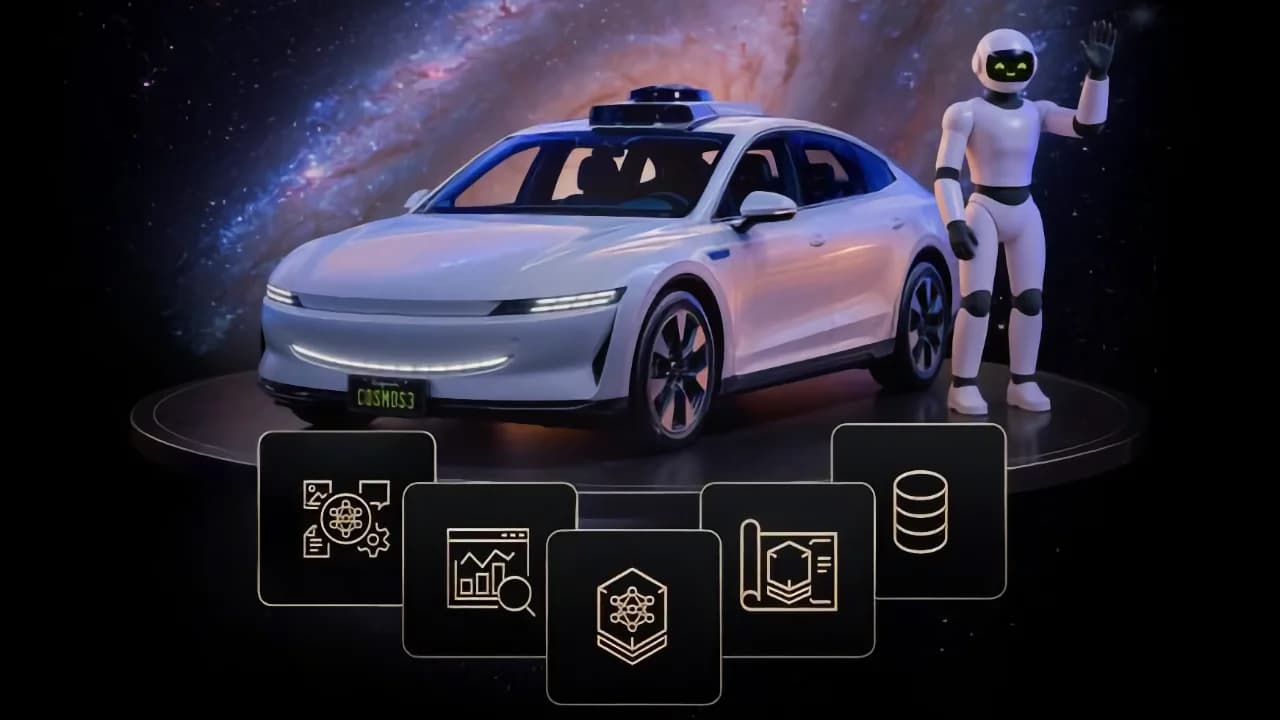
NVIDIA made a significant announcement at the GTC Taipei event in Taiwan, unveiling what it calls the world's first fully open omni-model. The company introduced Cosmos 3, an artificial intelligence model designed to advance robotics and autonomous vehicle technology. This model integrates visual reasoning capabilities with support for multiple output modalities, including text, images, video, and environmental audio.
Cosmos 3 processes inputs from various sensors and generates outputs that can be used for training and deploying autonomous systems. The model's omni-modal architecture allows it to handle different data types simultaneously, enabling more comprehensive understanding of environments. NVIDIA positions this as a tool for developers working on robots and self-driving cars.
The model's visual reasoning ability means it can interpret scenes and make decisions based on visual data, which is critical for navigation and object interaction. By supporting environmental audio, Cosmos 3 can also incorporate sound cues, such as sirens or approaching vehicles, into its decision-making process. This multimodal approach aims to create more robust and adaptable autonomous systems.
NVIDIA emphasized that Cosmos 3 is fully open, allowing researchers and developers to access and modify the model for their specific use cases. This openness is intended to accelerate innovation in the field of embodied AI, where AI systems interact with the physical world. The company believes that shared access to such models can drive progress in robotics and autonomous driving.
The announcement was made during the GTC Taipei event, a key platform for NVIDIA to showcase its latest technologies. The company has been expanding its presence in the AI and autonomous systems sectors, with Cosmos 3 representing a significant step in its product lineup. The model builds on NVIDIA's previous work in AI and simulation technologies.
Cosmos 3 is expected to be available for download and use by the developer community. NVIDIA has not yet disclosed specific pricing or licensing details, but the open nature of the model suggests it will be freely accessible. The company plans to provide documentation and tools to facilitate integration into existing workflows.
Developers can anticipate using Cosmos 3 for tasks such as training robots to navigate complex environments or enhancing the perception systems of autonomous vehicles. The model's ability to generate multimodal outputs could also be applied in simulation environments for testing and validation. NVIDIA's announcement positions Cosmos 3 as a foundational tool for the next generation of AI-powered machines.
NVIDIA stated that Cosmos 3 is now available for developers to explore and implement in their projects. The company encourages the research community to leverage the model's capabilities to push the boundaries of what autonomous systems can achieve. Further details about the model's architecture and performance benchmarks are expected to be released in the coming weeks.

OpenAI Model Disproves Erdős Unit Distance Conjecture, Solving 80-Year-Old Math Problem
OpenAI announced that an internal AI model disproved the Erdős unit distance conjecture, a famous problem in discrete geometry unsolved for 80 years. Mathematicians including Fields Medalist Tim Gowers called it a milestone in AI mathematics.

In mid-May, OpenAI revealed that one of its internal AI models had disproved the Erdős unit distance conjecture, a longstanding problem in discrete geometry that had resisted human mathematicians for eight decades. The company provided early access to the result to several mathematicians and published their reactions online.
Tim Gowers, a recipient of the Fields Medal—mathematics' highest honor—stated that "there is no doubt that the solution to the unit-distance problem is a milestone in AI mathematics." University of Toronto professor Daniel Litt remarked that "this is the first example of a result produced autonomously by an AI that I find exciting in itself, as opposed to as a leading indicator."
The Erdős unit distance conjecture, posed by mathematician Paul Erdős in 1946, asks for the maximum number of pairs of points in a set of n points in the plane that can be exactly one unit apart. The conjecture proposed an upper bound, but the AI model found a counterexample that disproved it.
OpenAI did not disclose the specific architecture or training details of the model, but described it as a general-purpose reasoning system. The model generated the counterexample through a combination of symbolic reasoning and search, without human guidance on the problem.
The achievement marks a significant advance in AI's ability to tackle open mathematical problems. Previous AI systems have assisted in proving theorems or verifying proofs, but this is one of the first instances of an AI autonomously producing a novel result that experts find genuinely surprising.
Mathematicians who reviewed the solution confirmed its correctness. The counterexample has been formally verified, and the result is expected to be published in a peer-reviewed mathematics journal.
OpenAI plans to release further technical details about the model and the solution in a forthcoming paper. The company also intends to make the model available to researchers for exploring other open problems.
The Erdős unit distance conjecture is now resolved, with the AI's counterexample showing that the maximum number of unit distances grows faster than the conjectured bound. This result closes a chapter in discrete geometry that began nearly a century ago.

OpenAI Brings Codex Computer Use Feature to Windows
OpenAI has launched the Computer Use feature for Codex on Windows, enabling remote control of PCs via ChatGPT mobile. The tool allows users to execute tasks on their computers through natural language commands.
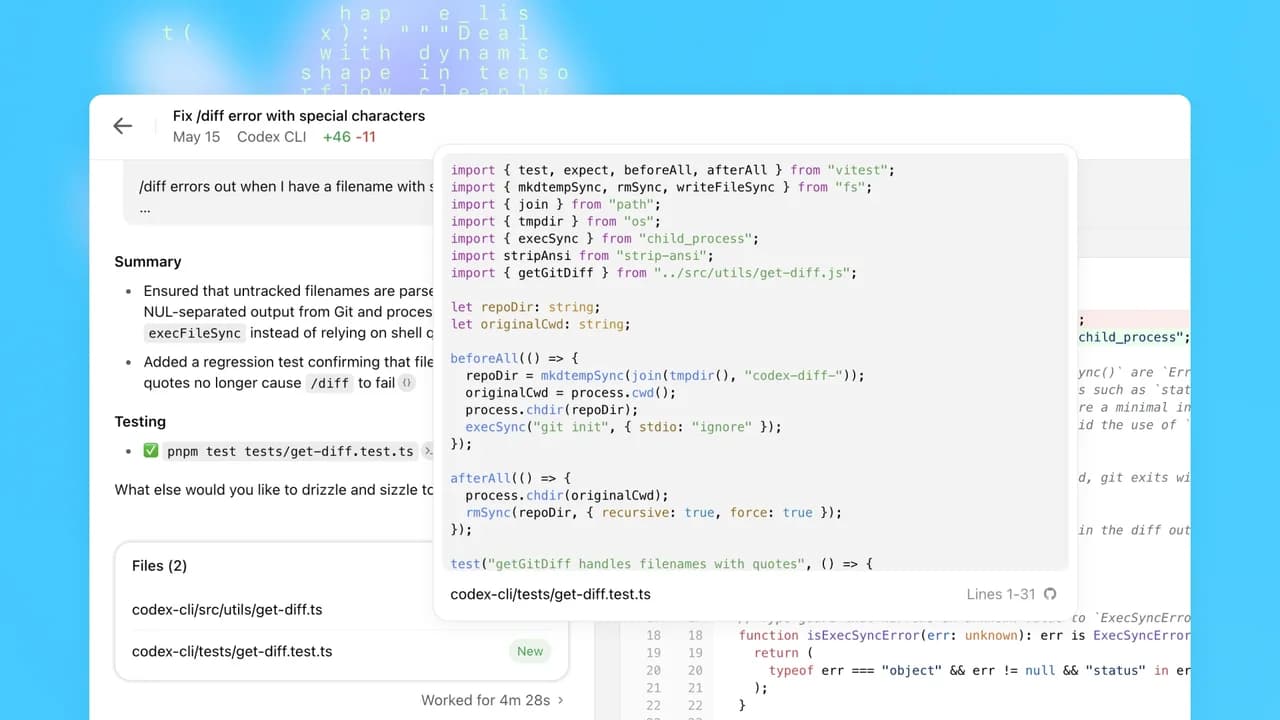
OpenAI announced the expansion of its Codex Computer Use feature to Windows users. The capability, previously available on macOS, now allows Windows PC owners to control their machines remotely through the ChatGPT mobile application. This development marks a significant step in integrating AI-powered automation into everyday computing tasks.
The Computer Use feature leverages Codex, OpenAI's AI system that translates natural language into executable commands. Users can instruct ChatGPT to perform actions such as opening applications, navigating files, or adjusting system settings. The system interprets the request and executes the corresponding operations on the Windows machine.
To use the feature, Windows users must install a companion application on their PC and link it to their ChatGPT account. Once connected, commands issued via the ChatGPT mobile app are relayed to the desktop client, which carries out the actions. The setup process requires enabling remote access permissions and ensuring both devices are on the same network.
OpenAI emphasized that the feature is designed for convenience and productivity. Common use cases include automating repetitive tasks, managing files while away from the desk, or assisting less tech-savvy users with system configurations. The company also highlighted security measures, such as requiring explicit user confirmation for sensitive operations.
The rollout follows months of testing on macOS, where the feature received positive feedback for its reliability and ease of use. Windows support addresses a major demand from users who rely on the platform for work or personal computing. OpenAI plans to continue refining the tool based on user feedback.
Availability begins immediately for ChatGPT Plus and Pro subscribers. The companion app is downloadable from OpenAI's official website and supports Windows 10 and 11. Users must have an active internet connection and a ChatGPT account with an active subscription to access the feature.
Pricing remains unchanged: ChatGPT Plus costs $20 per month, while Pro is $200 per month. The Computer Use feature is included at no additional cost for these tiers. OpenAI noted that free-tier users cannot access the functionality at this time.
OpenAI stated that the Computer Use feature for Windows is now live and ready for use. The company encourages users to explore the capabilities and provide feedback for future improvements.
Apple's Siri Overhaul: Early Look at AI-Powered Assistant Features
Apple is preparing a major Siri overhaul with AI-powered features expected to debut at WWDC 2025. The update will bring on-screen awareness, deeper app integration, and natural language improvements.
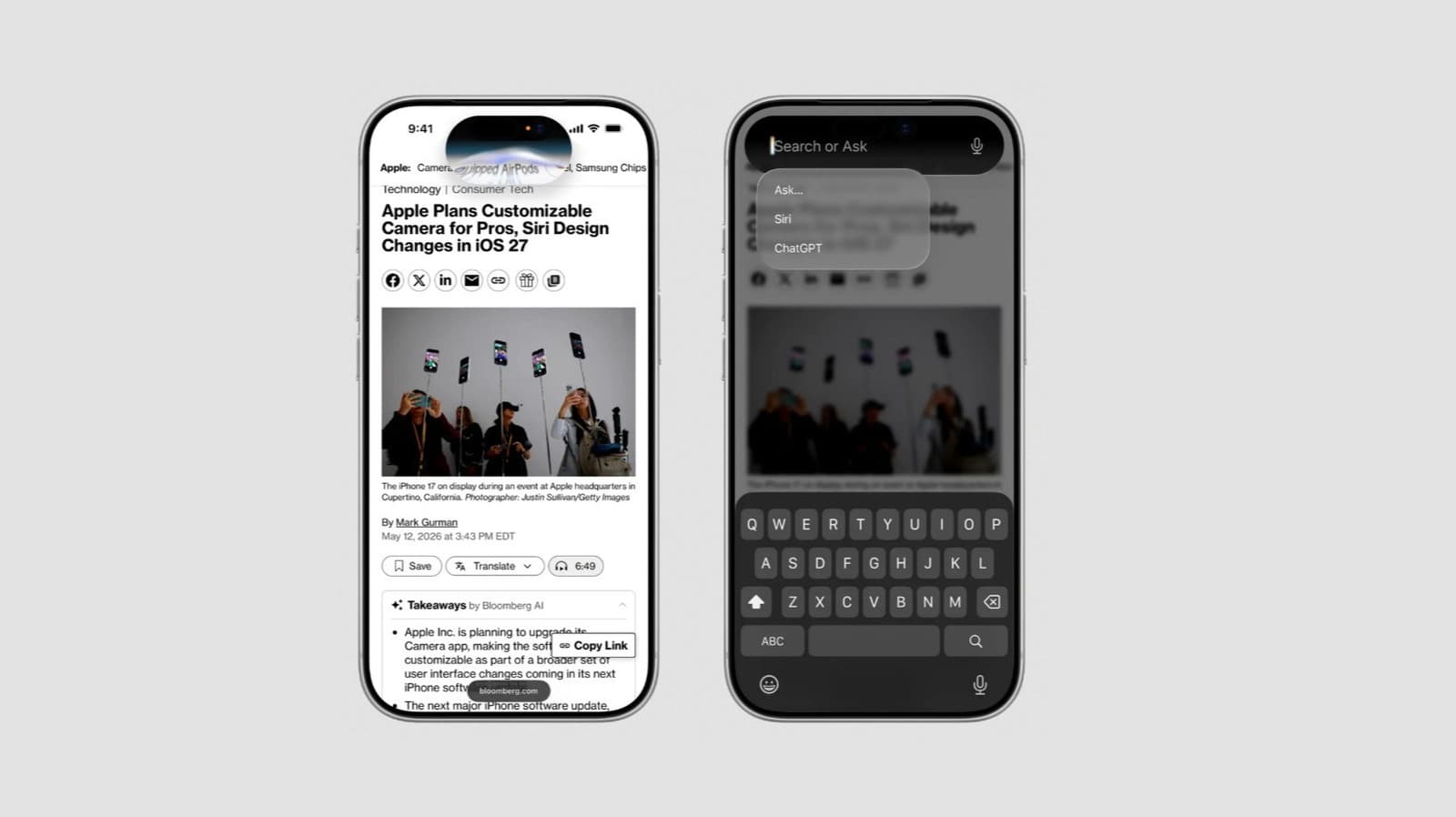
Apple is developing a significant overhaul of its Siri assistant, incorporating advanced artificial intelligence capabilities. The updated version is expected to be previewed at the company's Worldwide Developers Conference in June 2025. This marks one of the most substantial updates to Siri since its introduction in 2011.
The new Siri will feature on-screen awareness, allowing it to understand and act on content displayed on the user's screen. For example, if a user receives a message with an address, Siri could offer to add it to their calendar or provide directions. The assistant will also gain deeper integration with third-party apps, enabling it to perform tasks like editing photos or sending messages within those applications.
Natural language processing improvements will allow Siri to handle more complex requests and maintain context across multiple interactions. Users will be able to speak more conversationally, with Siri understanding follow-up questions and commands without requiring repeated context. The assistant will also be able to summarize notifications and messages, providing concise overviews of incoming information.
Apple's approach to AI differs from competitors like Google and OpenAI, focusing on on-device processing to protect user privacy. The company has been developing its own large language models and is investing heavily in AI infrastructure. The Siri overhaul is part of a broader push to integrate AI across Apple's ecosystem, including iOS, macOS, and visionOS.
The update is expected to be a key selling point for the iPhone 17 lineup, which will likely feature improved neural engines to handle the new AI workloads. Apple is also working on AI-powered features for other products, including a smart home hub with a robotic arm and advanced health monitoring capabilities.
Developers will gain access to new Siri APIs, allowing them to integrate their apps with the assistant's expanded capabilities. This could lead to a wider range of voice-controlled actions across the App Store. Apple is also exploring ways for Siri to control smart home devices more seamlessly.
The new Siri is expected to launch with iOS 19, iPadOS 19, and macOS 16 later in 2025. A public beta will likely be available after WWDC, with a full release in the fall alongside new hardware. Pricing for the software update will be free for compatible devices.
Apple has not officially confirmed details of the Siri overhaul, but reports from multiple sources indicate the company is prioritizing this update. The company declined to comment on future product plans. The new Siri is expected to be a centerpiece of Apple's AI strategy moving forward.