OpenAI Brings Codex Computer Use Feature to Windows
OpenAI has launched the Computer Use feature for Codex on Windows, enabling remote control of PCs via ChatGPT mobile. The tool allows users to execute tasks on their computers through natural language commands.
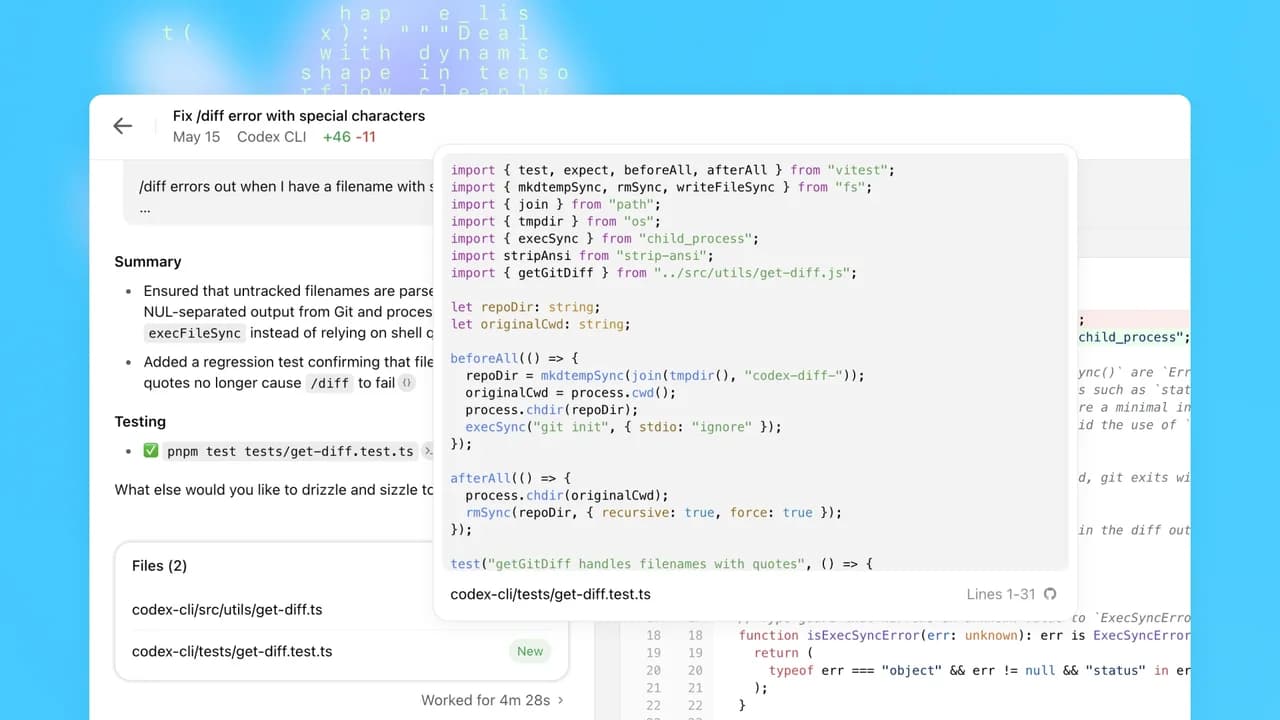
OpenAI announced the expansion of its Codex Computer Use feature to Windows users. The capability, previously available on macOS, now allows Windows PC owners to control their machines remotely through the ChatGPT mobile application. This development marks a significant step in integrating AI-powered automation into everyday computing tasks.
The Computer Use feature leverages Codex, OpenAI's AI system that translates natural language into executable commands. Users can instruct ChatGPT to perform actions such as opening applications, navigating files, or adjusting system settings. The system interprets the request and executes the corresponding operations on the Windows machine.
To use the feature, Windows users must install a companion application on their PC and link it to their ChatGPT account. Once connected, commands issued via the ChatGPT mobile app are relayed to the desktop client, which carries out the actions. The setup process requires enabling remote access permissions and ensuring both devices are on the same network.
OpenAI emphasized that the feature is designed for convenience and productivity. Common use cases include automating repetitive tasks, managing files while away from the desk, or assisting less tech-savvy users with system configurations. The company also highlighted security measures, such as requiring explicit user confirmation for sensitive operations.
The rollout follows months of testing on macOS, where the feature received positive feedback for its reliability and ease of use. Windows support addresses a major demand from users who rely on the platform for work or personal computing. OpenAI plans to continue refining the tool based on user feedback.
Availability begins immediately for ChatGPT Plus and Pro subscribers. The companion app is downloadable from OpenAI's official website and supports Windows 10 and 11. Users must have an active internet connection and a ChatGPT account with an active subscription to access the feature.
Pricing remains unchanged: ChatGPT Plus costs $20 per month, while Pro is $200 per month. The Computer Use feature is included at no additional cost for these tiers. OpenAI noted that free-tier users cannot access the functionality at this time.
OpenAI stated that the Computer Use feature for Windows is now live and ready for use. The company encourages users to explore the capabilities and provide feedback for future improvements.
Apple's Siri Overhaul: Early Look at AI-Powered Assistant Features
Apple is preparing a major Siri overhaul with AI-powered features expected to debut at WWDC 2025. The update will bring on-screen awareness, deeper app integration, and natural language improvements.

Apple is developing a significant overhaul of its Siri assistant, incorporating advanced artificial intelligence capabilities. The updated version is expected to be previewed at the company's Worldwide Developers Conference in June 2025. This marks one of the most substantial updates to Siri since its introduction in 2011.
The new Siri will feature on-screen awareness, allowing it to understand and act on content displayed on the user's screen. For example, if a user receives a message with an address, Siri could offer to add it to their calendar or provide directions. The assistant will also gain deeper integration with third-party apps, enabling it to perform tasks like editing photos or sending messages within those applications.
Natural language processing improvements will allow Siri to handle more complex requests and maintain context across multiple interactions. Users will be able to speak more conversationally, with Siri understanding follow-up questions and commands without requiring repeated context. The assistant will also be able to summarize notifications and messages, providing concise overviews of incoming information.
Apple's approach to AI differs from competitors like Google and OpenAI, focusing on on-device processing to protect user privacy. The company has been developing its own large language models and is investing heavily in AI infrastructure. The Siri overhaul is part of a broader push to integrate AI across Apple's ecosystem, including iOS, macOS, and visionOS.
The update is expected to be a key selling point for the iPhone 17 lineup, which will likely feature improved neural engines to handle the new AI workloads. Apple is also working on AI-powered features for other products, including a smart home hub with a robotic arm and advanced health monitoring capabilities.
Developers will gain access to new Siri APIs, allowing them to integrate their apps with the assistant's expanded capabilities. This could lead to a wider range of voice-controlled actions across the App Store. Apple is also exploring ways for Siri to control smart home devices more seamlessly.
The new Siri is expected to launch with iOS 19, iPadOS 19, and macOS 16 later in 2025. A public beta will likely be available after WWDC, with a full release in the fall alongside new hardware. Pricing for the software update will be free for compatible devices.
Apple has not officially confirmed details of the Siri overhaul, but reports from multiple sources indicate the company is prioritizing this update. The company declined to comment on future product plans. The new Siri is expected to be a centerpiece of Apple's AI strategy moving forward.

Anthropic Launches Claude Opus 4.8 with Dynamic Workflows and Enhanced Safety
Anthropic has released Claude Opus 4.8, introducing dynamic workflows, effort control, and improved safety features. The update aims to provide more flexible and secure AI interactions.
Anthropic announced the launch of Claude Opus 4.8, the latest version of its advanced AI model. The release introduces several new capabilities designed to enhance user control and safety. Dynamic workflows allow the model to adapt its reasoning process based on task complexity, enabling more efficient problem-solving. Effort control gives users the ability to adjust the computational resources allocated to a response, balancing speed and depth. The update also includes improved safety mechanisms, with refined guardrails to reduce harmful outputs. Anthropic stated that Claude Opus 4.8 undergoes rigorous testing to ensure alignment with ethical guidelines. The model is now available to developers through the Anthropic API. Existing Claude users can access the new features via the web interface and mobile apps. Pricing remains unchanged from previous versions, with usage billed per token. Anthropic emphasized that the release reflects its commitment to responsible AI development. The company plans to continue iterating on the model based on user feedback.

Anthropic reaches $96.5 billion valuation, surpassing OpenAI
Anthropic has achieved a $96.5 billion valuation after a new funding round, overtaking OpenAI. The company plans to expand capacity to meet growing demand for its Claude AI model.
Anthropic has secured a valuation of $96.5 billion following its latest funding round, surpassing rival OpenAI. The company announced the milestone on Tuesday, highlighting strong investor confidence in its artificial intelligence offerings.
The new valuation places Anthropic ahead of OpenAI, which was valued at $80 billion in a recent transaction. The funding round was led by existing investors including Google and Spark Capital, with participation from other venture firms.
Anthropic plans to use the capital to scale its infrastructure and meet surging demand for Claude, its flagship AI assistant. The company has seen rapid adoption of Claude across enterprise and consumer markets since its launch.
The Claude model family includes Claude 3 Opus, Sonnet, and Haiku, each optimized for different use cases. Anthropic has emphasized safety and alignment in its AI development, positioning itself as a responsible alternative in the competitive AI landscape.
Industry analysts note that Anthropic's growth reflects the broader boom in generative AI investment. The company has raised over $7 billion to date, with its valuation more than doubling from $18.4 billion in late 2023.
Anthropic's revenue has also grown significantly, though the company remains unprofitable as it invests heavily in research and computing resources. The firm expects to continue expanding its workforce and data center capacity.
The funding round closed on March 4, 2024, with Anthropic confirming the $96.5 billion valuation in a blog post. The company stated that the investment will accelerate its mission to build safe and beneficial AI systems.
Anthropic Raises $65 Billion in Series H, Surpassing OpenAI Valuation
Anthropic, the developer of the AI assistant Claude, has raised $65 billion in a Series H funding round, surpassing OpenAI's valuation. The round marks one of the largest in tech history.

Anthropic, the company behind the popular AI assistant Claude, has completed a Series H funding round that raised $65 billion in cash, according to official statements. The round represents one of the largest single fundraising events in technology history.
The funding round pushes Anthropic's valuation past that of OpenAI, its primary competitor in the generative AI space. The company did not disclose the specific investors involved in the round, but the scale of the raise signals strong institutional confidence in Anthropic's technology and business model.
Anthropic has positioned Claude as a safety-focused alternative to other AI assistants, emphasizing alignment and responsible development. The company was founded by former OpenAI employees and has consistently raised large sums to fund its research and infrastructure.
The $65 billion figure includes both primary capital for the company and secondary transactions for existing shareholders. The round is structured as a Series H, indicating that Anthropic has gone through multiple earlier funding stages.
Anthropic plans to use the new capital to expand its compute capacity, hire additional research staff, and accelerate the development of future Claude models. The company has been scaling rapidly, with Claude gaining adoption across enterprise and consumer markets.
The funding round comes amid a broader boom in AI investment, with major tech companies and venture firms pouring billions into the sector. Anthropic's ability to raise such a large sum reflects the intense demand for advanced AI systems and the competitive dynamics between leading labs.
Anthropic has not announced any changes to its product roadmap or pricing following the raise. The company continues to offer Claude through its API and consumer-facing chatbot, with both free and paid tiers available.
"This funding will allow us to pursue our mission of building safe, beneficial AI systems at an unprecedented scale," an Anthropic spokesperson said in a statement. The company expects to deploy the capital over the next several years as it works toward its next-generation models.