Semiconductor startup XCENA raises $135 million in Series B funding
South Korea-based semiconductor startup XCENA has secured $135 million in Series B funding, led by Atinum Investment and IMM Investment. The company plans to use the funds to accelerate mass production of its MX1 chip and expand commercial deployment for AI data center customers.
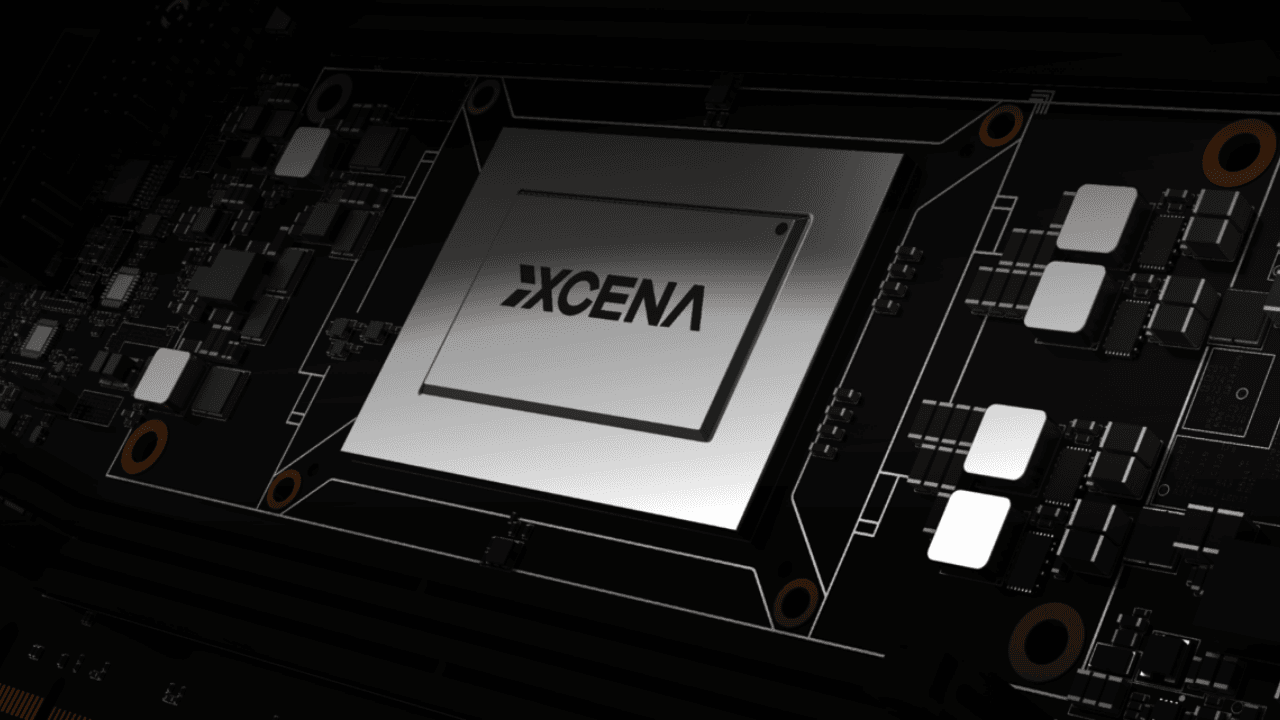
South Korea-based semiconductor startup XCENA announced it has raised $135 million in a Series B funding round. Atinum Investment and IMM Investment co-led the investment, with participation from Corstone Asia, SBI Investment, and Mirae Asset Capital. Founded in 2022, the company has now raised a total of $185 million and reached a valuation of $570 million.
XCENA develops semiconductor technologies aimed at solving memory and data transfer bottlenecks in AI data centers. The company argues that constant data movement between CPUs, GPUs, and memory in AI systems creates significant cost and performance inefficiencies. To address this, XCENA is working on a memory-centric architecture that brings processing power closer to where data resides.
The startup's MX1 chip is designed to handle tasks such as data preprocessing, cache management, and data transfer directly on the memory module, reducing the workload on CPUs and GPUs. The chip focuses on inference processes for large language models and generative AI applications. XCENA aims to lower data center costs, improve energy efficiency, and enable AI infrastructure to operate with fewer servers.
XCENA was founded by Dohun Kim and Harry Juhyun Kim. The company plans to use the new funding to accelerate mass production of the MX1 chip, advance product development, and initiate commercial-scale deployment for AI data center customers. The Series B round brings the startup's total funding to $185 million since its inception in 2022.
The company's valuation now stands at $570 million, reflecting investor confidence in its memory-centric approach to AI hardware. XCENA's technology targets the growing demand for efficient AI inference in data centers, where power and cost constraints are becoming increasingly critical.
XCENA's MX1 chip is expected to enter mass production in the near term, with commercial deployments planned for AI data center clients. The company has not disclosed specific timelines or customer names but stated that the funding will support scaling operations and meeting market demand.
"This investment validates our vision of transforming AI data center architecture through memory-centric computing," said Dohun Kim, co-founder of XCENA, in a statement. The company aims to deliver tangible improvements in performance and energy efficiency for AI workloads.
Apple Targets September Launch for New Apple TV and HomePod Mini
Apple plans to release new Apple TV and HomePod Mini models in September, according to reliable analysts. The devices are expected to feature incremental hardware updates, with the timing driven by Apple's AI initiatives.

Apple is preparing to strengthen its smart home ecosystem with long-awaited product updates. According to information from trusted technology analysts, the next-generation Apple TV and HomePod Mini models will officially go on sale this September. The two devices are not expected to undergo radical hardware changes, with the launch timeline primarily determined by Apple's new moves in the artificial intelligence space.
The upcoming Apple TV is anticipated to feature an upgraded processor, likely the A16 Bionic chip, to support enhanced streaming capabilities and smoother integration with smart home accessories. The device may also include improved support for high refresh rate displays and advanced audio codecs. However, the overall design and core functionality are expected to remain similar to the current model.
The new HomePod Mini is rumored to incorporate a more advanced Siri experience, leveraging Apple's latest AI models for better voice recognition and contextual understanding. The smart speaker may also gain support for additional smart home protocols, such as Thread and Matter, to improve interoperability with third-party devices. Audio quality improvements are also possible, though the compact form factor is likely to stay unchanged.
Analysts suggest that Apple's focus on AI is the primary driver behind the September launch window. The company is reportedly developing a new on-device AI engine that will power features like personalized recommendations, adaptive audio tuning, and proactive home automation. These capabilities are expected to debut on the new Apple TV and HomePod Mini, giving users a more intelligent and seamless smart home experience.
The timing of the release aligns with Apple's typical product cycle, as the company often unveils new hardware in September alongside the iPhone lineup. This year, the new Apple TV and HomePod Mini could be announced at the same event, allowing Apple to showcase its integrated ecosystem. The devices are expected to ship shortly after the announcement, with pre-orders opening on the same day.
Pricing for the new Apple TV is expected to start at $179 for the 64GB model, while the 128GB version with Ethernet may cost $199. The HomePod Mini is likely to retain its $99 price point, though a potential higher-end variant with additional sensors could be priced at $129. Availability will begin in the United States first, followed by other major markets in Europe and Asia within weeks.
Apple has not officially confirmed these details, but the company's supply chain partners have reportedly begun ramping up production for the new devices. The September launch is seen as a strategic move to capture holiday season demand and solidify Apple's position in the smart home market. The new Apple TV and HomePod Mini are expected to go on sale starting September 22.
NVIDIA unveils RTX Spark AI superchip for Windows PCs at Computex
NVIDIA introduced the RTX Spark superchip at Computex, designed to deliver AI and graphics performance to Windows laptops and small desktops. The chip offers 1 petaflop of AI compute and is positioned as a portable version of the $3,999 DGX Spark.
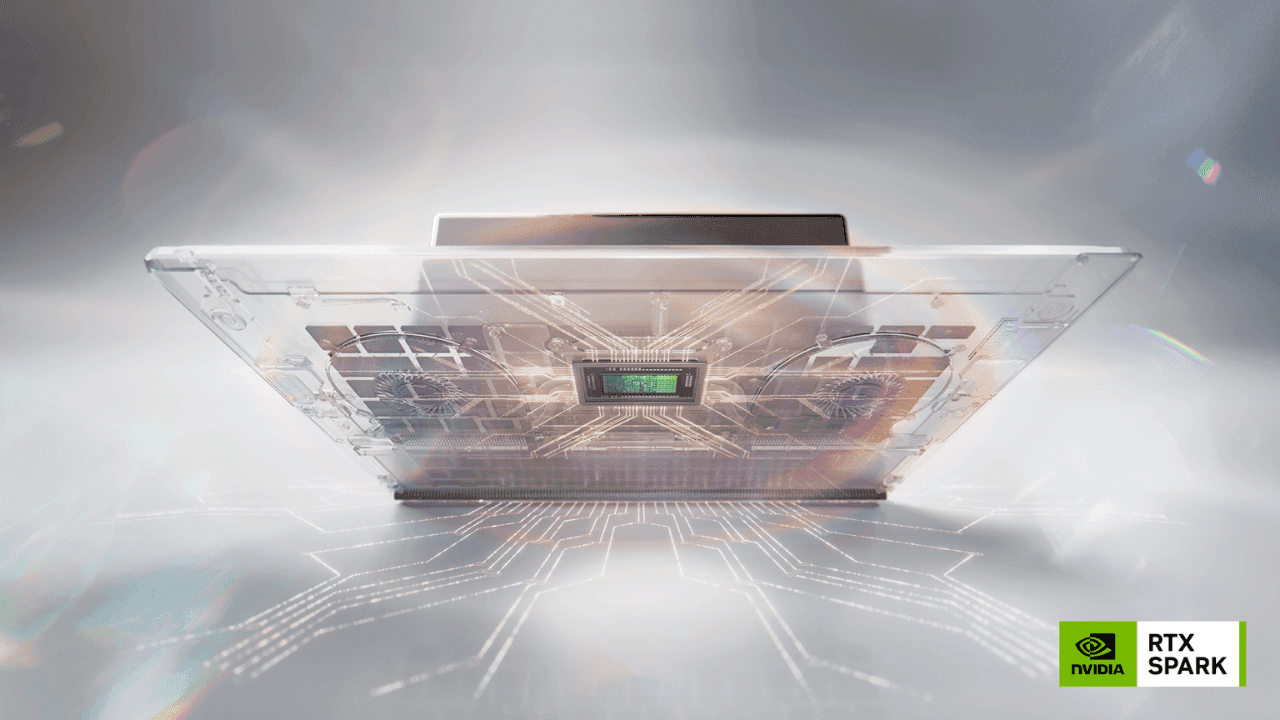
NVIDIA took the stage at Computex to announce the RTX Spark, a new superchip built for Windows-based computers. The chip targets both laptops and compact desktop systems, aiming to accelerate artificial intelligence and graphics workloads. According to NVIDIA, the RTX Spark will power upcoming devices from major OEMs, including the Surface Laptop Ultra and Dell XPS 16.
The RTX Spark is positioned as a portable counterpart to the company's DGX Spark, a $3,999 AI mini desktop. While the DGX Spark runs on Linux and primarily serves large enterprises and AI developers, the RTX Spark is designed for Windows and aims to be more accessible to content creators and those new to AI development.
NVIDIA claims the RTX Spark delivers 1 petaflop of AI compute performance. The chip integrates 6,144 Blackwell RTX cores alongside 20 Mediatek Arm CPU cores. NVIDIA noted that this configuration resembles the RTX 5070 laptop GPU but with significantly lower power consumption.
The chip includes a neural processing unit (NPU) fast enough to meet Microsoft's Copilot+ requirements, which mandate 40 TOPS. For AI tasks, the RTX Spark leverages tensor cores within its Blackwell GPU architecture. The GPU can directly access a unified memory pool ranging from 16 GB to 128 GB, while the chip itself consumes between single-digit watts and 80 W.
NVIDIA CEO Jensen Huang described the RTX Spark as a complete reinvention of the PC. He stated that the chip transforms PCs into devices designed for AI agents. Huang emphasized that the RTX Spark represents a fundamental shift in how computers handle AI workloads.
NVIDIA collaborated with Microsoft over several years to design the RTX Spark. Pavan Davuluri, Microsoft's head of Windows and devices, confirmed that the company optimized Windows 11's workload profile scheduling for the new chip. Davuluri explained that whether users are checking emails or running a local agent for code debugging, the Windows scheduler on RTX Spark will ensure optimal performance and efficiency from the CPU.
The RTX Spark is expected to appear in systems from all major OEMs. Pricing and specific release dates for individual devices have not yet been announced. NVIDIA positioned the chip as a bridge between high-end AI development platforms and mainstream Windows computing.
NVIDIA's announcement at Computex underscores the company's push to embed AI capabilities into everyday computing devices. The RTX Spark aims to bring advanced AI processing to a broader audience without requiring specialized hardware or Linux-based systems.

MSI Unveils MEG Vision X2 AI Plus Desktop with Holographic Dragon Display
MSI announced the MEG Vision X2 AI Plus, a flagship desktop PC featuring a cylindrical 'AI Holostage' display on the front panel that projects a holographic dragon. The system runs a local AI model to animate the dragon and interact with users.
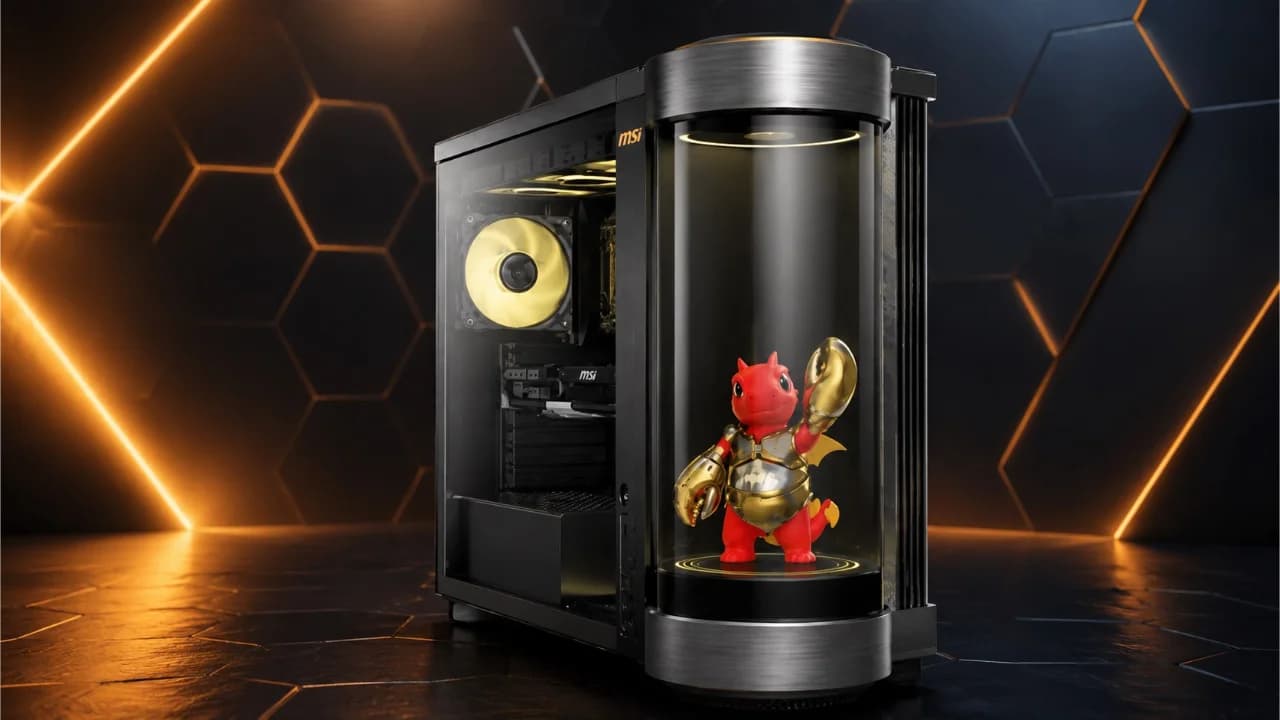
MSI is generating buzz ahead of Computex 2026 with the announcement of its new flagship desktop computer, the MEG Vision X2 AI Plus. The system targets high-end gamers and technology enthusiasts, reimagining the traditional PC chassis with a radical design overhaul. The front panel integrates a cylindrical display called the AI Holostage, which projects a holographic dragon that appears to live inside the case.
The AI Holostage runs a local AI model that powers the dragon's animations and interactions. The dragon responds to system events, user commands, and environmental data, creating a dynamic visual experience. MSI designed the display to serve as both an aesthetic centerpiece and a functional interface for monitoring system status.
Under the hood, the MEG Vision X2 AI Plus packs top-tier components tailored for demanding gaming and content creation workloads. The system supports the latest Intel Core processors and NVIDIA GeForce RTX graphics cards, though MSI has not disclosed specific configurations or performance benchmarks. The chassis incorporates advanced cooling solutions to manage heat from high-power components.
The AI Holostage is not merely decorative; it can display real-time system metrics such as CPU temperature, GPU load, and fan speeds. Users can interact with the dragon through voice commands or gestures, with the AI model processing inputs locally to ensure low latency. MSI emphasized that all AI processing occurs on-device, with no data sent to the cloud.
MSI positioned the MEG Vision X2 AI Plus as a statement piece for enthusiasts seeking a unique desktop experience. The company noted that the holographic display represents a shift toward integrating AI-driven interactivity into PC hardware. The dragon's behavior can be customized through software, allowing users to adjust its responsiveness and visual effects.
Pricing and availability details remain unannounced. MSI plans to reveal full specifications, pricing, and release dates during Computex 2026, which runs from June 2 to June 6 in Taipei. The MEG Vision X2 AI Plus will likely carry a premium price tag consistent with MSI's flagship MEG series.
MSI has not confirmed whether the AI Holostage technology will appear in other products or remain exclusive to this model. The company's Computex booth will showcase the system alongside other new hardware, including motherboards and peripherals. Early demonstrations suggest the holographic dragon responds fluidly to user interactions, though final software tuning may occur before launch.
MSI stated that the MEG Vision X2 AI Plus redefines the relationship between user and machine by making the PC's internal components visible and interactive. The company expects the system to appeal to collectors and modders who value both performance and visual flair. Full product details will be shared at Computex 2026.

Intel Unveils Xeon 6+ Series with 288 Cores for AI and Cloud Data Centers
Intel announced the Xeon 6+ (Clearwater Forest) processor family, built on the Intel 18A node, featuring up to 288 cores. The new chips target AI and cloud computing workloads in data centers.
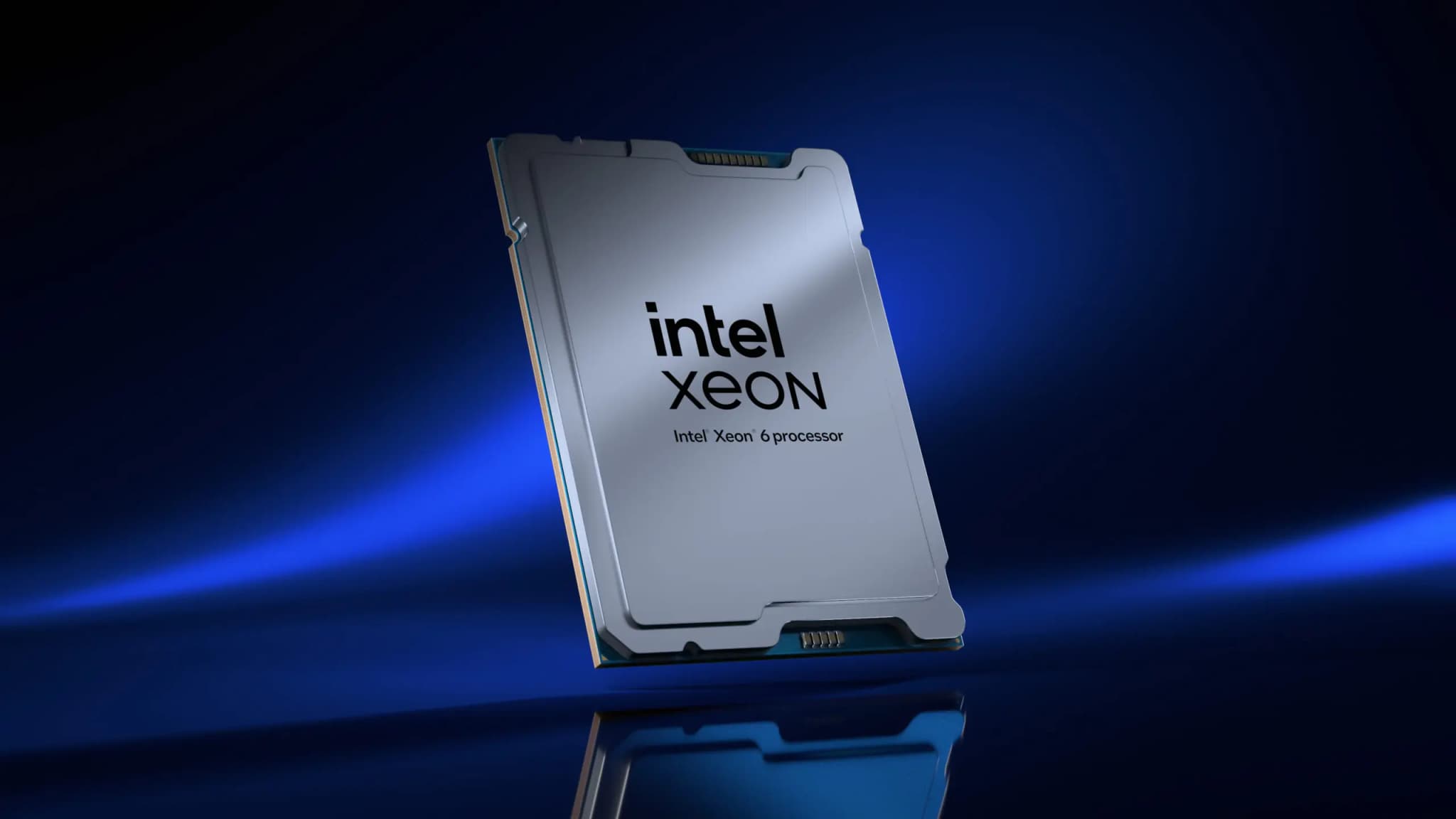
Intel has officially introduced its next-generation Xeon 6+ processor family, code-named Clearwater Forest, designed for data centers and AI infrastructure. The new chips are built on the company's most advanced manufacturing process, the Intel 18A node, and deliver up to 288 cores per socket. The announcement comes as demand for computing power in AI and cloud services continues to surge.
The Xeon 6+ series represents a significant architectural leap from its predecessors. Intel 18A technology incorporates RibbonFET gate-all-around transistors and PowerVia backside power delivery, enabling higher performance and energy efficiency. The 288-core configuration targets massively parallel workloads such as large language model training, inference, and high-performance computing.
Intel positions the new processors as a direct response to the growing computational demands of modern data centers. The company emphasized that the Xeon 6+ will support advanced memory and I/O technologies, including DDR5 memory and PCIe 5.0 interfaces, to minimize bottlenecks in data-intensive applications. Specific clock speeds and thermal design power figures have not yet been disclosed.
The Clearwater Forest architecture introduces several microarchitectural improvements over the previous Granite Rapids and Sierra Forest designs. Intel claims the new cores deliver a substantial increase in instructions per clock, though exact performance metrics will be shared closer to launch. The processors also incorporate enhanced AI acceleration capabilities through integrated matrix engines.
Intel expects the Xeon 6+ to compete directly with AMD's EPYC processors and Arm-based server chips from companies like Ampere Computing. The company has not announced specific pricing or volume availability dates but indicated that sampling to key customers will begin in the first half of 2025. Production ramp is anticipated later that year.
Data center operators and cloud service providers are expected to be the primary customers for the Xeon 6+ series. Intel highlighted that the processors will be compatible with existing LGA 7529 socket platforms, easing upgrades for current Xeon users. The company also confirmed support for Intel's oneAPI software stack to simplify development across heterogeneous architectures.
Intel's announcement underscores its commitment to regaining leadership in the server processor market, where it has faced intense competition. The Xeon 6+ series is part of a broader roadmap that includes future generations built on Intel 14A and beyond. The company stated that the new chips will help customers achieve significant performance-per-watt improvements for AI and cloud workloads.
Intel plans to provide additional technical details at upcoming industry events, including the Hot Chips conference later this year. The Xeon 6+ processors are expected to enter volume production in the second half of 2025, with general availability following shortly after. Pricing will be announced at that time.