SpaceX files for IPO that could be the largest in history
SpaceX has filed its S-1 prospectus with the SEC, initiating what may become the largest initial public offering ever. The company reported $18.67 billion in revenue for 2025, driven by Starlink, but posted a net loss of $4.9 billion.

SpaceX has taken a major step toward going public, filing its S-1 prospectus with the Securities and Exchange Commission. The document sets the stage for what could be the largest initial public offering in history when the company lists on the Nasdaq under the ticker SPCX.
According to The Wall Street Journal, SpaceX generated $18.67 billion in revenue in 2025. The Starlink satellite internet service was the primary driver, contributing more than $11 billion to that total. The company's revenue has grown substantially as Starlink expands its subscriber base and launches additional satellites.
Despite the revenue growth, SpaceX reported a net loss of over $4.9 billion last year. The New York Times noted that capital expenditures surged to $20.7 billion in 2025, up from $11.2 billion in 2024. These investments likely reflect the costs of developing the Starship rocket and expanding the Starlink constellation.
The filing comes after years of speculation about when SpaceX would go public. Elon Musk, the company's founder and CEO, has previously indicated that an IPO would occur once the company's Mars colonization plans were more mature. However, the financial demands of Starlink and Starship may have accelerated the timeline.
SpaceX's S-1 filing provides the first detailed look at its financials. The company has historically been private, with limited disclosure of its performance. The prospectus reveals the scale of its operations and the significant capital required to sustain its ambitious projects.
Starlink has become SpaceX's primary revenue source, with over 5 million subscribers globally as of early 2026. The service offers high-speed internet in remote areas and has secured contracts with governments and airlines. However, the business remains capital-intensive, requiring continuous satellite launches and ground infrastructure.
The IPO is expected to attract significant investor interest given SpaceX's dominance in the space industry. The company has a valuation estimated at over $200 billion in private markets. The offering could raise tens of billions of dollars, surpassing the record set by Alibaba's $25 billion IPO in 2014.
SpaceX has not yet announced the number of shares to be offered or the price range. The S-1 filing is the first step in a process that typically takes several months. The company will need to respond to SEC comments and market conditions before setting a final date for the listing.
The Verge reported that xAI, Musk's artificial intelligence company, recently completed a funding round. However, the IPO filing focuses solely on SpaceX's business, which includes launch services, Starlink, and the Starship development program.
xAI Faces Lawsuit Over Generators, Plans $2.8B Turbine Purchase
Elon Musk's xAI is being sued over its data center generators and plans to buy $2.8 billion in natural gas turbines over three years, per a SpaceX IPO filing.
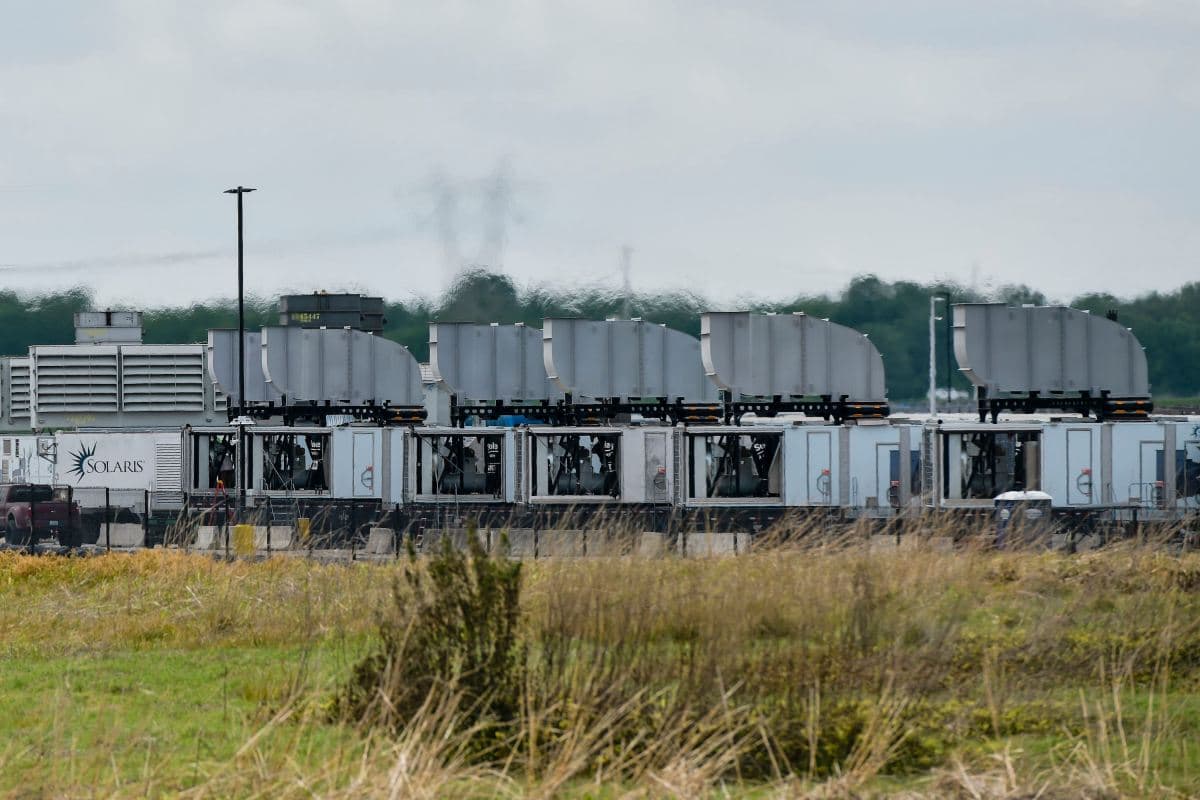
Elon Musk's artificial intelligence company xAI is facing a lawsuit related to its data center generators. The legal action centers on the environmental impact of the equipment used to power its computing infrastructure. Details of the lawsuit remain limited, but it adds to the regulatory and public scrutiny surrounding the company's operations.
In a separate development, xAI disclosed plans to purchase $2.8 billion worth of natural gas turbines over the next three years. The information emerged from a filing related to SpaceX's initial public offering, which included details about xAI's capital expenditures. The turbines are intended to support the energy needs of xAI's expanding data centers.
The purchase represents a significant investment in fossil fuel-based power generation, despite growing pressure on tech companies to adopt renewable energy sources. xAI's reliance on natural gas has drawn criticism from environmental groups, who argue that the company should prioritize cleaner alternatives.
xAI's data centers are critical for training and running its large language models, which require substantial computational power. The company has been scaling up its infrastructure to compete with other AI firms like OpenAI and Google DeepMind. The turbine acquisition is part of a broader strategy to ensure reliable energy supply for its operations.
The lawsuit and the turbine purchase come at a time when Musk's companies face increased scrutiny over their environmental practices. Tesla, another Musk-led company, has positioned itself as a leader in sustainable energy, but xAI's fossil fuel investments contrast with that image.
SpaceX's IPO filing, which included the xAI turbine details, has not been made public in full. However, the disclosure provides a rare glimpse into xAI's financial commitments and energy strategy. The company has not commented on the lawsuit or the turbine purchase beyond the filing.
xAI's data center locations and the specific turbine models have not been disclosed. The company is expected to take delivery of the turbines over the next three years, with installations likely at multiple sites. The total cost of $2.8 billion underscores the scale of xAI's infrastructure ambitions.
The lawsuit and turbine purchase highlight the tensions between AI development and environmental sustainability. As xAI moves forward with its energy investments, it will face ongoing legal and public relations challenges. The company has not provided a timeline for resolving the lawsuit or details on any mitigation measures for the turbines' emissions.

NanoClaw Creator Rejects $20M Buyout, Secures $12M Seed Round
The developer of NanoClaw, a secure container-based alternative to OpenClaw, turned down a $20 million acquisition offer and instead raised $12 million in seed funding. NanoClaw was originally built for the Cohen brothers' AI marketing firm to run agents in sandboxed containers.

The creator of NanoClaw has declined a $20 million buyout proposal, opting to raise $12 million in seed funding instead. NanoClaw emerged as a secure alternative to OpenClaw, designed to run AI agents in isolated containers rather than directly on a host machine. The project was initially developed to support the Cohen brothers' AI marketing firm, which relied on software agents to automate much of its workflow.
NanoClaw distinguishes itself from OpenClaw by executing agents within sandboxed containers, providing an additional layer of security. This architecture prevents agents from accessing the host system directly, reducing the risk of unauthorized data exposure or system compromise. The container-based approach allows for easier deployment and scaling across different environments.
The Cohen brothers' firm used NanoClaw to manage a fleet of AI agents that handled tasks such as content generation, data analysis, and customer outreach. By running these agents in containers, the firm could ensure that each agent operated in an isolated environment, minimizing the potential for interference or security breaches.
The $12 million seed round was led by venture capital firms that focus on enterprise security and AI infrastructure. The funding will be used to expand the development team, enhance the platform's security features, and build out integrations with popular container orchestration tools. The company plans to release a public beta later this year.
NanoClaw's decision to reject the buyout reflects the team's belief in the long-term potential of the platform. The founder stated that the acquisition offer undervalued the technology's impact on secure AI agent deployment. The seed funding provides the company with the resources to grow independently and capture a larger share of the emerging market for containerized AI agents.
The platform is currently in private beta with a handful of enterprise customers. Pricing has not been announced, but the company expects to offer a tiered subscription model based on the number of containers and agents deployed. General availability is targeted for the first quarter of next year.
NanoClaw is available as a hosted service or as a self-hosted solution for organizations with strict data residency requirements. The self-hosted option allows companies to deploy NanoClaw on their own infrastructure, ensuring full control over data and compliance with regulatory standards. The company has already received interest from financial services and healthcare sectors.
"We built NanoClaw to solve a real problem in the AI agent space: security and isolation," said the founder in a statement. "This funding allows us to bring that solution to a wider audience without compromising our vision."

Airbnb expands beyond homes with luggage storage and car rental bookings
Airbnb is adding luggage storage and car rental services to its platform, expanding beyond short-term rentals. The company also introduced AI tools for host onboarding and customer support.

Airbnb announced plans to offer luggage storage and car rental bookings through its app, marking a significant expansion beyond its core vacation rental business. The new services will be available in select markets starting later this year, the company said during its quarterly earnings call.
The luggage storage feature will allow travelers to drop off bags at partner locations, such as hotels or local shops, for a fee. Car rentals will be integrated through a partnership with an unnamed provider, enabling users to book vehicles directly within the Airbnb app. Pricing details have not been disclosed.
In addition to the new travel services, Airbnb is rolling out artificial intelligence tools to streamline host onboarding. The AI system will guide new hosts through listing creation, pricing suggestions, and house rules setup, reducing the time required to get a property live on the platform.
The company also deployed AI for customer support, using machine learning to handle common inquiries and escalate complex issues to human agents. Airbnb said the technology has already improved response times and resolution rates in pilot tests.
CEO Brian Chesky described the moves as part of a broader strategy to become a full-service travel platform. "We want to be the one-stop shop for every part of your trip," Chesky said on the earnings call. The luggage and car rental additions follow earlier experiments with experiences, restaurant reservations, and guided tours.
Airbnb reported strong financial results for the past quarter, with revenue growing 18% year over year to $2.7 billion. The company said it expects continued growth driven by international travel demand and new service offerings.
The luggage storage and car rental features will first launch in the United States and Europe, with a global rollout planned for 2025. Airbnb did not specify exact launch dates or partner names for the car rental service.
Hosts will not be directly involved in the new services, as Airbnb will manage the partnerships and logistics. The company emphasized that the expansions are designed to enhance the traveler experience without adding complexity for property owners.
Airbnb shares rose 3% in after-hours trading following the announcement. The company faces competition from traditional hotel booking sites and travel aggregators, but Chesky said the new services differentiate Airbnb by offering a cohesive trip planning experience.
Arteris FlexNoC and Magillem Deployed in Li Auto L9 SUV
Arteris announced that its FlexNoC network-on-chip IP and Magillem software have been adopted by Li Auto for the L9 Livis flagship SUV. The technology is used in Li Auto's proprietary autonomous driving SoCs.
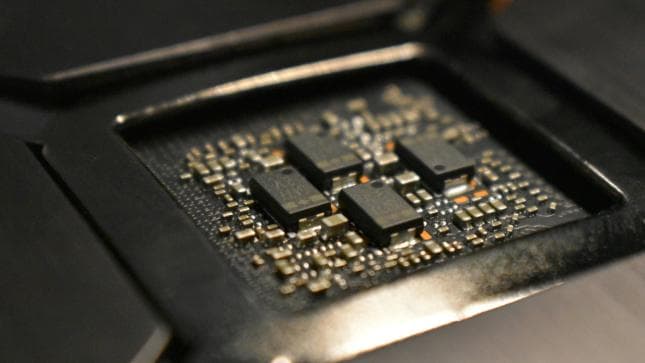
Arteris, a provider of network-on-chip interconnect IP and software, announced on May 19, 2026, that its FlexNoC NoC IP and Magillem software have been deployed in the Li Auto L9 Livis high-tech flagship SUV. The technology is integrated into Li Auto's proprietary autonomous driving systems-on-chip (SoCs).
The FlexNoC network-on-chip IP enables efficient on-chip communication between multiple processing elements in complex SoCs. Magillem software provides system-level design automation and management capabilities. Together, they support the high-performance and low-latency requirements of autonomous driving systems.
Li Auto's L9 SUV is a flagship model featuring advanced driver-assistance and autonomous driving functions. The proprietary SoCs leverage Arteris technology to handle sensor fusion, planning, and control tasks. The deployment marks a significant adoption of Arteris IP in the Chinese electric vehicle market.
Arteris CEO K. Charles Janac stated that the collaboration with Li Auto demonstrates the scalability and reliability of their interconnect solutions for automotive applications. The company emphasized that FlexNoC and Magillem help reduce design risk and time-to-market for complex SoCs.
The L9 SUV is already in production and available in China. Li Auto has not disclosed specific performance metrics or the number of SoCs per vehicle. However, the integration of Arteris technology is expected to enhance the vehicle's autonomous driving capabilities.
Arteris has a growing portfolio of automotive customers, including several major OEMs and Tier 1 suppliers. The company's IP is used in ADAS, infotainment, and powertrain applications. This deployment with Li Auto further strengthens its presence in the autonomous driving segment.
Financial terms of the agreement were not disclosed. Arteris shares traded at $12.45 on the Nasdaq following the announcement, up 2.3% from the previous close. The company continues to expand its customer base in the Asia-Pacific region.
Li Auto plans to integrate the same SoC architecture into future models, according to a company spokesperson. The L9 SUV remains the flagship vehicle in its lineup, with deliveries ongoing since 2025.