
Spotify Launches Desktop App to Rival Google's NotebookLM
Spotify has released a new desktop app as a research preview in over 20 markets, positioning it as a competitor to Google's NotebookLM. The app focuses on AI-powered note-taking and research assistance.

Spotify is entering the AI-assisted research space with a new desktop application, now available as a research preview in more than 20 markets. The app directly challenges Google’s NotebookLM, offering users a platform for note-taking and information synthesis. Spotify’s entry marks a significant expansion beyond its core music and podcast streaming services.
The application leverages artificial intelligence to help users organize and summarize information from various sources. It allows users to upload documents, web links, and other content, which the AI then processes to generate notes, summaries, and key insights. The tool is designed for students, researchers, and professionals who need to manage large volumes of information efficiently.
Spotify’s app integrates with its existing ecosystem, enabling users to access their research alongside music and podcasts. The interface is streamlined, focusing on simplicity and ease of use. Users can create projects, add notes, and collaborate with others, though collaboration features are limited in the preview phase.
Google’s NotebookLM, launched earlier this year, offers similar capabilities, including AI-generated summaries and question-answering based on uploaded documents. Spotify’s app differentiates itself by emphasizing audio integration, allowing users to listen to summaries or related content. This feature aligns with Spotify’s strength in audio delivery.
The research preview is available in over 20 markets, including the United States, United Kingdom, Canada, Australia, and several European countries. Spotify has not announced a timeline for a full public release, but the preview allows early adopters to test the app and provide feedback. The company plans to iterate based on user input.
Pricing for the app has not been disclosed, but it is expected to be free during the preview period. Spotify may introduce subscription tiers or integrate the tool into existing premium plans in the future. The app requires a Spotify account to use, but a premium subscription is not necessary for access.
Spotify’s move into AI research tools reflects a broader trend of tech companies expanding into productivity and education. The company faces stiff competition from Google, Microsoft, and startups like Notion and Roam Research. However, Spotify’s audio-centric approach could carve out a niche for users who prefer auditory learning.
Interested users can download the app from Spotify’s website. The research preview is available now in supported markets, and Spotify encourages users to share their experiences to help shape the final product. The company has not specified when the preview will end or when a stable version will launch.
Google adds voice-based prompting to Docs and Keep for hands-free creation
Google has introduced voice-based prompting in Docs and Keep, allowing users to create drafts, take notes, and search for emails using voice commands. The feature is rolling out to Workspace users.

Google is rolling out a new voice-based prompting feature across its Workspace suite, enabling users to create drafts, take notes, and search for emails using spoken commands. The update targets Docs and Keep, two of the company’s most widely used productivity tools. Users can now dictate content directly into documents or notes without relying on keyboard input.
The feature leverages Google’s speech recognition technology to transcribe spoken words in real time. In Docs, users can initiate voice typing by selecting “Voice typing” from the Tools menu or using the Ctrl+Shift+S shortcut. Keep users can tap the microphone icon within a note to start dictation. The system supports natural language commands, such as “create a bullet list” or “bold that,” to format text hands-free.
Beyond simple dictation, the update integrates with Google’s search capabilities. Users can say “search for email from John” or “find my meeting notes” to pull up relevant results without navigating away from their current document. This cross-app functionality aims to streamline workflows by reducing the need to switch between tabs or applications.
Google emphasized that the voice features are designed for accessibility and efficiency. The company noted that the tool can benefit users with mobility impairments or those who prefer speaking over typing. The voice data is processed on-device for privacy, though some commands may require cloud processing for complex queries.
The rollout began this week for Workspace customers, including Business, Enterprise, and Education tiers. Free personal Google accounts will also gain access, though the timeline may vary by region. Google plans to expand language support beyond English in future updates.
Administrators can manage voice settings through the Workspace admin console, including toggling the feature for specific organizational units. Google recommends users ensure their microphone permissions are enabled and that they are using a supported browser like Chrome or Edge.
Pricing remains unchanged; the feature is included in existing Workspace subscriptions at no additional cost. Google confirmed that no new hardware is required, as the feature works with standard computer microphones and mobile device mics.
“Voice is a natural way to interact with technology, and we’re excited to bring this capability to more Workspace apps,” a Google spokesperson said in a statement. The company plans to extend voice-based prompting to other Workspace tools later this year.

Google’s AI Studio now lets anyone build Android apps in minutes
Google has introduced new web-based AI tools that allow users to generate native Android applications in minutes. The tools are part of the company's broader push into AI-powered software development.

Google has launched a set of web-based AI tools that enable users to create native Android applications within minutes. The announcement was made during the company's latest developer event, where executives demonstrated the system's ability to generate functional apps from simple text prompts. The tools are integrated into Google's AI Studio platform, which previously focused on prototyping with large language models.
The system uses a combination of natural language processing and code generation to produce Android apps. Users describe their desired app in plain English, and the AI generates the corresponding Kotlin or Java code, along with XML layouts and resource files. The generated apps can include features such as user authentication, database integration, and API calls, depending on the complexity of the request.
Google emphasized that the tools are designed to lower the barrier to entry for app development. The company stated that even individuals with no prior programming experience can build functional applications. However, the generated code may require manual refinement for production-ready apps, as the AI occasionally produces suboptimal or incomplete implementations.
The new capabilities are powered by Google's Gemini model, which has been fine-tuned on Android development documentation and open-source projects. The system also incorporates feedback loops that allow users to iteratively refine their apps by providing additional instructions or corrections. Google claims this iterative process can reduce development time from weeks to minutes for simple applications.
Industry analysts noted that the move positions Google to compete with other AI-powered development platforms, such as GitHub Copilot and Amazon CodeWhisperer. However, Google's offering is unique in its focus on generating complete, runnable Android projects rather than just code snippets. The company also highlighted that the generated apps comply with Android's Material Design guidelines by default.
The tools are available immediately through the AI Studio web interface. Google plans to expand the system to support more complex app architectures and additional platforms in future updates. The company also announced that developers can export their projects to Android Studio for further customization.
Pricing for the AI Studio platform remains unchanged, with a free tier offering limited usage and paid tiers for higher quotas. Google stated that the app generation feature is included in all tiers, though the free tier may have restrictions on the number of generated projects per day. The company did not disclose specific limits.
Google's vice president of developer relations said in a statement that the goal is to "democratize app development" and enable more people to bring their ideas to life. The executive acknowledged that the technology is still evolving and encouraged developers to provide feedback to improve the system. The company plans to release regular updates based on user input.

Adaptive Intelligence 1.0.1: Self-Improving Retrieval Orchestration Framework Launches
The release of Adaptive Intelligence 1.0.1 introduces a self-improving retrieval orchestration framework that uses reinforcement learning for routing, conditional graph activation, and evaluation-driven learning. This update aims to enhance the efficiency and accuracy of information retrieval systems.
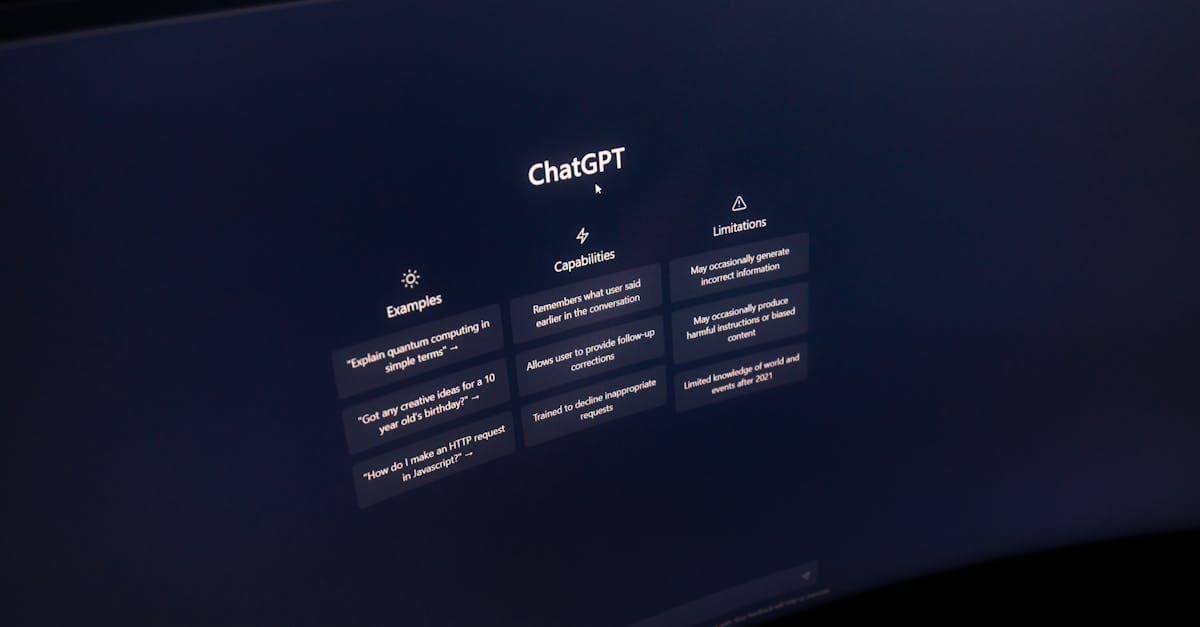
A new version of the Adaptive Intelligence framework, 1.0.1, has been released, introducing a self-improving retrieval orchestration system. The framework leverages reinforcement learning (RL) to optimize routing decisions, enabling more efficient information retrieval across complex data landscapes. This release marks a significant step forward in adaptive AI systems, focusing on dynamic and context-aware data access.
The core innovation lies in its RL-based routing mechanism, which learns from interactions to direct queries to the most relevant data sources. Additionally, the framework employs conditional graph activation, allowing it to activate only necessary parts of a knowledge graph based on the query context. This reduces computational overhead and improves response times. Evaluation-driven learning further refines the system by using performance metrics to continuously adjust its strategies.
Adaptive Intelligence 1.0.1 is designed for enterprise applications where large-scale data retrieval is critical, such as in search engines, customer support systems, and research databases. By automating the orchestration process, it reduces the need for manual tuning and adapts to changing data patterns. The framework supports integration with existing data infrastructures, making it versatile for various industries.
Compared to traditional retrieval systems, which rely on static rules, Adaptive Intelligence offers a more flexible and efficient approach. Its ability to self-improve over time means it can handle evolving data environments without constant human intervention. This is particularly beneficial for organizations dealing with rapidly growing datasets or shifting user needs.
Users can expect faster query responses and more accurate results, as the framework learns to prioritize high-value data sources. The update is available for all current users of the Adaptive Intelligence platform, with no additional cost for the base version. Enterprises can also opt for premium support and customization services.
While the framework is already operational, further enhancements are planned, including deeper integration with cloud services and support for more complex graph structures. The development team is also exploring ways to incorporate user feedback directly into the learning loop. Future releases will likely focus on scalability and real-time adaptation capabilities.