STARTRADER CEO Peter Karsten Delivers AI Keynote at University of Adelaide
STARTRADER CEO Peter Karsten delivered an online keynote titled 'AI Starter' to the University of Adelaide community. The address marks an early step in the company's commitment to youth education in artificial intelligence and future skills.
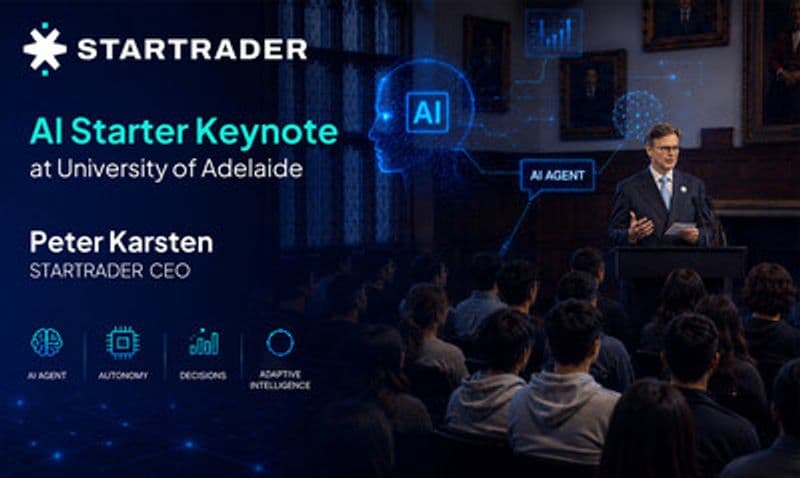
STARTRADER CEO Peter Karsten delivered an online keynote address to academic staff and students at the University of Adelaide. The presentation, titled 'AI Starter,' focused on artificial intelligence and future skills. The event took place on May 20, 2026, according to a company announcement from Dubai, UAE.
The keynote represents an early initiative in STARTRADER's broader commitment to youth education in AI. Karsten addressed the university community remotely, sharing insights on the evolving landscape of artificial intelligence. The company has not disclosed specific details about the content of the presentation.
STARTRADER, a global brokerage firm, has been expanding its educational outreach programs. The company's focus on AI education aligns with growing industry demand for skilled professionals in the field. The University of Adelaide has not issued a separate statement regarding the event.
The online format allowed for broad participation from students and faculty. Karsten's address is part of a series of educational engagements the company plans to undertake. STARTRADER has not announced further details about future events at this time.
The company's commitment to AI education comes as industries worldwide increasingly adopt artificial intelligence technologies. STARTRADER's initiative targets equipping young people with relevant skills for the future job market. The brokerage firm has not specified any financial contributions or partnerships related to the program.
STARTRADER operates as an online trading platform offering forex, commodities, and indices. The company has a presence in multiple countries and has been investing in technology and education. The University of Adelaide keynote is one of several corporate social responsibility activities undertaken by the firm.
No further information about the keynote's reception or follow-up plans has been released. STARTRADER stated that the address marks an early step in its youth education commitment. The company continues to explore opportunities to support AI learning initiatives.
SpaceX IPO Filing Reveals Extensive Financial Ties to Elon Musk’s Other Companies
SpaceX has filed for its initial public offering, a historic event that could make Elon Musk the world's first trillionaire. The filing documents reveal extensive financial interactions between SpaceX and Musk's other ventures, including Tesla, xAI, and X.
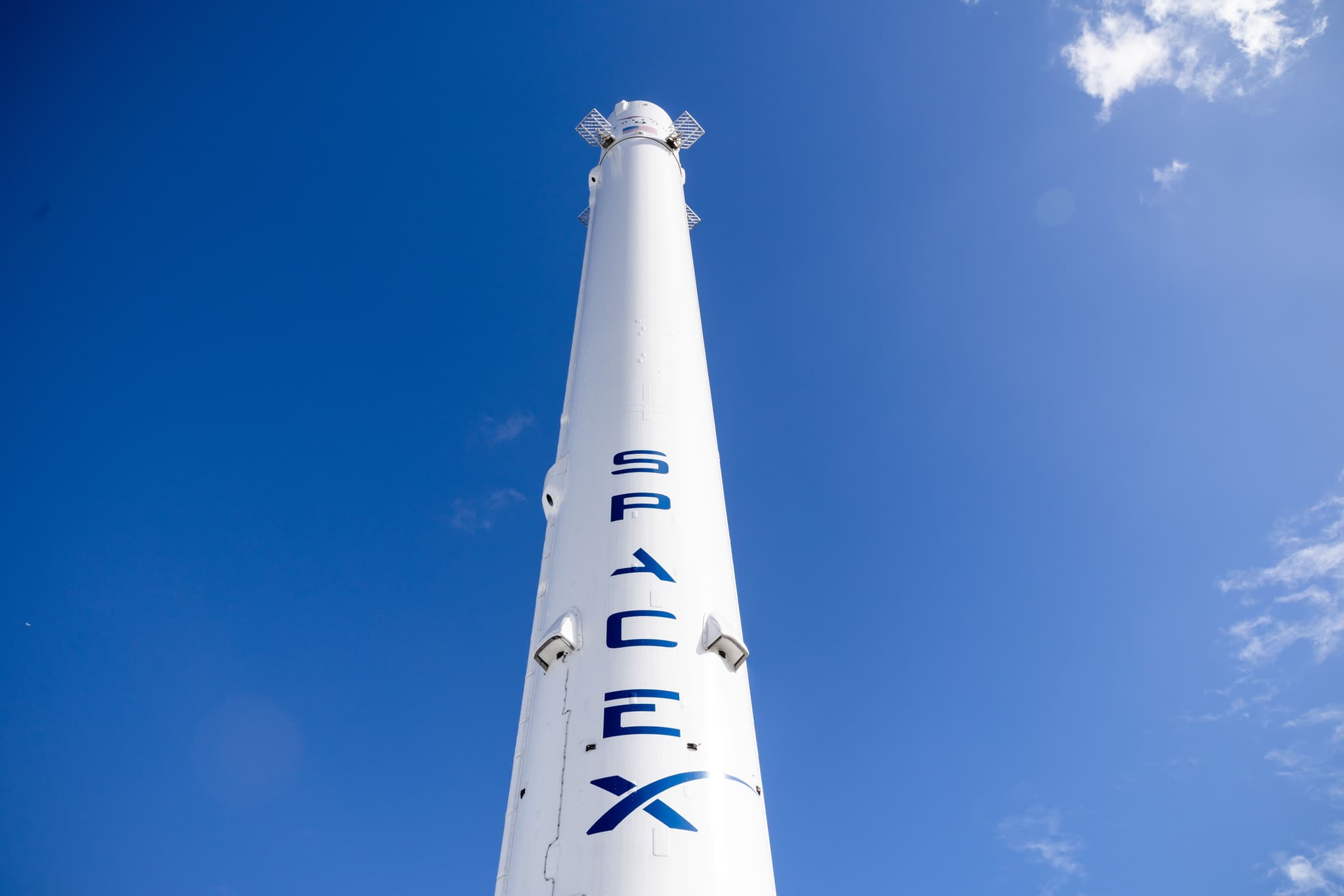
SpaceX has officially filed for its initial public offering, marking a milestone that could propel Elon Musk to become the world's first trillionaire. The IPO documents, spanning 330 pages, detail not only the company's rocket launches and interplanetary ambitions but also the intricate web of financial relationships between SpaceX and Musk's other businesses. A search for "Tesla" within the filing yields 87 mentions, while xAI appears 356 times and X 267 times. Even the Boring Company and Neuralink receive seven and three mentions, respectively.
The filing sheds light on how Musk's companies interact and overlap, often shuffling money in ways that can be difficult to track. These connections are evident in both obvious and subtle forms throughout the prospectus. The document provides a rare glimpse into the financial network that ties together Musk's diverse portfolio of ventures, from electric vehicles and artificial intelligence to social media and tunneling.
Investors and analysts are scrutinizing the IPO filing for insights into SpaceX's financial health and growth prospects. The company has long been a dominant player in the aerospace industry, with a valuation that has soared due to its reusable rocket technology and Starlink satellite internet business. However, the extensive references to Musk's other companies raise questions about potential conflicts of interest and the allocation of resources.
The filing details various transactions and agreements between SpaceX and Musk's other entities. For instance, SpaceX has contracts with Tesla for battery supply and with X for advertising and data services. These arrangements are part of a broader strategy to leverage synergies across Musk's companies, but they also introduce complexities for investors trying to assess SpaceX's standalone performance.
SpaceX's IPO is expected to be one of the largest in history, with the company seeking to raise billions of dollars to fund its ambitious plans, including the Starship spacecraft and missions to Mars. The offering comes at a time when Musk's public persona and controversial statements have drawn both praise and criticism, potentially affecting investor sentiment.
The IPO documents also highlight the risks associated with Musk's leadership and his involvement in multiple ventures. The filing explicitly lists Musk's other commitments as a risk factor, noting that his attention and resources are divided among several companies. This could impact SpaceX's operations and decision-making, particularly if conflicts arise.
Despite these concerns, SpaceX's track record of innovation and market leadership has generated significant investor interest. The company has successfully launched numerous missions for NASA and commercial clients, and its Starlink service is rapidly expanding its subscriber base. The IPO is expected to price later this year, with shares trading on a major stock exchange.
As the IPO process unfolds, regulators and investors will closely examine the financial ties between SpaceX and Musk's other companies. The filing provides a comprehensive overview of these relationships, but further disclosures may be required to ensure transparency. For now, the document offers a fascinating look at the interconnected empire of one of the world's most influential entrepreneurs.

Indian Gen Z, millennials top global AI confidence at work: Deloitte
According to Deloitte's Global Gen Z and Millennial Survey, about 90% of Indian Gen Z and millennial professionals regularly use AI tools at work, and a majority feel confident applying AI in their roles, outpacing global peers.
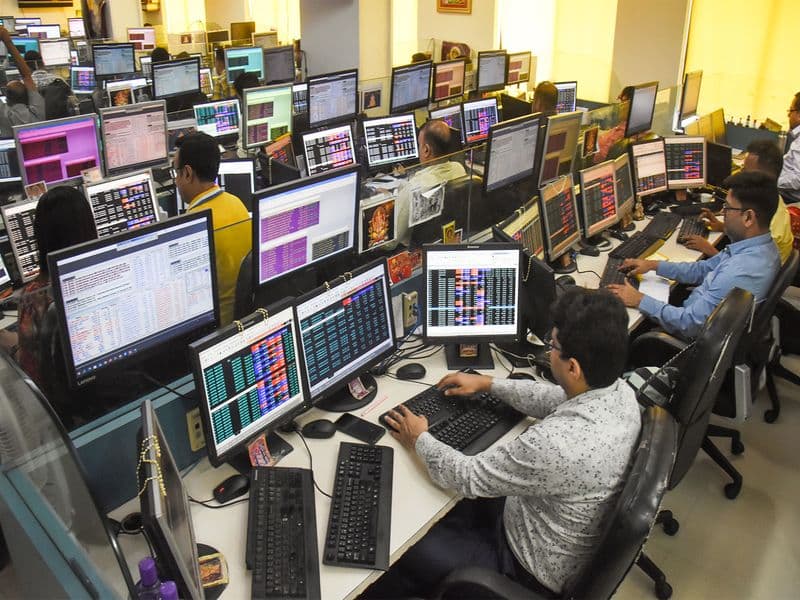
Indian Gen Z and millennial professionals are adopting artificial intelligence at the workplace at a faster pace than their global counterparts, according to Deloitte's latest Global Gen Z and Millennial Survey. The survey found that roughly 90 percent of respondents in India regularly use AI tools in their jobs. A majority of these workers expressed confidence in applying the technology to their roles, a sentiment that surpasses global averages.
The survey, which polled over 22,000 respondents across 44 countries, highlights India's leading position in AI integration. Among Indian Gen Z and millennials, 86 percent reported feeling confident about using AI at work, compared to 70 percent globally. Additionally, 74 percent of Indian respondents said they believe AI will enhance their career prospects, versus 60 percent worldwide.
Deloitte's findings also indicate that Indian professionals are more likely to view AI as a tool for efficiency and skill development rather than a threat. Only 12 percent of Indian respondents expressed concern about AI replacing their jobs, significantly lower than the global average of 24 percent. This optimism is reflected in their willingness to upskill: 78 percent of Indian Gen Z and millennials said they are actively learning about AI.
The survey further revealed that Indian workers are using AI for a variety of tasks, including data analysis, content creation, and automation of routine processes. About 65 percent of respondents said they use AI to improve productivity, while 58 percent use it for problem-solving. These figures are notably higher than global benchmarks.
Deloitte noted that India's strong digital infrastructure and emphasis on STEM education may contribute to this trend. The country's large pool of tech-savvy young professionals is driving early adoption, with many companies integrating AI into their workflows. The survey also found that organizations in India are more likely to provide AI training, with 55 percent of respondents reporting access to such programs, compared to 40 percent globally.
Despite the positive outlook, the survey highlighted areas for improvement. Only 45 percent of Indian respondents felt their employers had clear guidelines for ethical AI use, and 38 percent expressed concerns about data privacy. Deloitte recommended that companies invest in transparent AI policies and continuous learning opportunities to sustain this momentum.
The survey was conducted between October and November 2024, with responses collected online. Deloitte's report underscores India's potential to lead in AI-driven workplace transformation, though it cautions that addressing ethical and privacy concerns will be critical for long-term success. The full findings are available on Deloitte's website.

Raghav Chadha Files Delhi High Court Petition Against AI Deepfakes
Rajya Sabha MP Raghav Chadha has approached the Delhi High Court seeking protection of his personality rights against alleged misuse through artificial intelligence and digitally manipulated content. The matter is scheduled to be heard by Justice Subramonium Prasad on May 21.

Rajya Sabha MP Raghav Chadha has moved the Delhi High Court, requesting an injunction against the unauthorized use of his name, image, and voice through artificial intelligence and deepfake technology. The petition, filed on May 20, seeks to restrain individuals and entities from creating, publishing, or distributing manipulated digital content that misappropriates his persona. The court will hear the matter on May 21 before Justice Subramonium Prasad.
Chadha's legal action targets the growing threat of deepfakes, which use AI to generate realistic but fabricated audio and video. The petition argues that such content can cause irreparable harm to his reputation and public image. It cites specific instances where manipulated media allegedly portrayed him in a false light, though details of those instances were not disclosed in court filings.
The MP's plea emphasizes that personality rights—including control over one's name, likeness, and voice—are integral to an individual's identity and privacy. It contends that the unauthorized use of these attributes through AI tools violates his right to publicity and constitutes a form of digital impersonation. The petition seeks a permanent injunction against the creation and dissemination of such content.
This case adds to a growing body of litigation in India addressing deepfake misuse. In recent months, several public figures have sought legal remedies against AI-generated content, including actors and politicians. The Delhi High Court has previously issued interim orders in similar cases, recognizing the need to balance free speech with personality rights.
Chadha's counsel argued that existing laws, including the Information Technology Act and the Copyright Act, provide insufficient protection against deepfakes. The petition calls for a broader interpretation of personality rights to cover digital manipulations. It also requests that social media platforms and search engines be directed to remove infringing content proactively.
The hearing on May 21 will determine whether the court grants an interim injunction pending a full trial. If granted, the order could set a precedent for how Indian courts handle AI-generated impersonation. Legal experts note that the outcome may influence future regulations on deepfake technology in the country.
Chadha, a member of the Aam Aadmi Party, has been active in parliamentary debates on technology and privacy. His petition reflects growing concerns among lawmakers about the misuse of AI for disinformation. The case highlights the tension between technological innovation and individual rights in the digital age.
The matter is listed for hearing on May 21 before Justice Subramonium Prasad at the Delhi High Court.

Four Energy Stocks Poised to Benefit from AI-Driven Power Demand
The article highlights four energy stocks—Williams Companies (WMB), EQT Corporation (EQT), Vistra Corp (VST), and NextEra Energy (NEE)—that are positioned to capitalize on the growing electricity demand from artificial intelligence infrastructure. These companies are expected to play a key role in powering the buildout of AI data centers.

The rapid expansion of artificial intelligence is reshaping energy markets, creating opportunities for companies that can meet surging electricity demand. A recent analysis identifies four stocks that could benefit from this trend: Williams Companies (WMB), EQT Corporation (EQT), Vistra Corp (VST), and NextEra Energy (NEE). These firms are positioned to supply power for the massive data centers required to train and run AI models.
Williams Companies operates a vast natural gas pipeline network across the United States. Natural gas is increasingly used to generate electricity for data centers due to its reliability and lower carbon footprint compared to coal. As AI workloads grow, Williams' infrastructure could see higher utilization rates.
EQT Corporation is the largest natural gas producer in the United States. The company's low-cost production base gives it a competitive advantage in supplying fuel for power plants serving AI data centers. EQT's reserves in the Appalachian Basin are strategically located near major demand centers.
Vistra Corp is an integrated power company with a diverse generation fleet including natural gas, nuclear, and renewables. The company has been actively adding capacity to meet rising electricity demand from technology companies. Vistra's retail business also provides a direct channel to commercial and industrial customers.
NextEra Energy is the world's largest wind and solar energy producer. The company's renewable projects are increasingly paired with battery storage to provide round-the-clock power for data centers. NextEra's regulated utility in Florida also benefits from population growth and economic expansion.
The analysis notes that AI data centers require significant amounts of electricity, with some facilities consuming as much power as a small city. This demand is expected to grow rapidly over the next decade, driving investment in new generation capacity and grid infrastructure.
Investors should consider the risks associated with energy stocks, including regulatory changes, commodity price volatility, and technological shifts. However, the long-term outlook for electricity demand from AI appears robust, supporting the case for these four companies.
Williams Companies, EQT Corporation, Vistra Corp, and NextEra Energy each offer exposure to different segments of the energy value chain. Together, they represent a diversified approach to investing in the buildout of AI infrastructure.
As of the publication date, these stocks trade at valuations that reflect their growth prospects. The article suggests that investors may be overlooking these opportunities amid the broader AI hype focused on technology companies.