Maka Kids Raises $3M for Streaming App Focused on Child Development
Maka Kids, a startup building a streaming app for children ages zero to six, has raised $3 million in seed funding. The app features content optimized for healthy development rather than engagement.

Maka Kids has secured $3 million in seed funding to expand its streaming platform designed for young children. The startup focuses on children from birth to age six, offering content curated for developmental well-being rather than maximizing screen time engagement.
The company’s app provides videos and interactive content vetted by child development experts. Maka Kids emphasizes that its programming aims to support cognitive, social, and emotional growth, differentiating itself from traditional children’s media that often prioritizes keeping kids glued to the screen.
Founders say the funding will be used to grow the content library and improve the app’s recommendation algorithms. The platform uses a proprietary framework to evaluate how each piece of content aligns with developmental milestones for different age groups.
Maka Kids also incorporates parental controls that allow caregivers to set time limits and view reports on what their child has watched. The app does not include advertisements or in-app purchases, relying on a subscription model for revenue.
The seed round was led by a group of impact investors focused on early childhood education. The startup plans to launch additional features, including offline viewing and multilingual content, in the coming months.
Maka Kids is currently available on iOS and Android devices in the United States. The company offers a free trial period, with subscriptions priced at $4.99 per month or $49.99 per year.
“We believe screen time can be a positive force when the content is designed with intention,” said the company’s CEO in a statement. The startup aims to partner with pediatricians and educators to further validate its content selection process.
Fragrance Tech Startup Patina Raises $2 Million from Betaworks and True Ventures
Patina, a fragrance technology company, announced a $2 million funding round from investors including Betaworks and True Ventures. The startup aims to modernize the fragrance industry with its innovative approach.

Patina, a fragrance technology startup, disclosed on Thursday that it has secured $2 million in funding. The investment round included participation from Betaworks and True Ventures, among other investors. The company is positioning itself to disrupt a fragrance industry that has seen little change in nearly 50 years.
The startup focuses on leveraging technology to create personalized fragrance experiences. Patina's platform uses data and algorithms to help customers find scents tailored to their preferences. The company believes that traditional fragrance retail relies heavily on subjective recommendations and limited sampling options.
Patina's approach involves a proprietary scent-matching system that analyzes user inputs to suggest fragrances. The system aims to reduce the guesswork involved in selecting perfumes and colognes. The company also offers a subscription model for regular deliveries of personalized scents.
The fragrance industry has long been dominated by established brands with extensive distribution networks. Patina seeks to challenge this status quo by using direct-to-consumer sales and digital tools. The startup argues that many consumers find the current fragrance shopping experience outdated and inefficient.
With the new capital, Patina plans to expand its technology development and marketing efforts. The company intends to grow its team and enhance its algorithm to improve scent recommendations. Betaworks and True Ventures bring experience in backing tech-driven consumer brands.
Patina's funding round comes as the broader fragrance market shows steady growth. The global perfume market is valued at over $50 billion, with increasing demand for personalized products. However, the industry has been slow to adopt digital innovations compared to other consumer goods sectors.
The startup faces competition from other fragrance tech companies and traditional retailers that are beginning to explore personalization. Patina's success will depend on its ability to scale its technology and attract a loyal customer base. The company has not disclosed its valuation or revenue figures.
Patina's service is currently available in the United States. The company plans to use the funding to improve its online platform and customer experience. The startup aims to make fragrance selection more accessible and enjoyable for consumers.
"We are excited to partner with Betaworks and True Ventures to transform the fragrance industry," said a Patina spokesperson. The company expects to launch new features in the coming months as it works to modernize how people discover and buy fragrances.

SpaceX IPO to Enrich Elon Musk and Inner Circle Most
Elon Musk holds the largest stake in SpaceX by billions of shares, and the other biggest shareholders have deep ties to him. The upcoming IPO is expected to primarily benefit Musk and his inner circle.

Elon Musk stands to gain the most from SpaceX's initial public offering, holding a stake valued in the billions of shares. The company's other major shareholders also maintain longstanding personal and professional connections to Musk. These insiders are positioned to reap substantial rewards when SpaceX goes public.
SpaceX has not yet announced a specific date for its IPO, but the company has been preparing for the transition. The offering is expected to be one of the most anticipated in recent years, given SpaceX's dominance in the commercial space industry. Musk's ownership stake is the largest among all shareholders, giving him significant influence over the company's direction.
The inner circle of investors includes early backers and executives who have been with SpaceX since its founding. These individuals have held their shares for years, and the IPO will provide a liquidity event for them. Many of these shareholders have non-public roles within the company or are part of Musk's extended network.
SpaceX's valuation has soared in recent years, driven by its successful Starlink satellite internet service and reusable rocket technology. The company is now valued at over $100 billion in private markets. The IPO could push that valuation even higher, depending on market conditions.
Retail investors will have the opportunity to purchase shares in the IPO, but they are unlikely to see the same level of returns as early backers. The allocation of shares typically favors institutional investors and those with existing relationships with the underwriters. Musk and his inner circle will be the primary beneficiaries of the offering.
The exact timeline for the IPO remains uncertain, with SpaceX executives citing market conditions and regulatory approvals as factors. The company has not filed its S-1 registration statement with the SEC, a necessary step before going public. Analysts expect the IPO to occur within the next year or two.
SpaceX's financial performance has improved, with the company reporting profitability in recent quarters. Starlink has become a major revenue driver, and the company continues to win contracts from NASA and the U.S. military. These factors contribute to the company's attractiveness to public market investors.
Elon Musk has stated that SpaceX will go public once it has a regular cadence of flights to Mars. That milestone is still years away, but the company is making progress toward that goal. In the meantime, the IPO will provide a windfall for Musk and his closest associates.

Convective Capital Raises $85 Million Fund for Disaster Resilience
Convective Capital has closed an $85 million fund to invest in technologies addressing disaster resilience. The firm, which initially focused on fire tech, is broadening its mandate to cover a wider range of natural disasters.

Convective Capital announced the closing of an $85 million fund aimed at building disaster resilience. The venture capital firm, which originally launched to invest in fire technology, is now expanding its focus to include a broader set of natural disasters. The fund will target early-stage companies developing solutions for wildfire, flood, hurricane, and other climate-related events.
The firm's managing partner, Bill Clerico, said the decision to broaden the mandate came from recognizing that many technologies for fire resilience also apply to other disasters. Convective Capital has already made investments in several startups, including Gridware, which uses sensors to detect power line faults that can spark wildfires, and Caption, a company that provides real-time data on flood risks.
The new fund, called Convective Capital Fund II, will write checks ranging from $500,000 to $5 million. Clerico emphasized that the firm is looking for companies with hardware and software solutions that can be deployed quickly and scale effectively. He noted that the disaster resilience market is growing rapidly as climate change increases the frequency and severity of extreme weather events.
Convective Capital's portfolio also includes companies like Fireball, which develops autonomous aircraft for firefighting, and Rain, a startup that uses weather modification technology to prevent wildfires. The firm plans to invest in 20 to 25 companies with the new fund, focusing on the United States initially but with potential for global expansion.
Limited partners in the fund include institutional investors, family offices, and strategic partners from the insurance and utility sectors. Clerico said the firm's approach is to back entrepreneurs who are building technologies that can save lives and property while also generating strong financial returns.
The fundraise comes as venture capital investment in climate tech has surged, with disaster resilience becoming an increasingly important sub-sector. Convective Capital's previous fund, which closed at $35 million in 2021, was solely focused on fire tech. The new fund represents a significant increase in size and scope.
Clerico stated that the firm is already evaluating potential investments in areas such as early warning systems, resilient infrastructure, and disaster response logistics. He added that Convective Capital aims to be the leading venture firm in the disaster resilience space, providing not only capital but also operational support and industry connections.
The fund is now open for business, and Convective Capital expects to deploy the capital over the next three to four years. The firm is based in San Francisco and has a network of advisors with expertise in emergency management, climate science, and public policy.

Stilta raises $10.5M from a16z and YC to help companies rediscover the patents they forgot they had
Stilta announced a $10.5 million seed round led by Andreessen Horowitz, with participation from Y Combinator and operators from OpenAI, Legora, and Lovable. The company uses AI to help businesses identify and manage underutilized patents in their portfolios.
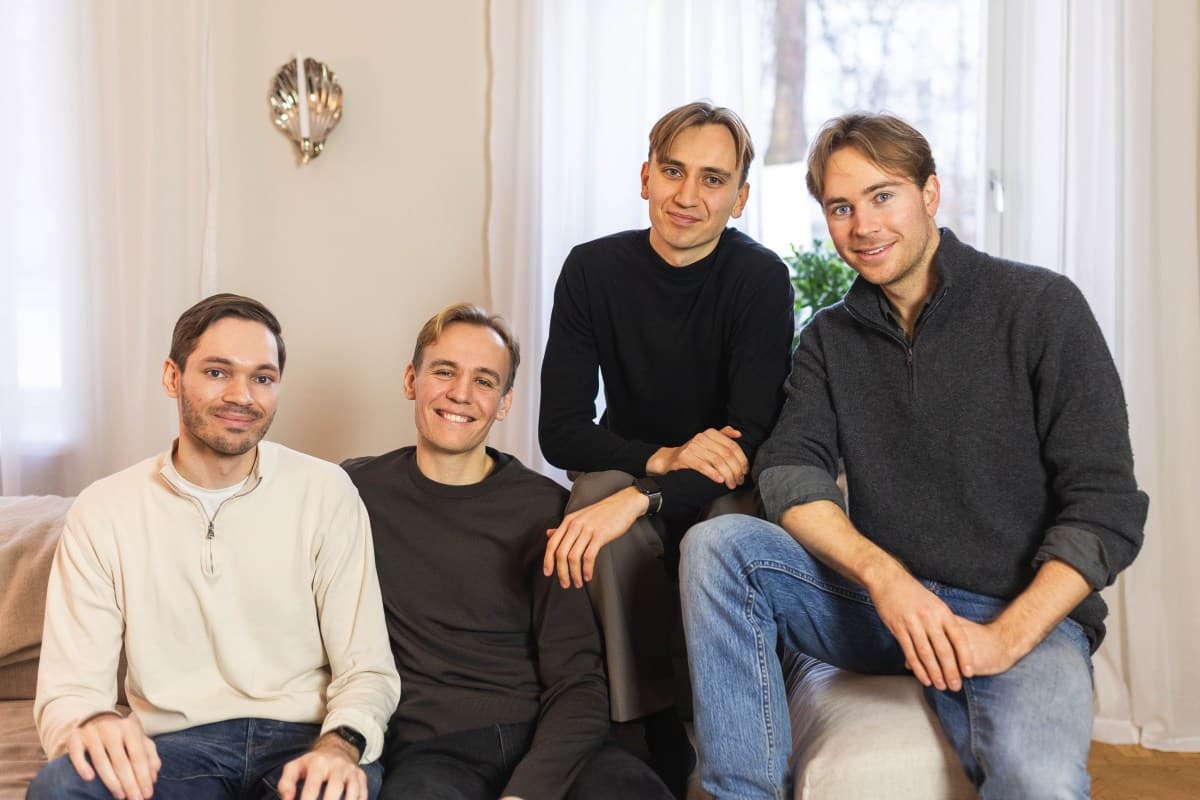
Stilta announced Tuesday a $10.5 million seed round led by Andreessen Horowitz. Other investors in the round include Y Combinator and operators from companies like OpenAI, Legora, and Lovable. The startup aims to solve a common problem for large corporations: forgotten patents buried in their portfolios.
Many companies hold thousands of patents but lack the resources to track them all. Stilta's platform uses artificial intelligence to scan patent databases and identify assets that may be valuable but overlooked. The system analyzes legal status, market relevance, and potential licensing opportunities.
The software integrates with existing intellectual property management tools. It provides dashboards that highlight patents nearing expiration or those with untapped commercial potential. Stilta claims its technology can reduce the time spent on patent audits by up to 80%.
Stilta was founded by former patent attorneys and AI researchers. The team previously worked at firms specializing in IP litigation and technology transfer. They observed that many clients held patents worth millions but had no systematic way to evaluate them.
The company plans to use the funding to expand its engineering team and accelerate product development. Stilta also aims to build partnerships with law firms and corporate IP departments. The startup currently serves a handful of Fortune 500 clients in pilot programs.
Stilta's approach addresses a growing need as patent portfolios become more complex. The number of active patents in the U.S. has surpassed 3 million, according to the U.S. Patent and Trademark Office. Companies often acquire patents through mergers or R&D but fail to integrate them into strategic planning.
The seed round brings Stilta's total funding to $12 million. The company declined to disclose its valuation. Andreessen Horowitz general partner David Ulevitch will join Stilta's board as part of the investment.
Stilta is headquartered in San Francisco and has a remote team of 15 employees. The company plans to double its headcount over the next year. It is currently hiring for roles in machine learning, software engineering, and customer success.