Philips 24B2D5300 Business Monitor features screens on both sides
Philips has announced the 24B2D5300 Business Monitor, a dual-sided display with screens on both sides. The monitor is designed for professionals who need to share their screen with someone across the desk, such as car salespeople or doctors.
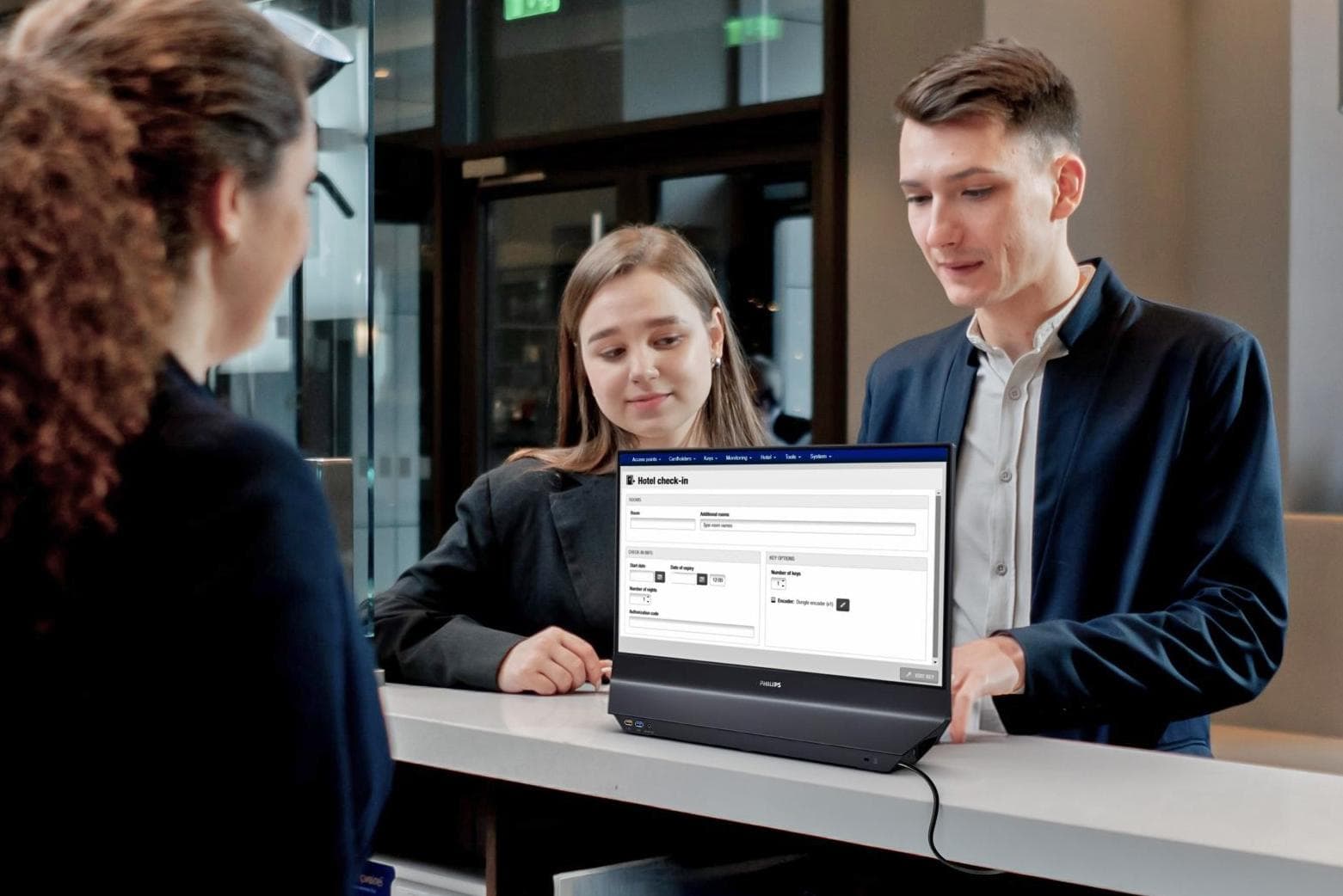
Philips has introduced a monitor with a design that breaks from convention. The 24B2D5300 Business Monitor features screens on both sides, a configuration the company says is a first for a display. The product targets professionals who frequently need to show their screen to someone sitting opposite them.
Front desk staff, car salespeople walking buyers through configurations, and doctors conferring with patients are among the use cases Philips envisions. The dual-sided design eliminates the need to physically turn the monitor around. Co-working applications are also possible, the company notes.
The monitor will launch in parts of Europe starting next month. Pricing is set at £359.99, which converts to approximately $484. Digital Camera World first reported the details. The product is already listed on Philips' UK and other European websites.
Technical specifications for the 24B2D5300 include a 24-inch panel on each side. The exact resolution and other display metrics have not been fully detailed. The monitor is positioned as a business tool rather than a consumer device.
Philips has not announced a release date for other regions, including North America. The company's focus remains on the European market for the initial rollout. The monitor's name, while straightforward, reflects its intended commercial audience.
The dual-screen design addresses a specific ergonomic challenge. Workers who frequently share their screen with clients or colleagues often resort to awkward setups. Philips aims to solve that with a monitor that shows the same content on both sides.
Availability will begin in Europe next month at the listed price of £359.99. Philips has not confirmed whether the monitor will see a wider release beyond Europe at this time. The product is listed on the company's official UK site.
Firefox 'Project Nova' redesign brings rounded UI and simplified privacy controls
Mozilla is overhauling Firefox with a rounded design called 'Project Nova' that includes a redesigned Settings section for easier access to privacy controls, including a toggle to disable all AI features. The update, rolling out later this year, also features bubble-like tabs and a fire-inspired color palette.
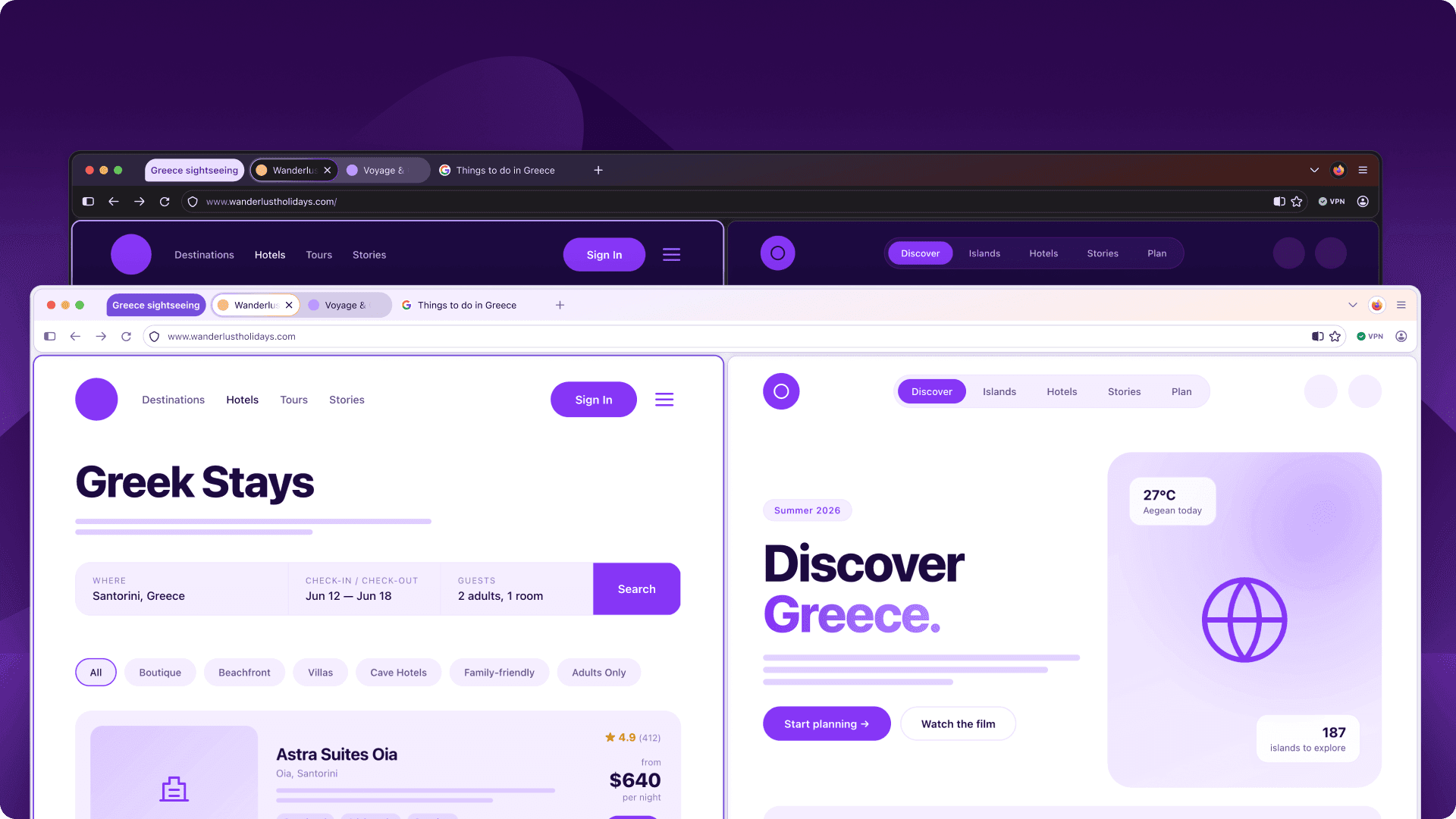
Mozilla has announced a major visual overhaul for its Firefox browser, internally dubbed 'Project Nova.' The redesign introduces rounded UI elements throughout the interface, including bubble-shaped tabs, and a refreshed color palette inspired by fire. The company plans to begin rolling out the update later this year.
A key focus of Project Nova is simplifying access to privacy settings. The redesigned Settings section will make it easier for users to find and adjust privacy controls, including a single switch to turn off all present and future AI features. Mozilla emphasized that AI features and models are not downloaded to a user's computer unless they choose to use them.
The update also includes refreshed icons designed to be more visually consistent across both light and dark themes. Mozilla aims to create a more cohesive and modern look while maintaining the browser's core functionality.
Project Nova represents Mozilla's effort to modernize Firefox's interface while keeping privacy and user control at the forefront. The rounded design language aligns with trends seen in other browsers and operating systems, but Mozilla is putting its own spin with the fire-inspired palette.
Mozilla has not provided a specific release date for Project Nova, but confirmed it will begin rolling out later this year. The redesign will be available on all platforms where Firefox is supported, including Windows, macOS, Linux, Android, and iOS.
Users can expect the new look to arrive through regular browser updates. Mozilla has not announced any changes to Firefox's underlying performance or security features as part of this redesign.
The company stated that the goal of Project Nova is to make Firefox more intuitive and visually appealing while preserving the privacy features that distinguish it from competitors. The simplified privacy controls are intended to give users more transparency and control over their browsing experience.
Mozilla's announcement comes as browsers increasingly incorporate AI features, raising privacy concerns. By offering a single toggle to disable all AI functions, Firefox aims to provide users with a straightforward way to opt out of these features entirely.

Sonos Roam 2 portable speaker discounted to $134 for Memorial Day
The Sonos Roam 2 is on sale for $134 at Amazon, Best Buy, and Walmart for Memorial Day, matching its lowest price ever. The second-gen model adds Bluetooth pairing out of the box and a dedicated pairing button.
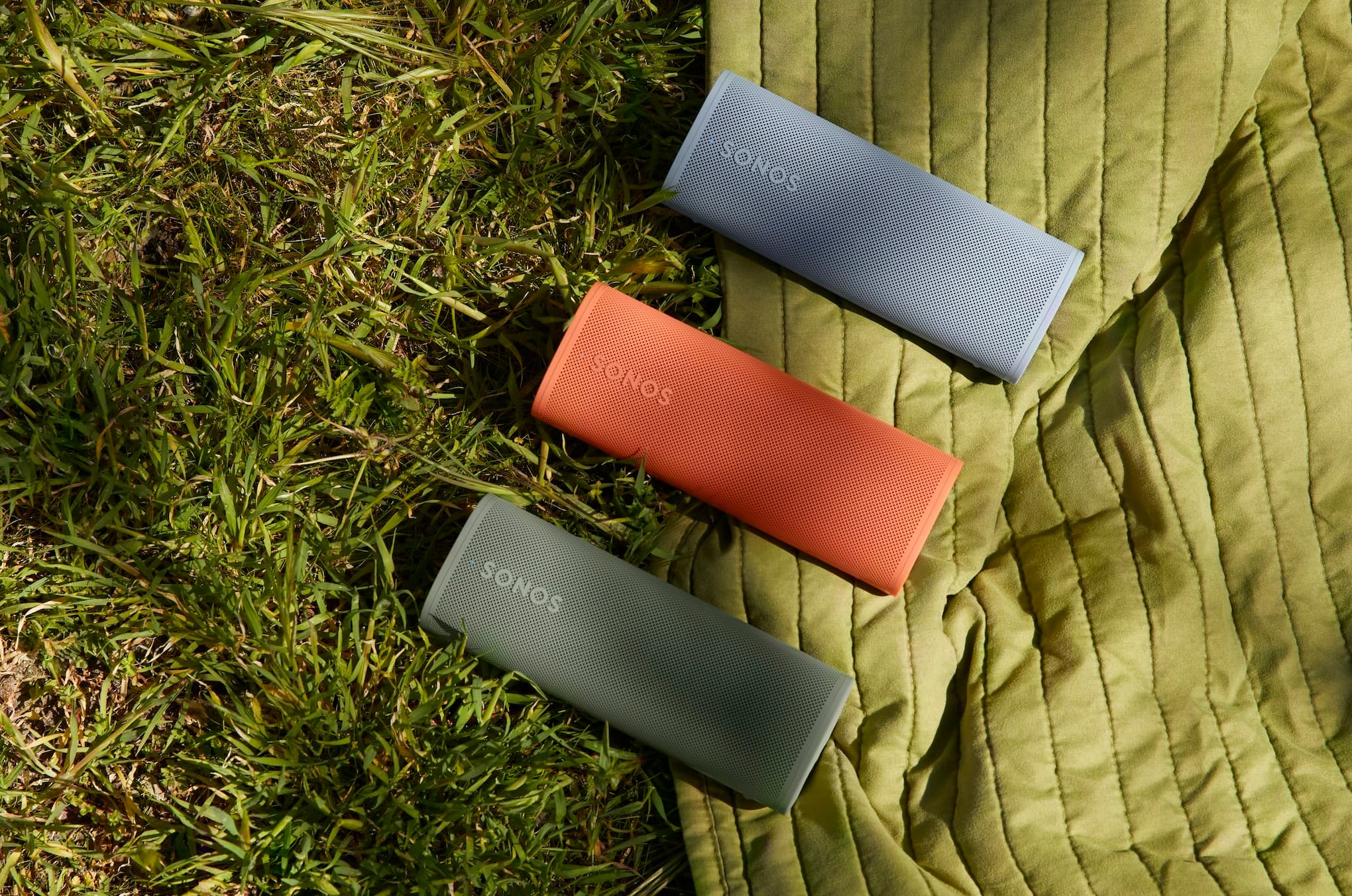
Sonos has discounted its Roam 2 portable Bluetooth speaker to $134 for Memorial Day, a $45 reduction from its usual $179 price. The deal is available at Amazon, Best Buy, and Walmart, matching the device's lowest price to date. The Roam 2 is designed for outdoor use, with a compact form factor and rugged build. It stands 6.61 inches tall and is roughly the size of a small water bottle, making it easy to carry in a backpack. The speaker carries an IP67 rating for dust and water resistance, and its battery lasts up to 10 hours on a single charge. Sonos says the battery life is sufficient for an afternoon at the pool or park. The second-generation model builds on the original Roam with several usability improvements. Unlike the first-gen model, which required setup through the Sonos app over Wi-Fi before Bluetooth could be used, the Roam 2 allows Bluetooth pairing immediately out of the box. It also adds a dedicated Bluetooth pairing button on the back, simplifying the process of connecting to multiple devices. The original model relied on a single, multi-use button for that function. In terms of audio performance, the Roam 2 delivers the same clear sound as its predecessor. It includes Sonos's Trueplay feature, which automatically adjusts the speaker's sound based on its surroundings. Users can switch between listening to the Roam 2 and other Sonos speakers, or stream audio from a Bluetooth-connected device across a Sonos system. The speaker's small size means it cannot produce the deep bass of larger party speakers or the new Sonos Move 2, but two Roam 2 units can be paired over Wi-Fi for stereo sound. The Memorial Day sale also includes discounts on other Sonos speakers. The Sonos Move 2 is priced at $399, down from $499, at Amazon, Best Buy, and Walmart. The Sonos Era 100 is available for $189, reduced from $219, at the same retailers. The Roam 2 deal is available now while supplies last. Sonos has not announced an end date for the promotion, but it is tied to the Memorial Day holiday weekend.

Viture's refurbished Luma Pro smart glasses drop to $271 at eBay with code
Viture's refurbished Luma Pro USB-C smart glasses are available for about $271 on eBay using code LONGWEEKEND, down from $499.99. The deal includes a 30-day return window and two-year warranty via Allstate.

Price remains a significant hurdle for many consumers interested in smart glasses for gaming, movie watching, or computer use. Most models start at $400 and climb higher, but a refurbished pair of Viture's Luma Pro USB-C smart glasses can now be purchased for roughly $271 on eBay with the promo code LONGWEEKEND. Each unit is described as being in "very good" condition, exhibiting "inconspicuous signs of use after being opened by users." While buying refurbished always carries some risk compared to new purchases, this deal includes a 30-day window for free returns and two years of warranty coverage through Allstate.
At under $300, the price point makes Viture's midrange smart glasses an attractive option. The Luma Pro offers a 52-degree field of view and supports up to 1080p resolution. A standout feature is the built-in diopter dials, which allow users to fine-tune each lens to their vision. This hardware-based adjustment makes content appear sharper compared to glasses that rely on software to simulate such visual corrections, including Viture's newer Beast model as well as Xreal's One and One Pro glasses.
These smart glasses are compatible with the Steam Deck and other gaming handhelds, laptops, and tablets that can output video over USB-C. However, they do not work out of the box with a Nintendo Switch 2. To enable support for that console, Viture's Pro Mobile Dock is required, which normally costs $129 at Amazon. A refurbished version of the dock is available on eBay for $79.20 using the same LONGWEEKEND code.
Other notable deals are also available. Nintendo's official USB camera for the Switch 2 console has dropped to $29.99 at Best Buy, down from $54.99. The price better reflects the camera's limited feature set and passable video quality. To use it with GameChat on the console, a Nintendo Switch Online subscription is required. With the camera, users can video chat with friends and have their video feed used in select games like Mario Kart World and the new Star Fox.
Puzzle game enthusiasts may want to check out Humble's latest bundle of Steam PC games. The "Perplexing Puzzles" bundle's $10 tier includes eight games and some coupons, with Viewfinder being a standout title. The first-person game challenges players to shift perspectives using clever mechanics, such as aligning photos to bridge gaps, to solve puzzles. Proceeds from the bundle support The Trevor Project, a nonprofit that aids LGBTQ-identifying teenagers.
Finding respectable gaming handhelds at good prices can be challenging, but the Asus ROG Ally is available for $499.99 during Best Buy's Memorial Day sale, a $100 discount. While not the first price cut on this model, it is worth considering for its ability to run many games well. The device features a seven-inch 120Hz refresh rate screen and includes three months of Xbox Game Pass Premium with purchase. Although initial reviews were not impressed, subsequent updates have improved the experience.
AI video tools evolve beyond cheap clips toward professional studio use
AI-generated video clips flooding social media are unlikely to replace Hollywood blockbusters, but new AI video solutions could transform studio workflows. The shift moves beyond simple slop toward tools that integrate into professional production pipelines.

A growing chorus on social media warns that Hollywood is doomed, citing AI-generated clips of Daniel Craig riding a Vespa through an Italian city, Godzilla battling King Kong, or The Avengers racing through Manhattan. These cheap, viral videos, however, are not about to replace big-budget blockbusters. Yet a new wave of AI video tools may fundamentally alter how studios approach production.
Until recently, AI companies primarily focused on generating short, often absurd clips that spread quickly online but lacked the polish or coherence needed for professional filmmaking. These early efforts were more about demonstrating technical novelty than delivering usable assets for studios. The output was frequently dismissed as slop by industry professionals.
Now, a shift is underway. Companies like Luma and Wonder Project have launched Innovative Dreams, a production company that aims to bridge the gap between AI experimentation and real-world studio needs. The venture signals a move toward integrating AI video generation into established workflows rather than replacing them wholesale.
These new solutions emphasize control, consistency, and quality. Instead of generating random clips, they allow filmmakers to iterate on scenes, adjust lighting and camera angles, and maintain character continuity across shots. This makes AI a practical tool for previsualization, storyboarding, and even final-frame rendering in certain contexts.
Studios have long used visual effects and computer-generated imagery, but AI video generation could accelerate pre-production and reduce costs. Directors might use AI to quickly test different visual approaches before committing to expensive shoots. Editors could generate placeholder footage to refine pacing and narrative flow.
Despite the promise, significant hurdles remain. AI-generated video still struggles with complex physics, realistic human expressions, and long-form narrative coherence. Legal and ethical questions around copyright and deepfakes also persist. Studios are proceeding cautiously, often using AI as a supplement rather than a replacement.
The availability of these tools varies. Some are offered as cloud-based services, while others require specialized hardware. Pricing models range from subscription fees to per-minute rendering costs. Early adopters include independent filmmakers and advertising agencies, but major studios are beginning to experiment behind closed doors.
Luma and Wonder Project's Innovative Dreams represents a concrete step toward professionalization. The company plans to produce original content using AI tools, demonstrating their capabilities in a real production environment. This could serve as a proof of concept for wider industry adoption.
As AI video technology matures, the line between amateur slop and professional-grade output will blur. For now, Hollywood remains far from cooked, but the ingredients for a new production workflow are being assembled. The industry's response will shape whether AI becomes a background tool or a transformative force.