Viture's refurbished Luma Pro smart glasses drop to $271 at eBay with code
Viture's refurbished Luma Pro USB-C smart glasses are available for about $271 on eBay using code LONGWEEKEND, down from $499.99. The deal includes a 30-day return window and two-year warranty via Allstate.

Price remains a significant hurdle for many consumers interested in smart glasses for gaming, movie watching, or computer use. Most models start at $400 and climb higher, but a refurbished pair of Viture's Luma Pro USB-C smart glasses can now be purchased for roughly $271 on eBay with the promo code LONGWEEKEND. Each unit is described as being in "very good" condition, exhibiting "inconspicuous signs of use after being opened by users." While buying refurbished always carries some risk compared to new purchases, this deal includes a 30-day window for free returns and two years of warranty coverage through Allstate.
At under $300, the price point makes Viture's midrange smart glasses an attractive option. The Luma Pro offers a 52-degree field of view and supports up to 1080p resolution. A standout feature is the built-in diopter dials, which allow users to fine-tune each lens to their vision. This hardware-based adjustment makes content appear sharper compared to glasses that rely on software to simulate such visual corrections, including Viture's newer Beast model as well as Xreal's One and One Pro glasses.
These smart glasses are compatible with the Steam Deck and other gaming handhelds, laptops, and tablets that can output video over USB-C. However, they do not work out of the box with a Nintendo Switch 2. To enable support for that console, Viture's Pro Mobile Dock is required, which normally costs $129 at Amazon. A refurbished version of the dock is available on eBay for $79.20 using the same LONGWEEKEND code.
Other notable deals are also available. Nintendo's official USB camera for the Switch 2 console has dropped to $29.99 at Best Buy, down from $54.99. The price better reflects the camera's limited feature set and passable video quality. To use it with GameChat on the console, a Nintendo Switch Online subscription is required. With the camera, users can video chat with friends and have their video feed used in select games like Mario Kart World and the new Star Fox.
Puzzle game enthusiasts may want to check out Humble's latest bundle of Steam PC games. The "Perplexing Puzzles" bundle's $10 tier includes eight games and some coupons, with Viewfinder being a standout title. The first-person game challenges players to shift perspectives using clever mechanics, such as aligning photos to bridge gaps, to solve puzzles. Proceeds from the bundle support The Trevor Project, a nonprofit that aids LGBTQ-identifying teenagers.
Finding respectable gaming handhelds at good prices can be challenging, but the Asus ROG Ally is available for $499.99 during Best Buy's Memorial Day sale, a $100 discount. While not the first price cut on this model, it is worth considering for its ability to run many games well. The device features a seven-inch 120Hz refresh rate screen and includes three months of Xbox Game Pass Premium with purchase. Although initial reviews were not impressed, subsequent updates have improved the experience.
AI video tools evolve beyond cheap clips toward professional studio use
AI-generated video clips flooding social media are unlikely to replace Hollywood blockbusters, but new AI video solutions could transform studio workflows. The shift moves beyond simple slop toward tools that integrate into professional production pipelines.

A growing chorus on social media warns that Hollywood is doomed, citing AI-generated clips of Daniel Craig riding a Vespa through an Italian city, Godzilla battling King Kong, or The Avengers racing through Manhattan. These cheap, viral videos, however, are not about to replace big-budget blockbusters. Yet a new wave of AI video tools may fundamentally alter how studios approach production.
Until recently, AI companies primarily focused on generating short, often absurd clips that spread quickly online but lacked the polish or coherence needed for professional filmmaking. These early efforts were more about demonstrating technical novelty than delivering usable assets for studios. The output was frequently dismissed as slop by industry professionals.
Now, a shift is underway. Companies like Luma and Wonder Project have launched Innovative Dreams, a production company that aims to bridge the gap between AI experimentation and real-world studio needs. The venture signals a move toward integrating AI video generation into established workflows rather than replacing them wholesale.
These new solutions emphasize control, consistency, and quality. Instead of generating random clips, they allow filmmakers to iterate on scenes, adjust lighting and camera angles, and maintain character continuity across shots. This makes AI a practical tool for previsualization, storyboarding, and even final-frame rendering in certain contexts.
Studios have long used visual effects and computer-generated imagery, but AI video generation could accelerate pre-production and reduce costs. Directors might use AI to quickly test different visual approaches before committing to expensive shoots. Editors could generate placeholder footage to refine pacing and narrative flow.
Despite the promise, significant hurdles remain. AI-generated video still struggles with complex physics, realistic human expressions, and long-form narrative coherence. Legal and ethical questions around copyright and deepfakes also persist. Studios are proceeding cautiously, often using AI as a supplement rather than a replacement.
The availability of these tools varies. Some are offered as cloud-based services, while others require specialized hardware. Pricing models range from subscription fees to per-minute rendering costs. Early adopters include independent filmmakers and advertising agencies, but major studios are beginning to experiment behind closed doors.
Luma and Wonder Project's Innovative Dreams represents a concrete step toward professionalization. The company plans to produce original content using AI tools, demonstrating their capabilities in a real production environment. This could serve as a proof of concept for wider industry adoption.
As AI video technology matures, the line between amateur slop and professional-grade output will blur. For now, Hollywood remains far from cooked, but the ingredients for a new production workflow are being assembled. The industry's response will shape whether AI becomes a background tool or a transformative force.

Waymo Suspends Atlanta Robotaxi Service After Vehicles Enter Flooded Roads
Waymo has paused its autonomous taxi operations in Atlanta following incidents where vehicles drove into flooded areas. The company is also suspending service in San Antonio to address the navigation issue.

Waymo announced it is temporarily halting its robotaxi service in Atlanta after multiple incidents in which its autonomous vehicles drove into flooded roadways. The company confirmed the suspension on Tuesday, citing the need to update its software to better handle extreme weather conditions. A Waymo spokesperson stated that the safety of passengers and the public is the top priority, and the pause will allow engineers to refine the system's response to standing water.
The issue came to light after local news reports showed Waymo vehicles attempting to navigate through deep water on Atlanta streets following heavy rainfall. In one instance, a robotaxi became partially submerged, requiring a tow truck to retrieve it. Waymo acknowledged that its current sensor suite and algorithms do not reliably detect water depth or distinguish between puddles and more hazardous flooding.
Waymo's fleet relies on lidar, cameras, and radar to perceive the environment. While the system can identify obstacles like curbs and other vehicles, standing water presents a unique challenge because it can appear as a reflective surface that the sensors misinterpret. The company is now developing new detection models that analyze water texture and surrounding context to determine whether a flooded area is safe to traverse.
The Atlanta suspension follows a similar pause in San Antonio, where Waymo had been testing its robotaxis since last year. In both cities, the company will continue mapping and data collection but will not carry passengers until the flooding issue is resolved. Waymo did not provide a timeline for resuming service, stating only that it will resume operations once the software updates are validated.
Waymo's expansion into southeastern U.S. cities has been part of a broader push to scale its autonomous ride-hailing service beyond its core markets in Phoenix and San Francisco. Atlanta, with its frequent thunderstorms and occasional flash floods, was seen as a key test for the technology's ability to handle diverse weather. The flooding incidents highlight the limitations of current autonomous systems in adverse conditions.
The company emphasized that no injuries or accidents occurred during the flooding incidents. Waymo is working with local authorities and weather services to improve its hazard prediction capabilities. Engineers are also exploring the use of additional sensors, such as thermal cameras, to better detect water on road surfaces.
Waymo's competitors, including Cruise and Tesla, have faced similar challenges with autonomous vehicles in rain and snow. The industry has long acknowledged that inclement weather remains one of the hardest problems for self-driving cars. Waymo's decision to pause services in two cities underscores the cautious approach needed to ensure safety as the technology matures.
For now, Waymo's robotaxis will remain idle in Atlanta and San Antonio. The company plans to resume passenger service only after thorough testing confirms that the updated software can safely navigate flooded roads. Waymo reiterated its commitment to transparency and safety, stating that it will provide updates as progress is made on the software improvements.

Recycling Startups Turn to AI as Aluminum Prices Surge 20%
Recycling startups are deploying artificial intelligence to enhance the recovery of critical minerals, particularly aluminum, as prices rise. The technology aims to create a significant domestic supply of the metal.
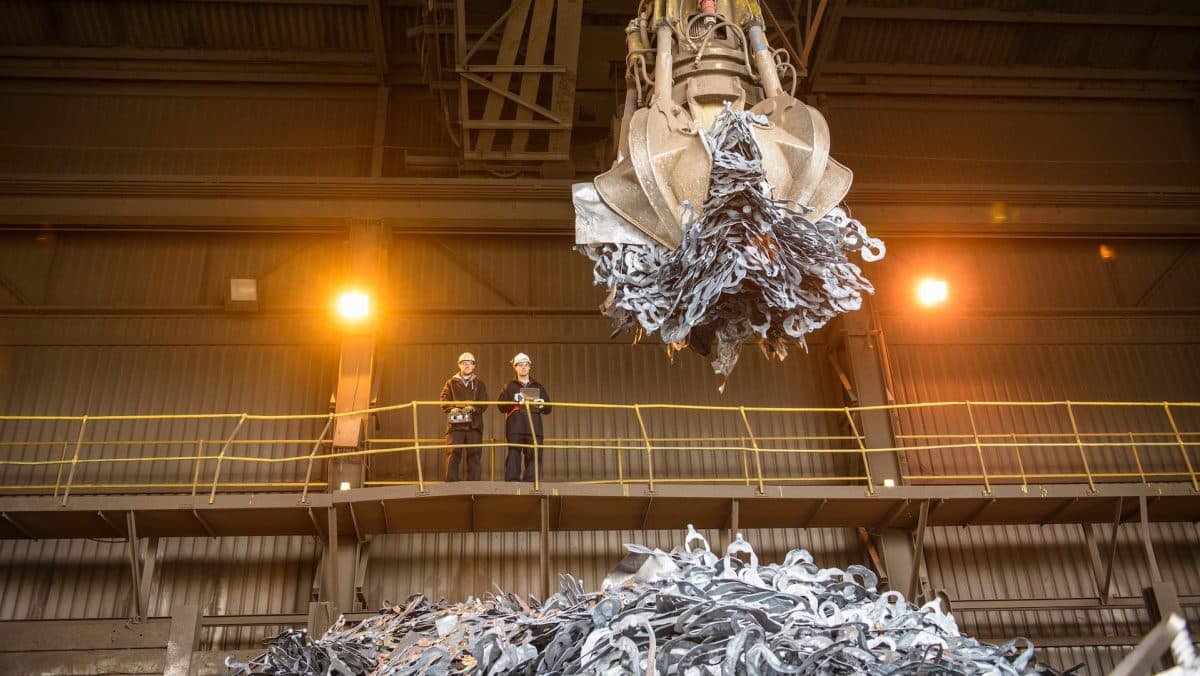
Recycling startups are increasingly adopting artificial intelligence to boost the recovery of critical minerals, with a focus on aluminum as prices climb. The companies see an opportunity to build a large-scale source of the metal domestically. AI systems are being used to sort scrap more efficiently, identifying and separating aluminum from mixed waste streams. This approach could reduce reliance on imported raw materials and lower environmental impact.
One startup, Sortera Alloys, uses AI-powered sensors to analyze scrap metal in real time. The system can distinguish between different aluminum alloys, which is crucial for producing high-quality recycled material. The company claims its technology can recover up to 95% of aluminum from complex scrap streams, compared to traditional methods that capture around 70%.
Another firm, Machinex, has developed an AI-driven optical sorter that identifies aluminum cans and other packaging. The system uses cameras and machine learning to recognize shapes and colors, then directs air jets to separate the items. This technology has been installed at several recycling facilities across the United States.
The push for AI in recycling comes as aluminum prices have risen roughly 20% over the past year, driven by supply constraints and growing demand from industries like automotive and construction. Recycled aluminum requires only 5% of the energy needed to produce primary aluminum, making it an attractive alternative.
Industry analysts note that AI can help recycling facilities process more material with greater accuracy, reducing contamination and improving the quality of output. This is particularly important for aluminum, which can be recycled indefinitely without losing its properties. The U.S. currently recycles about 50% of its aluminum cans, a figure that startups aim to increase.
However, the technology faces challenges, including high upfront costs and the need for large datasets to train AI models. Some facilities also struggle with inconsistent waste streams, which can confuse sorting algorithms. Despite these hurdles, several startups have secured funding from venture capital firms and government grants.
The U.S. Department of Energy has invested in AI recycling projects as part of its strategy to secure domestic supply chains for critical minerals. The agency awarded $10 million to a consortium led by the University of Texas to develop AI-based sorting systems for aluminum and other metals.
Startups are also exploring partnerships with major aluminum producers. For example, Novelis, a leading aluminum recycler, has tested AI sorting at its plants in Ohio and Kentucky. The company reported a 15% increase in recovery rates during trials.
As aluminum prices remain elevated, the economic case for AI-driven recycling grows stronger. Startups in the space expect their technology to become more widespread in the coming years, potentially transforming the scrap metal industry. The success of these efforts could help the U.S. reduce its dependence on imported aluminum and lower carbon emissions from metal production.

Bambu Lab faces backlash after asking developer to delete open-source code
Bambu Lab, known for its popular 3D printers, asked developer Paweł Jarczak to remove code enabling remote control without its software. The request sparked a coalition of open-source advocates and YouTubers opposing the company's move.
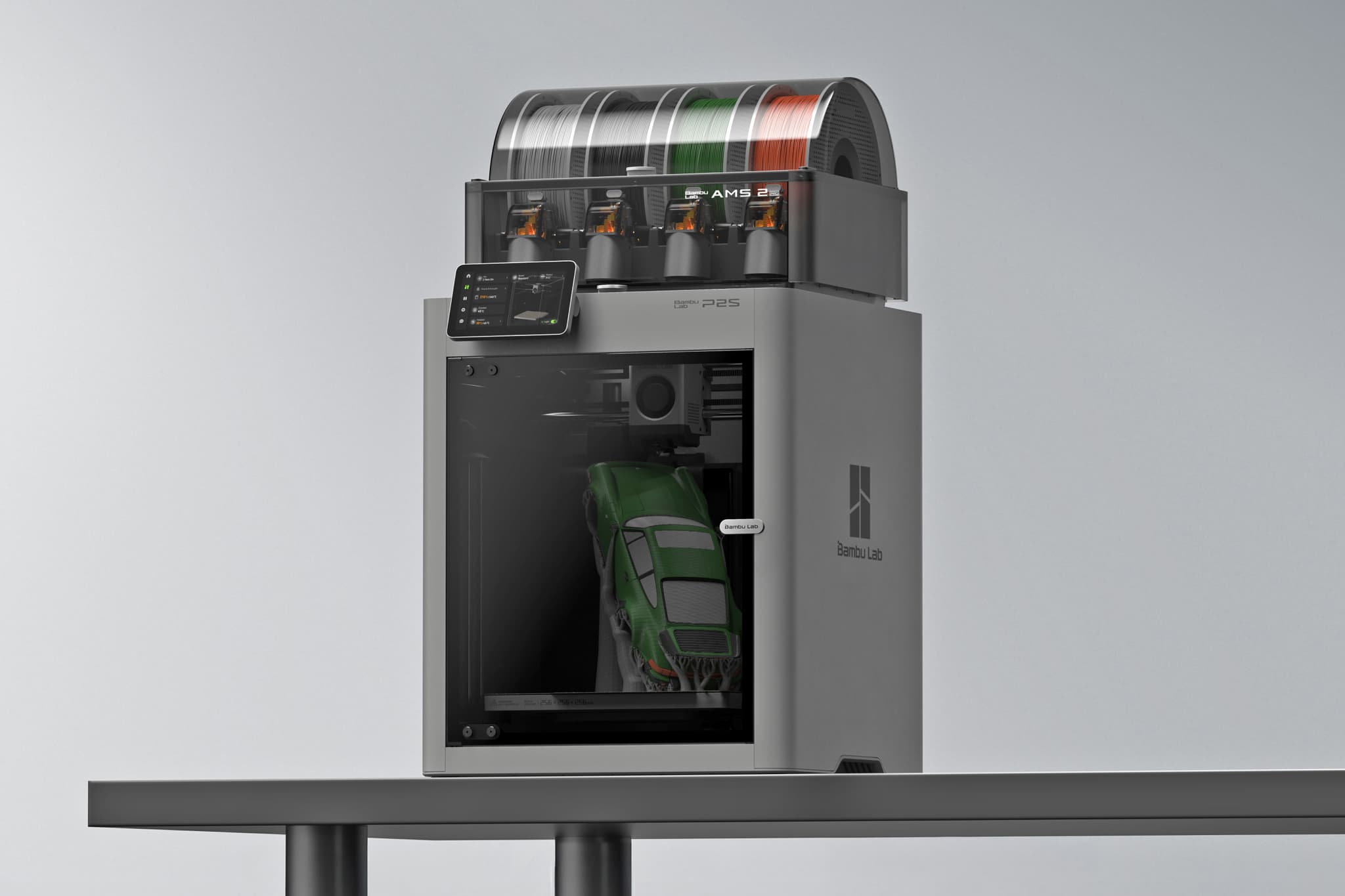
Bambu Lab, a company celebrated for producing some of the most accessible and high-quality 3D printers on the market, now finds itself at the center of a growing controversy. The dispute began when Paweł Jarczak, a developer, received a private message from Bambu Lab on Reddit requesting that he delete code he had shared. Jarczak's code allowed users to remotely control their Bambu printers without relying on the company's proprietary software. This request has ignited a firestorm within the 3D printing community, with many rallying behind Jarczak and funding efforts to challenge Bambu Lab's actions. The outcome could have significant implications for the future of 3D printer software and user freedoms.
Jarczak's code was designed to give users more control over their Bambu printers, enabling remote operation through alternative software. Bambu Lab, however, sought to lock down its system, despite the fact that its own software relies on open-source components. The company's request to remove the code was seen by many as an attempt to restrict user autonomy and undermine the open-source ethos that has long been a cornerstone of the 3D printing community.
The response from the community was swift and forceful. A coalition of open-source advocates, developers, and prominent YouTubers formed to oppose Bambu Lab's actions. They argue that the company's request not only violates the spirit of open-source collaboration but also sets a dangerous precedent for user rights in the 3D printing industry. The coalition has launched fundraising efforts to support Jarczak and to potentially fund legal challenges against Bambu Lab.
Bambu Lab's printers have been widely praised for their ease of use, reliability, and advanced features, making them popular among both hobbyists and professionals. The company's rapid rise in the market has been fueled by a combination of innovative design and a strong community following. However, this incident has threatened to tarnish that reputation, as many users feel betrayed by a company they once admired.
The controversy highlights a broader tension in the tech industry between proprietary control and open-source principles. Bambu Lab's reliance on open-source code while attempting to restrict its use has drawn criticism as hypocritical. Critics argue that the company is trying to have it both ways—benefiting from open-source contributions while limiting how users can interact with their own hardware.
As of now, Bambu Lab has not publicly responded to the backlash beyond the initial private message to Jarczak. The company's silence has only fueled further speculation and anger within the community. Jarczak, for his part, has not complied with the request to delete his code, and he continues to receive support from a growing number of backers.
The situation remains fluid, with potential legal and commercial ramifications for Bambu Lab. The company's next moves will be closely watched by the 3D printing community and could set a precedent for how hardware manufacturers handle open-source software in the future. The coalition opposing Bambu Lab has vowed to continue its efforts, regardless of the company's response.
Bambu Lab's printers are available for purchase through its website and select retailers, with prices ranging from several hundred to over a thousand dollars depending on the model. The company has not announced any changes to its product lineup or policies in light of the controversy. The outcome of this dispute could influence consumer trust and the broader direction of the 3D printing industry.