Satirical Piece Imagines How People Would Discuss Other Technologies Like A.I.
Caroline Rose Giuliani and Ginny Hogan wrote a satirical article imagining how people would discuss other technologies if they used the same hyperbolic language often applied to artificial intelligence.

Caroline Rose Giuliani and Ginny Hogan published a humorous piece exploring the way people talk about artificial intelligence. The authors imagine applying similar language to other technologies, such as the internet, smartphones, and electricity. The satire highlights the often exaggerated and fearful rhetoric surrounding A.I. discussions.
The piece draws parallels between current A.I. discourse and historical reactions to past innovations. Giuliani and Hogan point out that every major technological shift has sparked both excitement and anxiety. They note that the language used to describe A.I. today mirrors past conversations about other breakthroughs.
One example in the article imagines someone saying, "The internet is going to destroy our ability to focus and remember things." The authors contrast this with actual historical concerns about the internet. They also reference how people once worried that telephones would make face-to-face communication obsolete.
The satire extends to smartphones, with a fictional quote: "Smartphones are rewiring our brains and making us addicted to dopamine." Giuliani and Hogan remind readers that similar warnings accompanied the rise of television and radio. The piece suggests that such fears often fade as society adapts to new tools.
Electricity is another target of the satire. The authors imagine someone claiming, "Electricity will make us lazy and dependent on machines." They point out that electricity ultimately improved quality of life despite initial skepticism. The article argues that A.I. may follow a similar trajectory.
Giuliani and Hogan emphasize that their goal is not to dismiss legitimate concerns about A.I. Instead, they aim to encourage a more measured perspective. The piece concludes by noting that humans have historically integrated new technologies without losing their humanity.
The article was published on a humor platform and has sparked discussion about A.I. rhetoric. Readers have praised the authors for using comedy to address a serious topic. The piece serves as a reminder to approach technological change with both caution and perspective.
Samsung faces strike by 47,000 workers at chip plants starting Thursday
More than 47,000 Samsung Electronics workers plan an 18-day strike starting Thursday at domestic chip plants after bonus negotiations collapsed. The strike threatens memory chip production amid an ongoing shortage.

Samsung Electronics is bracing for a strike involving over 47,000 workers at its domestic semiconductor facilities, set to begin Thursday. The walkout follows the breakdown of bonus payment talks between the company and its union, with the strike lasting 18 days. The action targets Samsung's chipmaking plants in South Korea, raising concerns about further strain on already constrained memory chip supply chains.
The union had agreed to mediation proposed by South Korea's National Labor Relations Commission, though the terms of that proposal remain undisclosed. Samsung management, however, rejected the deal without providing a reason, according to Nikkei Asia. The union's demands include higher bonuses and improved working conditions, though specific figures have not been released.
Workers gathered outside Samsung's semiconductor plant in Pyeongtaek on April 23rd for a rally ahead of the planned strike, as seen in photos from the event. The strike is limited to domestic chipmaking operations and does not affect other Samsung business units such as consumer electronics or mobile devices.
The timing of the strike adds pressure to the global memory chip market, which has been experiencing shortages driven by high demand for AI and data center applications. Samsung is the world's largest memory chip manufacturer, and any production disruption could exacerbate supply constraints.
Samsung Electronics has not publicly commented on the strike or the rejected mediation. The company's management has yet to outline contingency plans for maintaining chip production during the walkout. The union has indicated it is prepared to extend the strike if demands are not met.
The strike is set to commence on Thursday and will run for 18 consecutive days. The affected facilities include Samsung's main chip production lines in Pyeongtaek and Hwaseong. The union represents a significant portion of Samsung's domestic chip workforce, though the exact number of workers participating has not been confirmed.
Samsung's rejection of the mediated deal without explanation has drawn criticism from labor advocates. The National Labor Relations Commission's mediation details remain confidential, but the union had accepted the proposal before management's refusal. The strike proceeds as Samsung faces ongoing challenges in the semiconductor market, including fluctuating prices and geopolitical tensions affecting supply chains.

YouTube launches AI-powered conversational search and Gemini Omni for Shorts
YouTube introduces 'Ask YouTube', an AI-powered conversational search feature, and integrates Gemini Omni into Shorts. The updates aim to enhance user interaction and content discovery on the platform.

Google has announced a significant overhaul of its search capabilities on YouTube, introducing a new feature called 'Ask YouTube' that leverages artificial intelligence to enable conversational search. The update allows users to ask questions in natural language and receive relevant video results, moving beyond traditional keyword-based queries. Additionally, YouTube is integrating Gemini Omni into its Shorts format, bringing advanced AI capabilities to short-form video content.
The 'Ask YouTube' feature is designed to understand complex queries and provide direct answers from video content. For instance, users can ask questions like 'How do I fix a leaky faucet?' and the AI will surface specific segments from instructional videos. This functionality relies on Google's large language models and video understanding technology, which can parse spoken words, on-screen text, and visual elements within videos.
Gemini Omni, Google's multimodal AI model, is being integrated into YouTube Shorts to enhance content creation and discovery. Creators can use the AI to generate captions, suggest edits, or even create short clips from longer videos. The model can also analyze viewer preferences to recommend personalized Shorts feeds, improving user engagement.
These updates come as part of Google's broader strategy to infuse AI across its products. The company has been testing conversational search features in its main search engine and is now extending similar capabilities to YouTube. The move aims to make video content more accessible and interactive, particularly for users seeking specific information or tutorials.
YouTube's AI-powered search is expected to roll out gradually to users in the coming weeks, starting with English-language queries. The feature will be available on both mobile and desktop versions of the platform. Google has not specified a timeline for global availability but confirmed that additional languages will be supported in the future.
For creators, Gemini Omni integration in Shorts will be available through YouTube Studio. The tool offers features like automatic captioning, scene detection, and music suggestions. Google emphasized that the AI is designed to assist creators without replacing their creative input, maintaining the authenticity of user-generated content.
Privacy considerations have been addressed, with Google stating that user data from conversational searches will be handled according to its existing privacy policies. The company also noted that AI-generated suggestions in Shorts will be clearly labeled to maintain transparency.
YouTube's parent company, Google, announced these features during its recent product update event. The company highlighted that the AI enhancements are part of ongoing efforts to improve user experience and content discoverability on the platform. 'Ask YouTube' and Gemini Omni for Shorts are now rolling out to select users, with broader availability expected later this year.

Nvidia earnings report to test AI chip dominance amid shifting market
Nvidia is set to report earnings on Wednesday, with expectations high for another strong quarter. However, changes in AI usage patterns are raising questions about the sustainability of its chip market leadership.
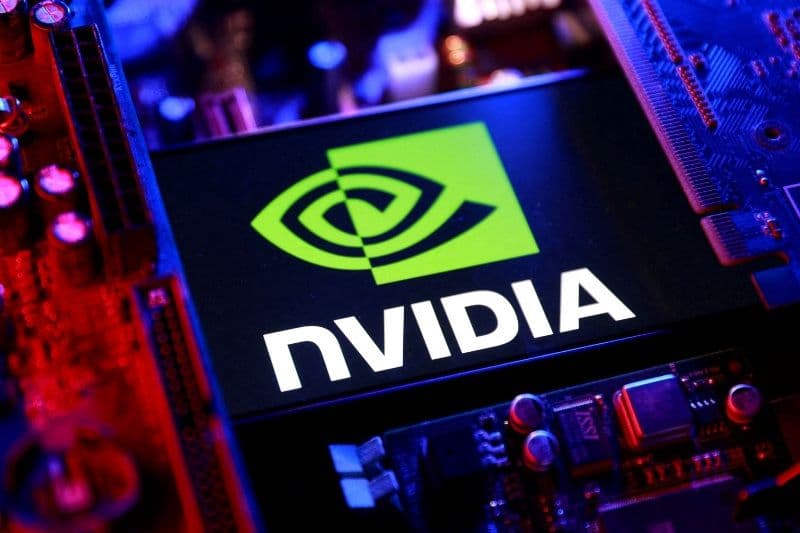
Nvidia will release its quarterly earnings report on Wednesday, and analysts anticipate another robust performance. The company has been a dominant force in the AI chip market, but evolving trends in artificial intelligence deployment are prompting scrutiny of its long-term position.
The shift toward inference-based AI workloads, which require different processing capabilities than training models, could alter demand dynamics. While Nvidia's GPUs have been essential for training large AI models, competitors are developing specialized chips for inference tasks.
Nvidia's data center revenue has surged over the past year, driven by demand from cloud providers and enterprises building AI infrastructure. The company's upcoming earnings will provide insight into whether this growth trajectory can be maintained.
Investors will focus on Nvidia's guidance for the current quarter, as well as any commentary on supply chain constraints and customer adoption patterns. The company has faced challenges in meeting demand for its high-end chips, including the H100 and upcoming Blackwell architecture.
Some analysts have expressed concerns about potential market saturation as AI model training becomes more efficient. Others point to the expansion of AI into new sectors, such as healthcare and automotive, as a source of continued demand.
Nvidia's stock has more than tripled over the past year, reflecting optimism about its AI prospects. However, the company faces increasing competition from AMD, Intel, and custom chip designs from major cloud providers.
The earnings report will be closely watched for signs of how Nvidia plans to navigate these competitive pressures. The company has been investing in software and networking technologies to create a more comprehensive AI platform.
Nvidia's CEO Jensen Huang has emphasized the company's role in enabling the next wave of AI innovation. The earnings call on Wednesday will offer a concrete update on whether that vision is translating into sustained financial performance.

Google launches Universal Cart to track shopping across devices and retailers
Google announced Universal Cart, a new feature that tracks users' shopping across multiple devices and retailers. The tool aims to simplify the online shopping experience by consolidating cart items from various sites.
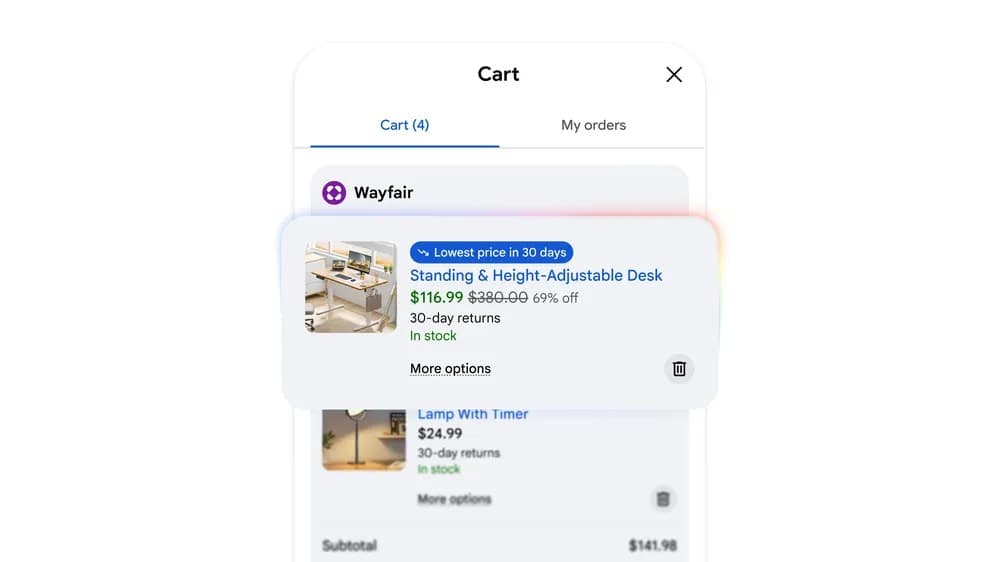
Google introduced Universal Cart, a feature designed to follow users' shopping journeys across different devices and online retailers. The announcement was made during the company's annual developer conference. Universal Cart aims to address the fragmented nature of online shopping, where consumers often browse and add items to carts on multiple sites over several days.
The feature integrates with Google's Shopping platform and uses the user's Google account to sync cart data across devices. When a user adds an item to their cart on a participating retailer's site, Universal Cart saves that information. The user can then access their cart from any device, including smartphones, tablets, and desktop computers.
Universal Cart also provides price tracking and alerts. If the price of an item in the cart drops, Google will notify the user. The feature can also suggest alternative products or retailers based on the user's shopping history and preferences. Google emphasized that user privacy is a priority, and the data is encrypted and not shared with third parties without consent.
Retailers that have signed up for Universal Cart include major brands like Target, Walmart, and Best Buy. Google plans to expand the list of participating retailers over time. The feature is currently rolling out in the United States, with a global expansion expected later this year.
To use Universal Cart, users need a Google account and must enable the feature in their Google Shopping settings. The feature is available on the Google Shopping app and website. Google stated that Universal Cart is free for both users and retailers, with no additional fees for participation.
The launch of Universal Cart comes as Google faces increasing competition from Amazon in the online shopping space. Amazon offers a similar feature called Amazon Cart, which syncs across devices but is limited to Amazon's own platform. Google's Universal Cart aims to provide a cross-retailer solution.
Google also announced that Universal Cart will integrate with its Google Assistant, allowing users to add items to their cart via voice commands. The feature will be available on Google Home devices and Android smartphones. Google plans to add support for iOS devices in the coming months.
Universal Cart is now available to all users in the U.S. who have the latest version of the Google Shopping app. Google encourages users to provide feedback to help improve the feature. The company has not announced a specific date for the international rollout but expects it to begin in the fourth quarter of this year.