AI Reconstruction of Dead Pilots' Voices Forces NTSB to Block Docket Access
Individuals used AI to reconstruct voices of deceased pilots from spectrogram images of cockpit recordings, prompting the NTSB to temporarily block access to its docket system.

The National Transportation Safety Board temporarily blocked public access to its online docket system after discovering that individuals were using artificial intelligence to reconstruct the voices of dead pilots from cockpit voice recorder spectrograms. The NTSB said the move was necessary to prevent misuse of sensitive audio data from aviation accident investigations.
Cockpit voice recorders capture conversations and sounds in the cockpit, which are typically analyzed by investigators. Spectrograms are visual representations of audio frequencies over time, often included in public docket materials. By feeding these spectrograms into AI voice synthesis tools, users were able to recreate speech patterns and voices of pilots who died in crashes.
The NTSB stated that the reconstructed audio could be misleading or inaccurate, potentially causing distress to families and undermining the integrity of investigations. The agency emphasized that raw audio from cockpit voice recorders is never released to the public, but spectrograms have been routinely included in docket files.
This incident highlights the growing capability of AI to extract and replicate audio from visual data. Voice synthesis models, such as those based on deep learning, can generate realistic speech from limited input, including spectrograms. The NTSB's action underscores the challenges regulators face as AI tools become more accessible.
The temporary block on the docket system began on [date not specified in source] and affected access to all documents, not just those related to cockpit recordings. The NTSB said it is reviewing its policies on what information is made public and how to protect sensitive data from AI exploitation.
Aviation safety experts noted that cockpit voice recordings are crucial for understanding accident causes, but their release must balance transparency with privacy and security. The NTSB's docket system is used by researchers, journalists, and the public to access investigation materials.
The NTSB has not announced when the docket system will be fully restored. The agency is working on implementing safeguards to prevent similar AI-driven reconstructions in the future. This case marks one of the first known instances of AI being used to recreate voices from accident investigation data.
Ferrari taps IBM AI to build deeper Formula 1 fan engagement
IBM and Scuderia Ferrari HP are using IBM's AI platform to create personalized digital experiences for Formula 1 fans. The collaboration aims to transform how fans interact with the team through data-driven insights and interactive tools.

IBM and Scuderia Ferrari HP have unveiled a new initiative that leverages artificial intelligence to deepen fan engagement in Formula 1. The partnership, announced this week, integrates IBM's watsonx AI platform into Ferrari's digital ecosystem. The goal is to deliver personalized content and interactive experiences to fans worldwide.
The system analyzes vast amounts of race data, including telemetry, driver performance, and historical statistics. It then generates tailored insights and predictions for individual fans. For example, a fan might receive a customized race preview highlighting their favorite driver's strengths against a specific rival.
IBM's AI also powers a new chatbot on Ferrari's official app and website. The chatbot can answer questions about race strategies, car specifications, and team history. It learns from user interactions to improve its responses over time.
Ferrari's head of brand diversification and lifestyle, Nicola Lanzetta, said the technology allows the team to connect with fans on a more personal level. "We want every fan to feel like they are part of the team," Lanzetta stated. "AI helps us deliver that experience at scale."
IBM's watsonx platform provides the underlying machine learning models. These models are trained on decades of Ferrari race data and real-time feeds from current Grands Prix. The system can simulate race outcomes and suggest fantasy racing picks.
The initiative is part of a broader trend in motorsports where teams use AI to enhance fan engagement. Other F1 teams have experimented with similar tools, but Ferrari's partnership with IBM is among the most comprehensive.
Fans can access the AI features through the official Scuderia Ferrari app, available on iOS and Android. The chatbot is currently in beta and will roll out fully ahead of the 2025 season. Ferrari plans to expand the AI's capabilities to include virtual reality experiences and predictive gaming.
IBM's senior vice president of software and chief commercial officer, Kate Woolley, emphasized the scalability of the solution. "This is not just about Ferrari," Woolley said. "The same AI framework can be adapted for other sports and entertainment properties."
The partnership builds on IBM's long-standing relationship with Ferrari, which includes providing IT infrastructure and data analytics. The new AI features are free for all registered Ferrari fans.

Alibaba unveils Qwen3.7-Max AI model and Zhenwu M890 chip with triple performance
Alibaba introduced its new AI model Qwen3.7-Max, capable of 35 hours of continuous operation, and the Zhenwu M890 chip, which offers three times the performance of its predecessor. The company also officially announced its 'AI factory' vision.

Alibaba has launched a new artificial intelligence model and a high-performance chip, marking a significant expansion of its AI capabilities. The Chinese tech giant introduced the Qwen3.7-Max model, which can operate continuously for 35 hours without interruption. Alongside the model, Alibaba unveiled the Zhenwu M890 chip, which delivers three times the performance of its previous generation.
The Qwen3.7-Max model is designed for sustained AI workloads, offering extended runtime for complex tasks. Alibaba emphasized the model's efficiency and reliability for enterprise applications. The Zhenwu M890 chip, meanwhile, represents a major leap in processing power, enabling faster data processing and AI inference.
Alibaba also formally announced its "AI factory" vision, a strategy to integrate AI into manufacturing and production processes. The initiative aims to create intelligent factories that leverage AI for automation, quality control, and supply chain optimization. The company sees this as a key driver for industrial transformation.
The new chip and model are part of Alibaba's broader push to strengthen its AI ecosystem. The Zhenwu M890 is expected to power Alibaba's cloud services and internal AI systems, while the Qwen3.7-Max model will be available to enterprise customers through Alibaba Cloud.
Alibaba's AI factory concept aligns with China's national strategy to modernize manufacturing through technology. The company plans to deploy AI-powered systems in its own facilities and offer them to other manufacturers. This move positions Alibaba as a key player in the industrial AI space.
The Qwen3.7-Max model and Zhenwu M890 chip are now available for select enterprise clients. Alibaba has not disclosed pricing for the chip or model, but they are expected to be integrated into the company's cloud offerings. The AI factory initiative is currently in pilot phase with several manufacturing partners.
Alibaba's announcement comes amid intensifying competition in the AI sector, with Chinese and global tech firms racing to develop more powerful models and hardware. The company's focus on industrial applications differentiates it from rivals targeting consumer-facing AI products.
Alibaba Cloud will manage the rollout of the new AI model and chip. The company stated that the Qwen3.7-Max model is optimized for long-duration tasks such as data analysis and simulation. The Zhenwu M890 chip is designed to support these workloads with higher energy efficiency compared to previous chips.

Google AI Overviews Fails to Generate Summary for 'Disregard' Search
Google's AI Overviews feature is malfunctioning when users search for the word 'disregard', displaying a single-line response instead of an AI-generated summary. The issue appears to be triggered by the word itself, causing the AI to skip its usual summarization.

Google's AI Overviews feature is encountering a peculiar glitch. When users search for the word 'disregard', the search results show a single-line response instead of the typical AI-generated summary. The issue was first reported by users on social media platforms, who noticed that the AI overview fails to produce its usual paragraph-length answer for this specific query.
The problem appears to be triggered by the word 'disregard' itself. When entered as a search term, Google's AI system seems to interpret it as a command to ignore or skip the AI-generated overview. Instead of providing a summary, the search results display a brief, one-line response that often reads 'Disregard' or a similar short phrase.
Google has acknowledged the issue, stating that the AI model is designed to follow user instructions, and the word 'disregard' is being treated as a directive to not generate an overview. The company is working on a fix to prevent the AI from misinterpreting common words as commands.
This glitch highlights the challenges of training AI models to understand context and intent. While the AI is programmed to respond to certain keywords, it sometimes fails to distinguish between a search query and a command. Google's AI Overviews, which launched earlier this year, aims to provide concise summaries for search queries, but this incident shows that the system still has limitations.
The issue is not widespread and only affects searches for the word 'disregard' and possibly similar terms. Users searching for other words or phrases do not experience the same problem. Google has not disclosed how many users have been affected or when the fix will be implemented.
Google's AI Overviews feature is available in select regions and languages, including the United States and English. The company has been gradually expanding the feature to more countries and languages since its launch. The 'disregard' glitch is expected to be resolved in a future update.
In a statement, Google said, 'We are aware of an issue where the AI Overviews feature does not generate a summary for the search term 'disregard'. Our team is working on a solution to ensure the AI correctly interprets search queries. We apologize for any inconvenience.' The company did not provide a specific timeline for the fix.
As of now, users searching for 'disregard' on Google will continue to see the single-line response instead of an AI-generated summary. Google advises users to be patient while the issue is being addressed.

Meta repurposes internal workflows as AI post-training lab
Meta has converted its internal processes into an AI post-training laboratory. The move aims to improve ad efficiency and revenue, though execution risks may limit genuine model advancements.
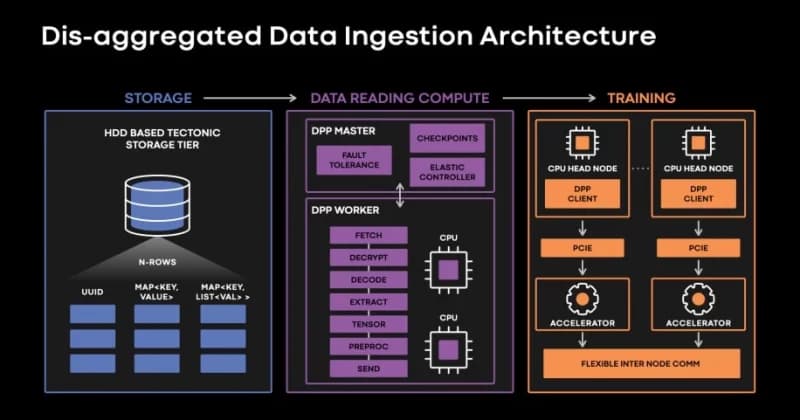
Meta announced it has transformed its internal workflows into a dedicated AI post-training lab. The initiative is designed to refine the company's artificial intelligence models using real-world operational data. By leveraging internal processes, Meta seeks to enhance the performance of its AI systems without relying solely on external datasets.
The post-training lab focuses on fine-tuning AI models after their initial training phase. This approach allows Meta to adjust algorithms based on actual usage patterns and business needs. The company believes this method can lead to more efficient ad targeting and increased revenue generation.
However, analysts caution that the strategy carries execution risks. Relying on internal processes may introduce biases or limit the diversity of training data. If not managed carefully, the lab could produce incremental improvements rather than substantial leaps in AI capability.
Meta's AI post-training efforts are part of a broader push to integrate artificial intelligence across its platforms. The company has invested heavily in AI research and infrastructure, aiming to stay competitive in the rapidly evolving tech landscape. The new lab represents a shift toward using proprietary data for model refinement.
The lab will initially focus on advertising-related AI models, given their direct impact on Meta's revenue. By optimizing these models through post-training, Meta hopes to deliver more relevant ads to users and improve return on investment for advertisers.
Meta has not disclosed specific timelines or performance targets for the lab. The company stated that the initiative is in its early stages and will evolve based on results. Further details are expected in upcoming earnings calls or product announcements.
The announcement comes as Meta faces increasing scrutiny over its data practices and AI ethics. The use of internal processes for AI training raises questions about transparency and potential biases. Meta has emphasized that it will adhere to its responsible AI principles throughout the lab's operations.
Meta's AI post-training lab is now operational, with the company monitoring outcomes closely. The success of the initiative will depend on balancing efficiency gains with robust model improvements.